



This is both a requirement from tenants, building occupiers, lenders and investors, and a regulatory expectation regarding the EU taxonomy and national and multinational bodies.
This applies throughout the life span of a real estate project, from planning and permitting, project financing, through to construction and material sourcing, leasing, property and facility management and an exit strategy with a sale to an investor.
In this way, all real estate stakeholders, whether market actors or end-users, are impacted by ESG-related market demands and expectations and the requirement to adapt to increasingly all-embracing international regulations. Essentially, real estate-related industries such as construction, architecture, finance, investment and facility and property management need to adapt and prepare continually for the new ESG reality.
Analysts see ESG elements being used in real estate sectors beyond office and industrial, with regulations and market pressures now also impacting hotels, residential buildings, and public buildings. Further, more stringent and sophisticated “governance” of the “environmental” and “social” parts of ESG will become the norm as technology advances.
“Climate challenges, evolving user expectations, rising social awareness, and economic volatility all demand a conscious and strategic approach. At GTC, we see these changes as an opportunity to deepen our commitment to environmental protection, community engagement, and transparent governance,” says Małgorzata Czaplicka, CEO of GTC.
“Thanks to our team’s dedication, we have made notable progress in reducing CO2 emissions, increasing the share of green energy, and lowering water consumption across our buildings. These efforts help us optimize our portfolio in line with long-term ESG objectives,” she adds.
From the perspective of the lender, György Salamon, head of real estate financing at Erste Bank Hungary, says, “Environmental considerations are an integral part of Erste’s strategy and core operations. This means incorporating sustainability into all areas of activity to make the bank’s entire operation more sustainable.”
Lenders are under growing pressure from regulators, particularly the ECB, which has flagged commercial real estate as a systemic risk and urged banks to limit their exposure.
“This has translated into tighter lending standards, increased scrutiny of asset resilience, and financial incentives for performance-linked sustainability,” comments Hubert Abt, CEO and founder of Workcloud24. “The motivations are clear: reduce portfolio risk, ensure borrower robustness, and stay ahead of regulatory scrutiny. It’s less about green labelling and more about future-proofing credit quality.”
Aurelia Luca, executive vice president of operations for Hungary and Romania at Skanska, says she sees a clear expectation emerging across the market: Strong proven ESG is becoming a must. Transactions are increasingly shaped by demand for tangible climate performance, transparent material data, and spaces that genuinely support people’s well-being.
“This shift is creating long-term value for those who can demonstrate real results, and it is a responsibility we fully embrace in our developments in Budapest,” she insists.
“We see ESG shifting from compliance to a competitive advantage. In 2026, the market will increasingly reward assets that can prove real environmental performance and deliver a healthier, more engaging experience for people,” Luca says.
“Investors and tenants alike are prioritizing transparency, certified materials, measurable energy data and workplaces where people feel and perform at their best. This clarity supports better decisions, lower operational risks and stronger long-term value,” she adds.
Zoltán Ligetvári, investment director at ConvergenCE, speaking at the inaugural Warsaw WELL Summit 2025, summarized the role of the third-party, interior and well-being certification at its Academia offices redevelopment.
“When investigating investment opportunities, ConvergenCE seeks assets that are undermanaged and where value-add potential may be unlocked. In today’s market, to capture high rents and tenants with outstanding covenants, the buildings must be certified and meet certain ESG requirements,” he explains.
“Achieving WELL certification for our buildings has been one of the clear attributes we could demonstrate and has led to one of the key elements to our leasing successes. Upon any future exit from our investments, it is critical that the asset demonstrates the necessary certifications as well,” Ligetvári acknowledges.
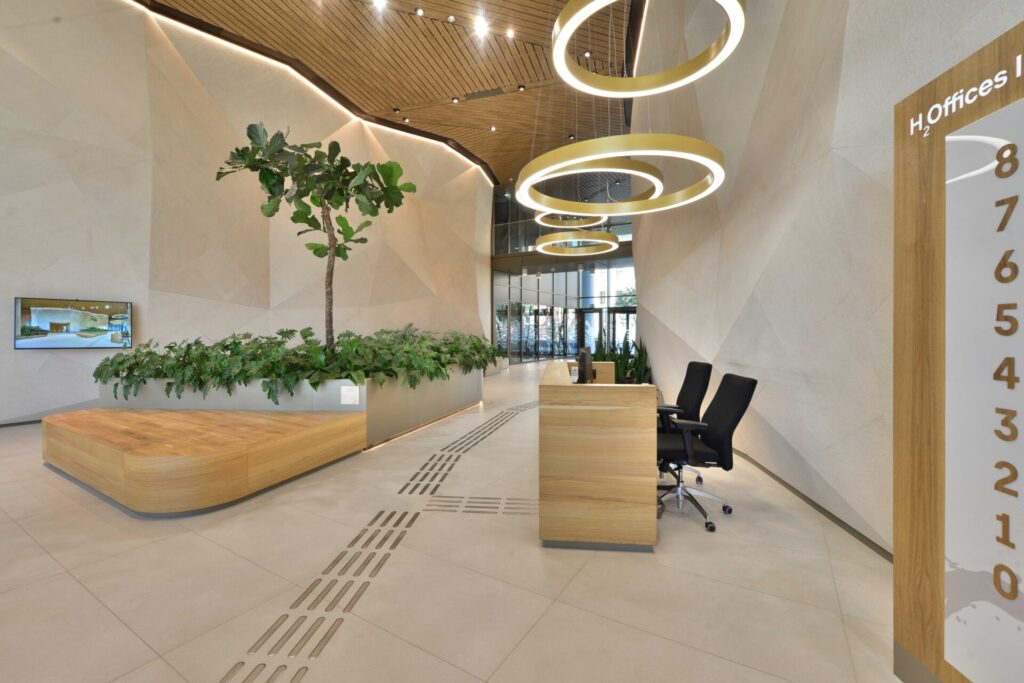
“Being WELL certified will lead to the property being more appealing to a wider set of potential buyers. The asset will be more financeable by commercial banks; buildings not meeting certain certifications will carry high financing risk and will struggle to trade, with financing being more expensive or not available to them. The [Academia] property will, overall, be more marketable and will demonstrate higher liquidity,” he adds.
The most impactful improvements to WELL, as a third-party accreditation system, will likely focus on making it more accessible to diverse project types while maintaining its evidence-based approach to promoting human health through design. So says Regina Kurucz, managing director of Rewell Consulting, and a WELL advisor.
“WELL currently skews toward high-end commercial projects. Developing streamlined certification tracks for smaller buildings, residential projects, and retrofit applications would broaden its impact,” she notes.
“This includes creating cost-effective monitoring solutions and simplified documentation processes while maintaining rigor. The good news is that these developments have already started: WELL Residence and WELL coworking rating launched in 2024, and new updates are coming soon,” Kurucz adds.
A major milestone was reached in the hospitality sector, where the Tribe hotels at Budapest Airport and the Groupama Stadium earned the region’s highest BREEAM certifications for hotels, according to Zsombor Barta, founding partner at Greenbors Consulting. Indeed, the Stadium Hotel became the first in Hungary to achieve the BREEAM In-Use “Outstanding” rating.
While green certifications for hotel operations are common, certifying the building itself represents an important and innovative advancement for the sector.
Transparent ESG reporting is expected from large companies and, increasingly, from their suppliers across the region, says Barta. At the same time, market demand for ESG performance is not slowing. In Hungary and the wider CEE region, ESG has become a mainstream tool for sustainability screening, risk assessment and access to finance. Investors and lenders continue to rely on credible ESG indicators, especially as new EU rules introduce higher transparency requirements for ESG rating providers, he adds.
“Moving beyond point-in-time assessments to continuous monitoring through IoT sensors and building management systems would provide ongoing feedback loops. This could enable dynamic certification levels that respond to actual performance rather than just design intent,” agrees Kurucz.
“The certification process also serves as crucial quality control for developers and building owners, ensuring that well-being features are properly designed, installed, and functioning as intended through rigorous third-party verification and performance testing,” she says.
“Beyond the immediate benefits of reduced sick days and higher employee satisfaction, WELL certification creates a baseline for Environmental, Social, and Governance reporting and benchmarking, helping companies meet growing investor and stakeholder demands for sustainable business practices,” she adds.
Barta also foresees technology, particularly artificial intelligence, becoming an increasingly crucial enabler of ESG work. AI tools can streamline data collection, automate compliance reporting, detect risks proactively, and structure ESG data to enable greater transparency and comparability.
This technological shift should help dispel much of the “fog” around ESG metrics and allow companies, investors and regulators to move from intention to verifiable impact, he believes.
Beyond technology, 2026 is likely to see a growing emphasis on concrete results rather than promises. The market will increasingly penalize “greenwashing.” Companies will be expected to substantiate their sustainability credentials with clear, audited data, measurable outcomes and accountability frameworks.

Structural societal and economic pressures (such as climate change, demographic shifts, and resource constraints) together with evolving regulatory frameworks across Europe, will continue to incentivize ESG-aligned operations and investments as a means to manage risk, enhance resilience, and capture long-term value.
“At Skanska, this is already embedded into our development process: from our environmental management framework to the use of materials supported by Environmental Product Declarations that provide measurable carbon emissions data,” comments Luca.
“We welcome this evolution: sustainability, digital readiness and well-being now define what ‘premium’ truly means, and we are already building for that future in Budapest,” comments Aurelia.
“The pros of ESG pressures are clear: ESG-aligned assets tend to attract stronger, longer-term tenants, command a premium in valuations, and ensure better access to financing, particularly green and sustainability-linked loans. They also help mitigate long-term risks associated with climate change, regulatory tightening, and obsolescence,” Barta argues.
“However, there are also challenges. For developers, incorporating ESG from the outset can increase upfront costs and design complexity, especially in markets where planning regulations or available technologies lag behind EU averages. Investors may face data gaps or struggle with the inconsistent availability of ESG benchmarks in CEE. Moreover, there is still a risk of ‘greenwashing’ (superficial ESG claims without real impact), which can erode trust in the market,” he concludes.
This article was first published in the Budapest Business Journal print issue of January 30, 2026.


