Listen to the audio version of this article (generated by AI).
Listen to the audio version of this article (generated by AI).

Constraints on electricity supply could also make new data centers increasingly difficult to develop.
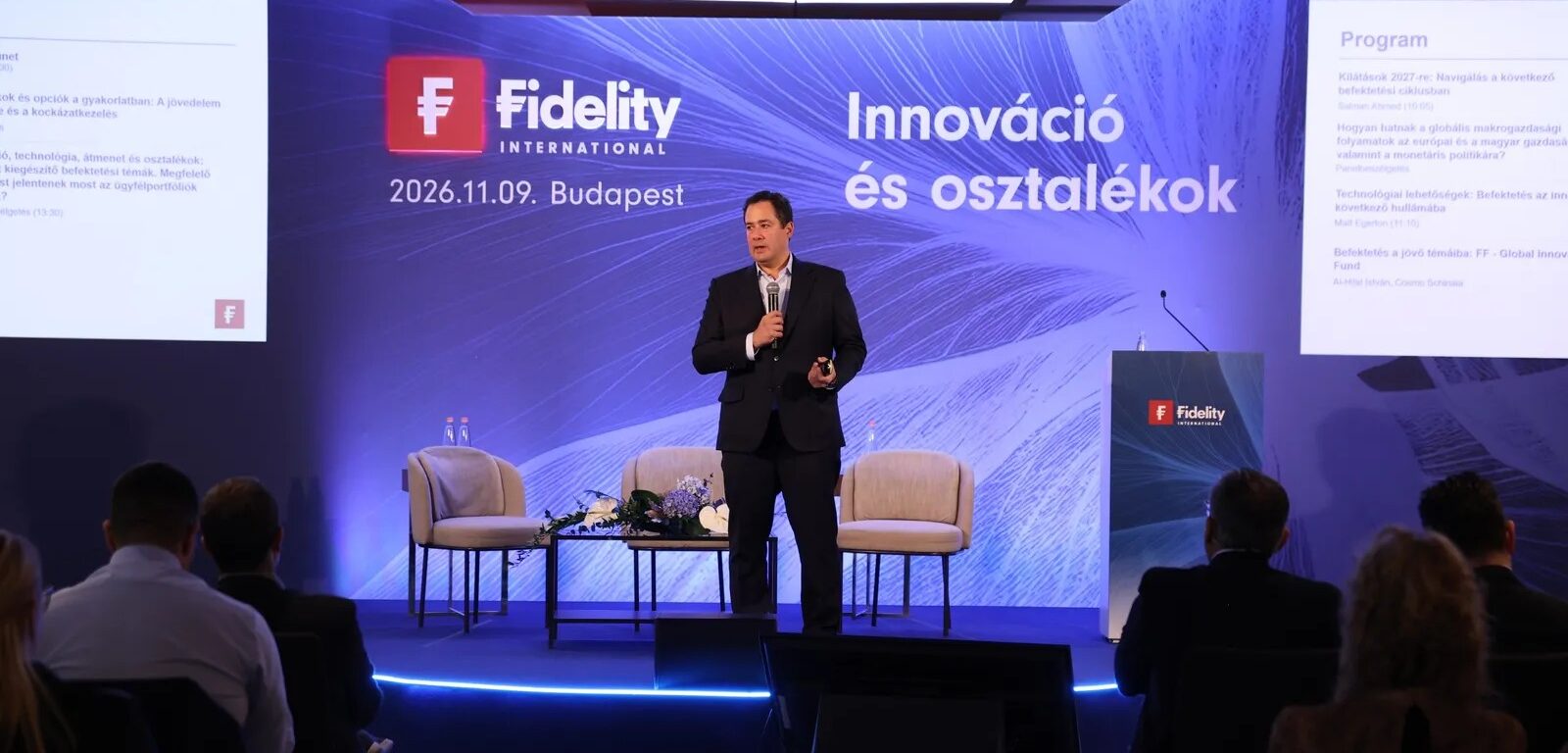
At its “Innovation and Dividends” event in Budapest, the investment manager identified four themes for investors: persistent inflation, the economics of AI, opportunities outside U.S. stock markets and the contribution of dividends to long-term returns.
Fidelity forecasts U.S. economic growth of around 2% in 2027, with eurozone growth of approximately 1.3%, excluding volatile Irish data. Inflation could remain above 2.5% in the United States and reach 2.7% in the eurozone.
“We believe it is important for investors to understand the long-term opportunities and risks of equity investing, which is why we also place particular emphasis on providing information in Hungary,” said István Al-Hilal, Fidelity’s head of Central and Eastern Europe.
“A stable global strategy built around dividend-paying companies involves different risks and return opportunities from an active strategy seeking growth opportunities through technological development and innovation. Whether someone is cautious or comfortable taking greater risks, everyone can find suitable investments in the equity market,” he added.
Salman Ahmed, Fidelity’s global head of macro and strategic asset allocation, expects persistent inflation and fiscal pressures to continue into next year.
He forecasts three or four Federal Reserve interest rate increases, provided AI investment remains strong. He also considers a European Central Bank increase likely in December, potentially followed by further tightening in 2027.
Fidelity assigns a 60% probability to trend growth in the U.S. economy next year, compared with 20% for a cyclical recession, 15% for stagflation and 5% for reflation. Its tactical asset allocation remains neutral on equities, corporate bonds, government bonds and cash.
Ahmed also discussed Hungary, saying economic conditions had improved noticeably since the election and describing the strengthening of Hungarian markets as one of Europe’s notable developments this year.
He identified the possible release of European Union funding, the fiscal balance and defense spending as important factors to monitor. Over the medium term, he said investors should watch Hungary’s progress toward joining the eurozone.
Corporate AI adoption is moving from experimentation toward routine operational use. However, portfolio manager Matt Egerton said that while benefits were already apparent in some applications, it remained uncertain whether the economywide gains would be large enough to justify the scale of investment.
Investors could therefore increasingly distinguish between companies able to turn AI spending into sustainable business results and those struggling to demonstrate returns.
Fidelity’s internal forecasts suggest that annual additions to AI data center capacity outside China, measured in gigawatts, could grow at an average annual rate of 62% between 2025 and 2028.
Egerton expects U.S. data center construction could peak in 2028, although investment may continue for years afterward. Developers generally build first at sites where permits, electricity and water are easier to secure, making each additional gigawatt more difficult to bring online.
As electricity becomes scarcer, Egerton sees opportunities among optical networking equipment manufacturers whose technology enables more data transmission with lower energy consumption.
Fidelity also highlighted potential regulatory obstacles following the U.S. midterm elections. According to the company, Texas, Ohio and Georgia, where Democrats won governorships, together account for nearly one-third of planned U.S. data center capacity.
Restrictions on permits, possible construction moratoriums and measures addressing water supplies, energy costs and investment incentives could slow development. Fidelity considers this an important risk to a U.S. growth outlook increasingly dependent on AI investment.
Valuation differences provide another reason to examine opportunities outside U.S. markets, according to portfolio manager Fred Sykes.
As of June 30, 2026, the MSCI USA index had a forward price-to-earnings ratio of 20.6, compared with 14.1 for the MSCI EAFE index, which covers developed markets in Europe, Australasia and the Far East.
Lower valuations do not automatically translate into higher returns. However, a company’s listing location does not necessarily reflect where it earns its revenue.
London-listed Compass Group, for example, generated 67% of its 2025 revenue in North America, illustrating how investors can gain exposure to U.S. economic activity through companies listed elsewhere.
Index data covering a 20-year period and calculated in local currencies showed that reinvested dividends accounted for approximately half of total returns in most of the markets examined.
Sykes said strong balance sheets, resilient business models and sustained cash generation underpin sustainable dividend payments.
At the Budapest event, Al-Hilal and Cosmo Schinaia, Fidelity’s head of Southern Europe and Latin America, also announced the availability of the Global Innovators Fund in Hungary from November.
Managed by Mark Schmehl, the global equity fund seeks companies in developed and emerging markets where new technologies, business models or improving performance create long-term growth opportunities that are not yet fully reflected in share prices.
The actively managed fund targets a portfolio of 100 to 200 stocks and aims to deliver long-term capital growth. Its Hungarian introduction broadly coincides with the strategy’s international rollout, following its previous availability only in North America.
“Central and Eastern Europe remains important to Fidelity. When developing new funds, we start with what investors in the region need,” Al-Hilal said.
Producing journalism that is worthy of the name is a costly business. For over 30 years, the publishers, editors and reporters of the Budapest Business Journal have striven to bring you business news that works, information that you can trust, that is factual, accurate and presented without fear or favor.Newspaper organizations across the globe have struggled to find a business model that allows them to continue to excel, without compromising their ability to perform. Most recently, some have experimented with the idea of involving their most important stakeholders, their readers.
We would like to offer that same opportunity to our readers. We would like to invite you to help us deliver the quality business journalism you require. Hit our Support the BBJ button and you can choose the how much and how often you send us your contributions.