



Banks are increasingly influenced by regulatory frameworks, which in turn exert market pressure on developers and investors. EU taxonomy is gaining traction among various stakeholders, which is a promising development. While it may not be as stringent or comprehensive in the real estate sector as some ESG-related certifications, it is important to recognize that it addresses a broad range of economic activities.
Both incentives and mandatory regulations are effective tools for steering the market in the right direction. However, they should prioritize impactful and meaningful measures, rather than getting lost in detail or focusing on aspects with minimal relevance to key ESG objectives.
From the market perspective, tenants already play a significant role in driving ESG expectations for developers and investors. Ideally, individuals should also contribute to this transformation through their choices and behaviors.
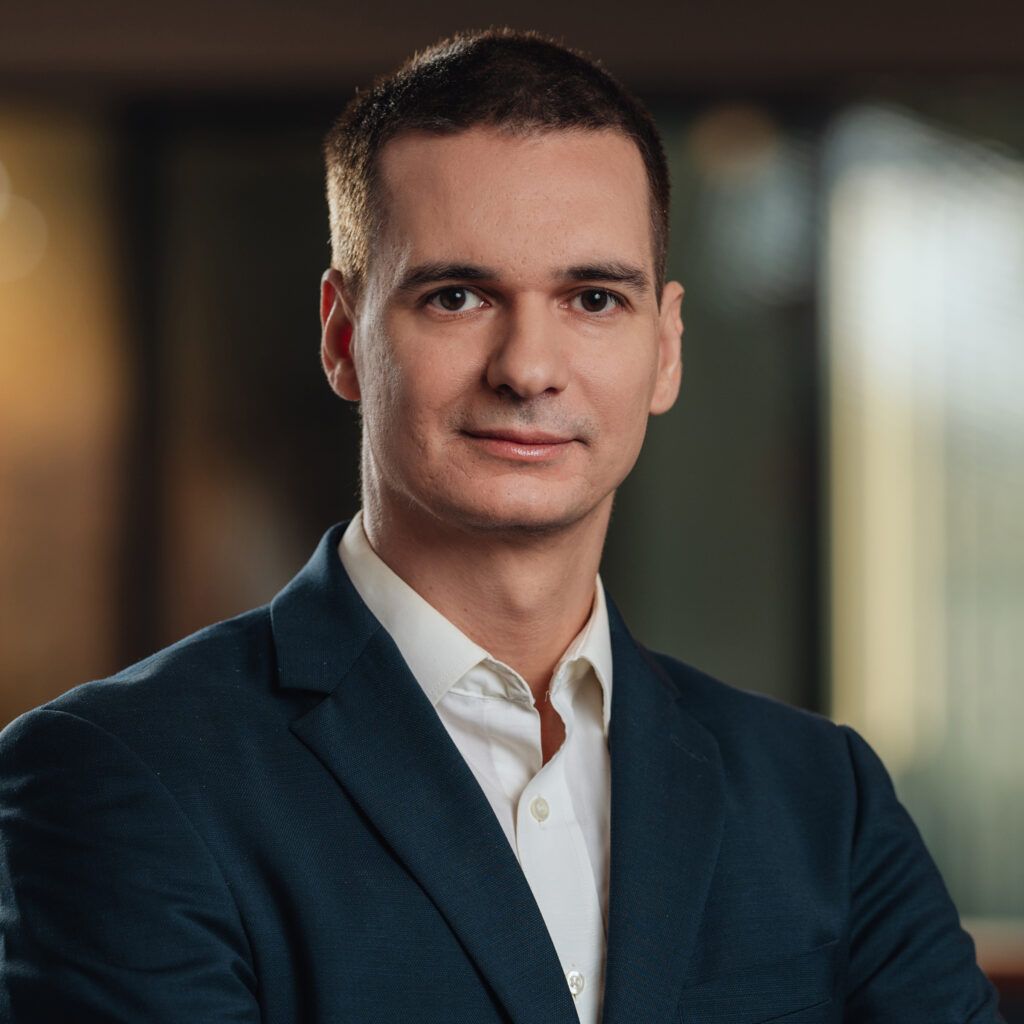
Norbert Szircsák, Director, Head of ESG Advisory Services, Colliers
The objectivity and independence of ESG assessments are a critical issue, particularly as sustainability performance becomes increasingly linked to financial value, regulatory compliance, and market competitiveness. In the Hungarian and broader Central European real estate market, this question is particularly relevant due to the relatively small pool of qualified ESG professionals, who often wear multiple hats as consultants, assessors, and certifiers.
It is true that potential conflicts of interest can arise when the same professional or company provides both advisory services and acts as an assessor or verifier. For example, a consultant may support a developer in preparing a building for certification and then be involved, directly or through affiliated teams, in the official assessment process. In such cases, the perception of independence may be compromised, even if formal procedures are followed.
However, reputable ESG frameworks, such as BREEAM, LEED, or the EU taxonomy, include built-in mechanisms to preserve objectivity. These often involve multi-stage verification, third-party auditing, and strict role separation requirements.

Zsombor Barta, Founding partner, Greenbors Consulting
Sustainability is a key consideration, especially for tenants with substantial international backing and large corporations, and so, naturally, the type of property in which they operate is also important. In most cases, these companies already have sustainability strategies and targets in place, which their Hungarian subsidiaries must also comply with. These requirements also include items to be fulfilled in relation to energy consumption and the resulting carbon footprint. Thus, the expectations are already directly reflected in the preliminary negotiations with each potential tenant.
HelloParks considers it a market advantage that we can meet these higher expectations, so we continually improve all our buildings and offer sustainable solutions to existing and new tenants year after year. The biggest innovation in 2025 is that our entire portfolio will be powered by green electricity with a guarantee of origin certification.

Anna Bencze, Head of sustainability, HelloParks
Although Lurdy Ház is not legally required to produce ESG reports, sustainability is embedded as a core strategic pillar in our operations. Market forces, particularly the increasingly conscious sustainability demands of our tenants and visitors, are complemented by regulatory trends that inspire us to voluntarily and proactively embrace ESG principles. This dual dynamic drives innovation, strengthens our competitive edge, and fosters long-term tenant loyalty.
We believe that ESG compliance requires a holistic sustainability mindset, integrating energy-efficient technical solutions, comprehensive waste management, expanding green spaces, barrier-free accessibility, and sustainable transportation connections. In daily operations, we prioritize optimizing energy consumption, delivering high-quality, eco-conscious tenant services, and addressing both social responsibility and economic sustainability. Our project and facility management teams continuously track and improve energy efficiency, maintenance processes, and financial transparency. This ensures that sustainability goals translate into tangible, measurable business value.

Csaba Szilágyi, Managing director, Lurdy-Ház Shopping and Office Center Kft.
In the Hungarian real estate and construction market, both regulatory and market pressures are compelling developers and investors to prioritize ESG-conscious business practices. In line with EU directives, the consistent and continuous raising of energy requirements has now made solutions that were considered special five to eight years ago standard practice, such as the use of GSHP [ground source heat pump] systems.
Regulatory frameworks, particularly the EU taxonomy, play a decisive role in shaping investment and development strategies. The gradual integration of ESG aspects into governmental urban development goals and permitting procedures are further reinforcing these trends.
However, I see market forces, especially financing, as a much more important factor. In economic terms, this essentially means internalizing environmental factors, which is a decades-old solution to environmental problems. Additionally, rising energy costs have reinforced the economic appeal of energy-efficient, resource-conscious design, benefitting developers, investors, and occupiers alike.

Nándor Kovács, Strategy director, Óbuda Group
For the WELL accreditation system, the most impactful improvements would likely focus on making it more accessible to diverse project types while maintaining its evidence-based approach to promoting human health through design.
WELL currently skews toward high-end commercial projects. Developing streamlined certification tracks for smaller buildings, residential projects, and retrofit applications would broaden its impact. This includes creating cost-effective monitoring solutions and simplified documentation processes while maintaining rigor.
The good news is that these developments have already begun; WELL Residence and WELL Co-working rating were launched in 2024, and new updates are coming soon. Moving beyond point-in-time assessments to continuous monitoring through IoT sensors and building management systems would provide ongoing feedback loops. This could enable dynamic certification levels that respond to actual performance rather than just design intent.
The WELL Building Standard has pioneered the integration of human health and well-being into the built environment, yet its current framework only begins to address the needs of neurodivergent individuals. By expanding WELL’s evidence-based framework to address neurodivergent needs explicitly, we can create environments that not only accommodate but actively support the well-being and productivity of all users.

Regina Kurucz, Managing director, Rewell Consulting
Market demands driven by occupiers, investors, and regulatory frameworks such as the EU taxonomy, SFDR [Sustainable Finance Disclosure Regulation], and the Corporate Sustainability Reporting Directive [CSRD] have become particularly influential. Investors and tenants are increasingly prioritizing sustainability credentials and transparency in performance. These measures effectively encourage developers not only to comply but to proactively integrate ESG criteria into their core business strategy, turning sustainability into a competitive advantage rather than simply a compliance requirement.
We are clearly approaching a convergence point. ESG has evolved from a “nice-to-have” to a strategic necessity. While some companies still focus on meeting only the basic requirements, others, guided by their values and target audiences, go far beyond compliance to create a meaningful, lasting impact. At Skanska, embedding sustainability is fundamental to creating long-term value, environmentally, socially, and financially. Today, responsible business practice and financial success increasingly go hand in hand.

Dávid Hoffer, Head of property management, Skanska Commercial Property Development Europe
Although ESG has only recently become a standard approach in the real estate sector, it has long been a core element of our development strategy at Wing. Our design philosophy emphasizes the flexible and efficient use of spaces, as well as the conscious selection of sustainable materials, such as recycled or low-emission options.
In property and facility management, digital tools such as advanced BMS [building management systems] enable optimized energy consumption and real-time performance monitoring, while eco-friendly operations and a zero-waste policy further support sustainability. Amenities such as bicycle storage, changing rooms, electric vehicle chargers, parcel lockers, and water fountains promote healthy, sustainable lifestyles.
Finally, location remains a significant factor. Proximity to public transport and urban mobility hubs is key to reducing the carbon footprint associated with commuting. At Wing, these principles are embodied in developments such as the mixed-use Liberty and our latest boutique office project, Liget Center Vitrum. Both combine sustainable design, smart building systems, prime locations, and a wide range of amenities.

Ernő Takács, Deputy CEO of Hotels and Commercial Properties, Wing
Regulatory and market forces remain key, but the focus has shifted beyond ESG compliance to resilience and operational excellence. Regulatory frameworks like the EU taxonomy and SFDR [Sustainable Finance Disclosure Regulation] still matter, but a major driver now is financial institutions recalibrating their risk exposure.
The European Central Bank, for example, has explicitly pushed lenders to reduce their commercial real estate portfolios, reflecting concerns about asset vulnerability in a changing market. This is prompting a revaluation of what constitutes a high-quality, future-ready asset.
We are beyond ESG as a standalone pressure. The convergence is real, but the endgame is resilience: financial, environmental, and operational. Business leaders increasingly see ESG metrics as tools to build and demonstrate long-term viability. As regulators and investors focus on risk-adjusted performance, the pressures once seen as “ESG” are now simply best business practice.

Hubert Abt, CEO and founder, Workcloud24
This article was first published in the Budapest Business Journal print issue of September 5, 2025.


