



It remains a question when the investment market will become more liquid in Hungary after a subdued period due to concerns over the cost of finance, longer-term demand in some sectors, the uncertain economic and geopolitical environment and what you might call the “perception differential” between buyers and sellers, says the Budapest Business Journal’s real estate editor Gary J. Morrell.
At the same time, there are worries about the supply of investment-grade assets, although pipelines are relatively high for the industrial and hotel segments. The Christmas wrapping around all of this is that successful development projects must meet increasingly all-embracing ESG requirements from market actors, EU Taxonomy and other international ESG-related regulations.
The investment volume for Hungary fell to EUR 240 million for the year to November, according to CBRE. Eston International comments that it is common to see 100 basis point differentials between buyers and sellers in Hungary. A lack of transactions has resulted in no reliable comparative investment data.
In a rare Budapest office transaction approaching the turn of the year, Atenor successfully sold the 15,500 sqm Breeam “Excellent” rated RoseVille office complex in Budapest to BXR, a London-based fund. The developer, which operates across Europe, is now offering the 16,600 sqm first phase of its BakerStreet development (Hengermalom út 18-20, District XVI, fully let to E.ON Hungária as its HQ) to investors, having sold its 24,000 sqm Lakeside office complex in Warsaw for a reported EUR 67.5 million.
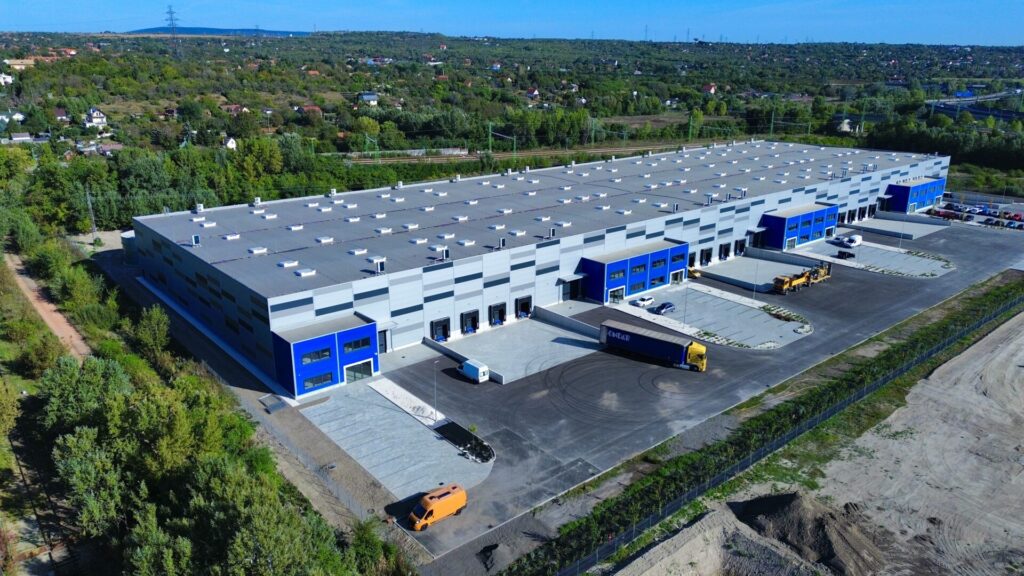
Although the industrial sector is generally regarded as an attractive option for investors, the availability of investment-grade assets is limited as developers tend to hold onto them. That said, industrial parks by independent developers are seen as a possible transaction target. The Faedra22 logistics center was sold to a Swiss-German investor. The 16,600 sqm development concept was tailored around high building specifications and a strong ESG focus, including heat pumps, solar panels and insulation, all contributing to a Breeam “Very Good” and “A+” energy rating, according to Máté Szoboszlay, business development and investment director at Faedra Group.
The Faedra22 sale was facilitated by the Colliers Capital Market department and is “an excellent example of the ongoing international investor interest in modern, ESG-compliant properties in good locations with full occupancy,” the consultancy says. “In 2024, the Faedra22 logistics park was the first and, to date, the only major commercial property sale to a foreign investor in Hungary,” comments Colliers.
The two new domestic ZF factories developed by Panattoni in Kecskemét and Debrecen, the latter acquired by OTP RE Investment Fund, will make a major contribution to strengthening one of the most significant pillars of the Hungarian economy, the automotive industry. The developer’s attention to detail ranges from the use of local contractors to the fact that the completed factories will have zero local carbon emissions during the production process and will be heated by electric heat pumps, says Zsolt Kákosy, head of property management at Icon Real Estate Management.
Retail is once again regarded as an attractive investment option, with retail parks seeing strong sales growth across the country. The leading Budapest shopping centers are not expected to transact, however, as owners are holding onto their products with a view to renovating earlier-generation assets. One recent transaction outside the capital is the purchase of two Interspar units representing 17,700 sqm by Unione Group.
“After the successful acquisition of the Immofinanz and S-Immo property groups in 2022 and 2023, CPI Hungary was in the phase of aligning its portfolio by selling mainly non-core assets,” explains Attila Madler, country chief asset management officer for CPI Hungary.
“As part of this strategy, we in Hungary managed to sell two Interspars to a local investor. We could see significant interest in this single-tenant, stand-alone asset. On the other hand, we perceive the office investment market as almost frozen, mainly since banks do not tend to finance office transactions. We see that there are usually more equity partners behind the deals and that collecting the equity has also become very difficult,” Madler comments.
One significant deal in March 2024 saw Vörösmarty 1, a trophy asset in Budapest’s premium shopping district, change hands. According to Máté Szoboszlay, head of direct capital deployment at Prologis, the combination of retail and parking elements would have enhanced its attractiveness for a buyer like Indotek, known for value-add strategies.
The acquisition signifies renewed confidence in the Hungarian retail sector post-pandemic and illustrates the increasing demand for mixed-use properties with diversified income streams. It also reflects Indotek’s strategy of strengthening its position in core locations, Szoboszlay adds.
Determining the hotel transaction of the year is challenging, as several significant deals were closed on the market, such as the acquisition of a 70% stake in the LUA Resort (78 rooms), the sale of the Lánchíd Hotel (48 rooms), and the transaction of the Körszálló Budapest (the cylindrical tower building in Buda’s District II perhaps better known as the Hotel Budapest), purchased by Market Asset Management Zrt. from Danubius Hotels. However, if the sale of the Budapest Marriott Hotel property (364 rooms) is finalized, it will undoubtedly claim the title, says Colliers.
One of the most active investors in the market is BDPST Group, which in October began renovating the iconic Hotel Gellért that it acquired from Indotek in December 2022. It is now in talks to buy the Marriott Budapest building. The deal would make BDPST one of the most significant professional investors in Budapest, with the agreement due to be closed soon, comments Newmark VLK Hungary.
“2024 has proved to be a very active year for our office portfolio. We completed the mixed-use development of Liberty with the delivery of another 20,000 sqm of office space,” says Noah Steinberg, chairman and CEO of Wing. “The complex offers an ESG-compliant, high-quality and sustainable environment. It is designed to align with Breeam ‘Excellent’ certification, [is] energy efficient, runs on 100% green electricity and has a near-zero energy demand,” he says.
“Our other major project during the year was the Liget Center located next to the City Park (Városliget). The HQ building was handed over at the end of summer to RTL Hungary, one of the country’s largest commercial TV channels,” Steinberg notes.
“Wing successfully preserved the original modernist architectural features while incorporating the latest technology and the special functional needs of RTL’s broadcasting and operational activities,” he says.
“The Auditorium, a facility with a history spanning more than 70 years, has been transformed into a near-zero energy building with an ‘A’ energy efficiency and an ‘A+’ CO2 emission efficiency rating. With these enhancements, the Auditorium has become one of Budapest’s most sustainable heritage buildings,” Steinberg adds.
With the involvement of Colliers, SAP extended its office lease agreement for 18,000 sqm in Graphisoft Park in October. Unless something remarkable happens in December, the largest office market transaction of 2024 also took place with Colliers tenant representation: Ericsson Hungary extended its lease agreement in November 2024 for 20,000 sqm in an office building developed by Wing and owned by GTC.
One challenge during the process was that, initially, Ericsson planned to return 50% of its office space, but the project was successfully closed with the retention of the entire building, says Colliers.
Newmark VLK Hungary sees the 20,000 sqm Morgan Stanley lease extension, the 11,800 sqm Nokia lease extension and the 6,000 sqm Lufthansa Systems Hungary extension as the most significant office leasings of the year.
“This year, we launched a highly complex headquarters project for one of the biggest commercial banks in Hungary in a partnership with the Workplace and PDS (Project & Design) teams,” says Kinga Major, head of marketing at iO Partners Hungary.
“The project, which involves the relocation of the two current locations and the complete interior and visual renovation of the central office building, will also involve a significant organizational and working environment transformation,” she explains.
“Workplace Strategy Consultancy played an important role in the preparation of the project, working with iO Partners’ design and project management team to develop the concept and layout of the new office. The design of the 14,000 sqm office space took into account the bank’s global working environment and image guidelines, local office use requirements, which vary significantly from area to area, and the building and environmental conditions. The plans and the resulting budget have been approved by the bank’s international management, and the project is now in the pre-construction phase,” Major adds.
The industrial market is booming, albeit with a shift towards built-to-suit projects. Both leading regional industrial park developers and operators and Hungarian players are active in a market that has grown on the back of increasing logistics and industrial space demand, in part to meet the significant FDI in the electric vehicle and related industries.
Wing Industrial has concluded an agreement with a leading regional parcel logistics operator at East Gate Pro Business Park. The 9,000 sqm building, a BTS development with a prelease agreement, will be completed by the beginning of next year. As with the three completed halls, B2 is expected to obtain Breeam “Very Good” sustainability certification.
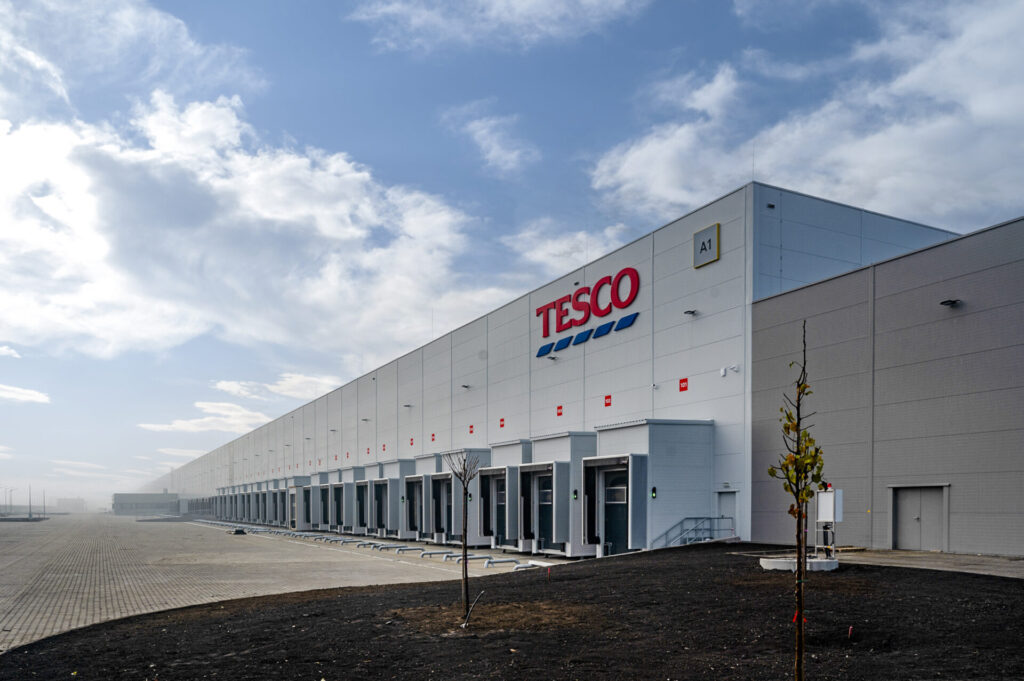
Newmark VLK Hungary notes the 100,000 sqm Tesco’s logistics center, the HelloParks Páty PT2 32,000 sqm letting to Gebrüder Weis and the PT3 42,000 sqm prelease to Transdanubia as significant deals. In the first of these, CTP has handed over a BTS logistics facility for Tesco in Szigetszentmiklós, about 20 km south of central Budapest by road. The warehouse will serve Tesco stores across the country. The almost one-kilometer-long complex has achieved an “A” energy rating and is awaiting Breeam accreditation.
Colliers recently closed two noteworthy retail deals. One involved the lease of 700 sqm of retail space, formerly occupied by Budapest Bank at Nyugati tér, to KIK for its High Street flagship store. KIK is set to open the new location in mid-December. The second deal was the lease of a 340 sqm unit, formerly occupied by Russia’s Sberbank, to Simon’s Burger for its flagship store. The exceptionally successful local F&B concept has opened 14 restaurants in just two years and has four additional locations under contract.
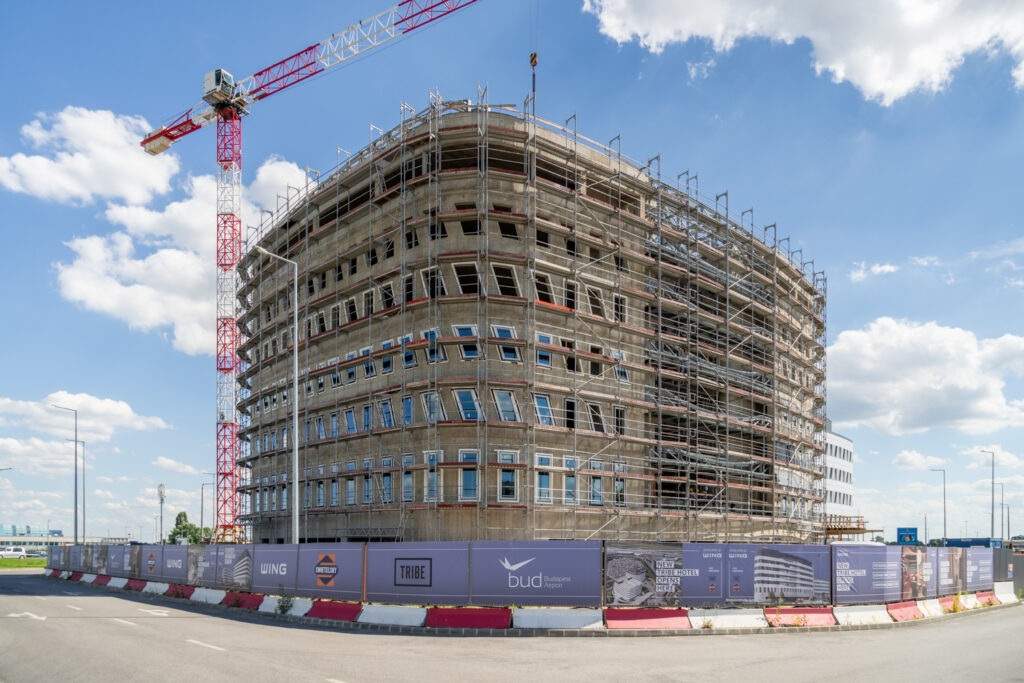
Wing has achieved structural completion of the 167-room Tribe Budapest Airport Hotel. The four-star hotel will be completed in the second half of 2025. It stands alongside the three-star Ibis Styles Hotel (which opened in 2018 and was also developed by Wing) and offers a direct connection to the airport.
Kimpton BEM Budapest Hotel is a five-star boutique hospitality redevelopment that opened this year, where a hotel and office building go hand in hand. Physically and functionally integrated services (gastronomy, meeting rooms, and private rooms) are available to hotel guests and office tenants alike. It is another excellent example of redevelopment, says Icon’s Kákosy.
The first phase of Le Jardin, a residential park developed by Living, a unit of Wing, has received its final use permit, and the handover of 165 apartments with “A+” energy rating has started. Living says it prioritized environmentally friendly and energy-efficient solutions, making Le Jardin one of the first residential developments in Hungary to obtain a Breeam “Very Good” certification in the design phase. Sales are underway, and only a few apartments are still available. It caps a successful year for Living, which started 2024 by reaching a significant milestone: the completion of its 1,000th apartment.
Wing has also completed the final phase of Living’s Kassák Terrace project in Budapest’s District XII. The residential park has 246 apartments with “A+” energy ratings and cutting-edge energy solutions for cost-effectiveness.
Madler, of CPI, says this year, the developer targeted re-accrediting 14 office buildings at Breeam “Very Good” level under the latest sixth version of the scheme and acquiring new accreditation for its three shopping centers.
“We saw this as very challenging as the new v6 regime requires much more documentation and data to be collected. We see that banks usually require not only a green certification but also look into the sustainable, energy-saving performance of the assets and the owner’s ESG/sustainability strategy,” says Madler.
Consultancy Colliers has also been pursuing certification success: “Among our notable ESG accreditations, we can highlight the Leed ‘Gold’ certification of the BEM Center, with an energy-efficient building operated by heat pumps only, while the whole roof is equipped with PV panels, furthermore excellent public transportation, and bicycle connections,” it comments.
ESG criteria have become increasingly pivotal for both tenants and investors, emphasizing energy efficiency, utility cost savings, and sustainability in the workplace, says Skanska.
“These values are integral to our development philosophy. We are incorporating these principles in all our projects. For instance, at H2Offices, features such as heat pumps underscore the advantages of energy independence and reduce reliance on central heating systems,” notes Amarilla Cseke, leasing and asset director at Skanska’s commercial development business unit in CEE.
Hungary’s real estate market in 2024 has been shaped by dynamic investment activity, transformative leasing deals, and an unmistakable shift toward sustainability, says Zsombor Barta, a former president of and now ambassador to the Hungarian Green Business Council.
“However, beneath the momentum lie critical challenges: tightening regulatory requirements, the need for significant retrofitting of older assets, and a persistent gap between sustainability goals and market realities. Each sector – office, industrial, retail, hotel, and residential – offers insights into how the market is evolving and the hurdles it must overcome to thrive in 2025 and beyond,” Barta concludes.
This article was first published in the Budapest Business Journal print issue of December 13, 2024.


