Listen to the audio version of this article (generated by AI).
Listen to the audio version of this article (generated by AI).

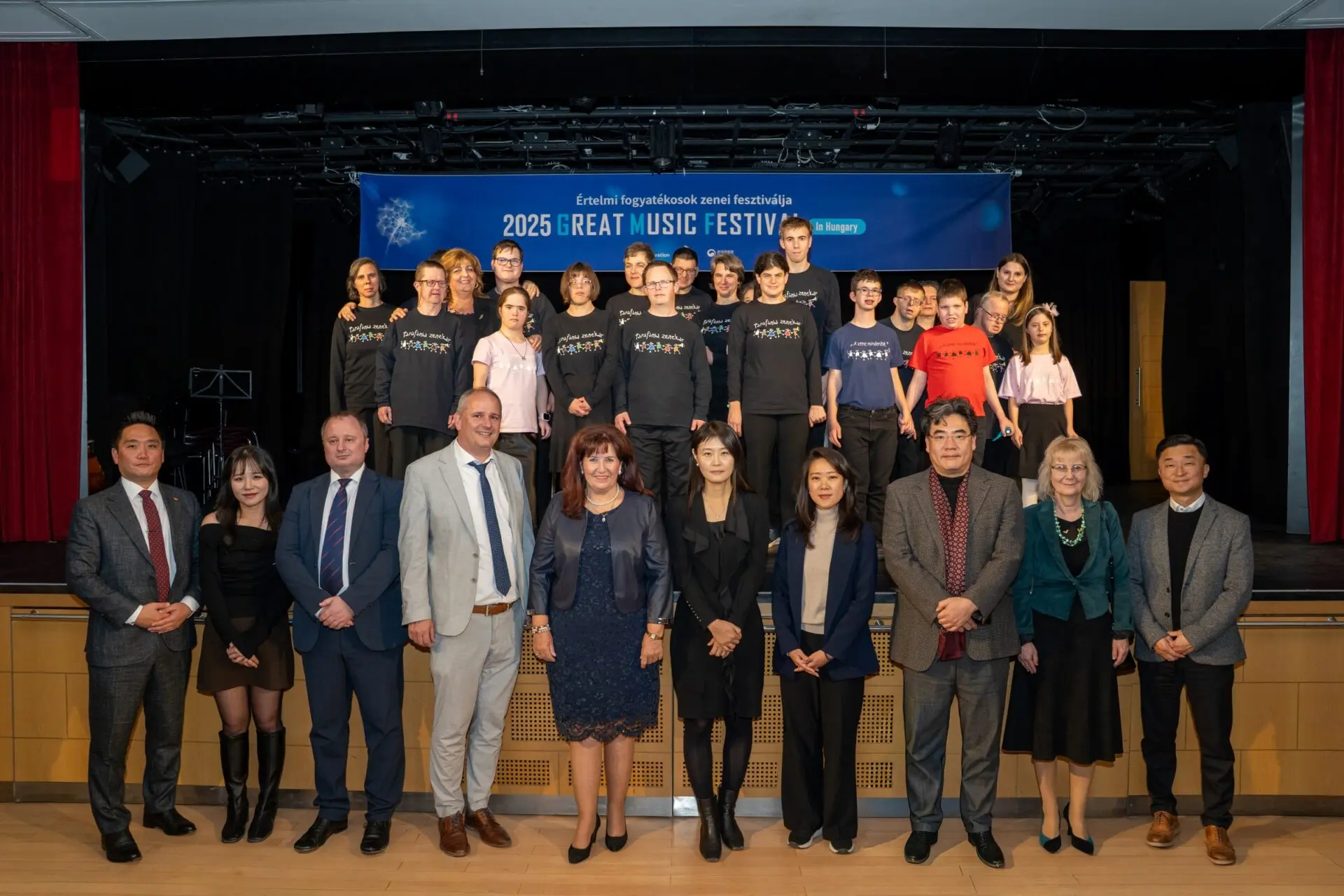
Held on November 8 at the Aranytíz Cultural Center with the support of SK Innovation, the parent company of SK On Hungary, the festival has grown into one of the world’s most significant events celebrating diversity and unity through music.
Since its founding eight years ago, 238 musical formations and more than 2,500 musicians have performed at the festivals. Many participants have continued their musical studies, become professional artists, and collaborated with renowned orchestras.
The Great Music Festival gained international recognition in 2023 when the first event outside South Korea was held in Atlanta, United States. The following year, Hungary hosted the festival’s first European edition, and this year the Hungarian audience once again had the opportunity to experience the inspiring celebration. The 2025 GMF Hungary event honored cultural diversity, cooperation, and the universal power of music.
A highlight of the program was the Parapille Band, founded by children with different developmental paths and supported by SK Innovation since 2023. The group was created for the 2024 Budapest festival and returned to the stage this year. The Parafónia Orchestra, formed by young musicians with different developmental paths under the Association “Music Belongs to Everyone,” also performed. The guest of honor was the Korean Vivace Ensemble, a violin and viola duo and winner of the fifth GMF, who enriched the evening with an inspiring repertoire.
The mission of GMF is to reshape how society views people with different developmental trajectories by showcasing their dedication to personal growth through music. “We do not see them as people in need of care, but as talented, active members of society,” emphasized Réka Fabényi, musical director of the Parafónia Orchestra.
By organizing the GMF internationally, the founders aim to offer artists with different developmental paths opportunities to perform worldwide and to build bridges among musicians in similar life situations across different countries. The event’s organizers hope it will become a lasting tradition in Hungary, fostering cultural dialogue and promoting equal opportunities year after year.
Producing journalism that is worthy of the name is a costly business. For over 30 years, the publishers, editors and reporters of the Budapest Business Journal have striven to bring you business news that works, information that you can trust, that is factual, accurate and presented without fear or favor.Newspaper organizations across the globe have struggled to find a business model that allows them to continue to excel, without compromising their ability to perform. Most recently, some have experimented with the idea of involving their most important stakeholders, their readers.
We would like to offer that same opportunity to our readers. We would like to invite you to help us deliver the quality business journalism you require. Hit our Support the BBJ button and you can choose the how much and how often you send us your contributions.