


Six years and nine months. That’s currently the longest a patient would need to wait for their turn in Hungarian public healthcare in a hospital. That specific case concerns knee prosthesis surgery, which is usually among the top three operations with the longest waiting lists in the country. And while the timeframe mentioned above is absurdly lengthy, the phenomenon itself is a daily reality.
Currently, more than 32,000 patients have been waiting for more than 60 days to get surgery, with retina-related and hip replacement operations topping the charts, where the average wait time is 15 and eight months, respectively.
Little wonder, then, that patients are increasingly seeking the faster track offered by private healthcare. According to business news portal Portfolio’s recent analysis of the top 30 private healthcare providers’ 2024 financial reports, the private health market not only maintained momentum but grew significantly last year, with average revenue increases of around 18%.
This might sound surprising, given that the Hungarian economy has been sluggish over the past three years, not to mention the EU-record inflation that has carved a large chunk out of households’ standard of living.
Private healthcare’s steady expansion, therefore, rather reflects a deeper trend. Hungarian patients apparently prioritize gaining access to faster (and perhaps better) treatment, even if it means cutting other spending, and are prepared to cover costs out of pocket.
For many, private providers represent the only viable option for prompt and high-quality treatment. However, it’s not just patient demand driving growth; a combination of systemic pressures, market dynamics, and shifts in human capital are all shaping a new healthcare landscape.
While private clinics frequently highlight their expanding service portfolios and technological advancements, a significant part of their recent success stems from the structural failures of the public system. Doctors, now that the informal system of unaccounted gratuities (“hálapénz”) has been made illegal, and with limited performance-based incentives in public roles, are increasingly channeling their efforts into the private sector, where remuneration is more directly tied to workload.
The market’s financials showcase a clear trend. The total revenue of top players approached HUF 190 billion in 2024, roughly three times the amount five years ago. Medicover looks likely to have reclaimed the top spot, with estimated revenues surpassing HUF 27 bln, followed closely by TritonLife and the steadily ascending Budai Egészségközpont. (The picture is incomplete for now, as not all players have disclosed their 2024 financial records yet.)
While income growth is widespread (with some players experiencing 30% year-on-year increases), profitability tells a more complex story. Rising labor costs, particularly for physicians, are eating into margins. Even without state-level wage hikes in 2024, many private providers had to raise visit fees, with prices often exceeding EUR 100. Another key development is the emergence of a more competitive mid-tier, where several institutions with annual revenues of HUF 2 bln–3 bln have created a highly competitive environment.
And while the entire sector struggles with HR issues, which further drive up prices, the public-private divide in healthcare access seems likely to grow rather than shrink.

BBJ: How do you explain that the private healthcare segment in Hungary experienced dynamic revenue growth last year despite a challenging macroeconomic backdrop? What did you do to make it happen?
Dennis Diokno: We didn’t implement any major changes. We simply stayed focused on delivering exceptional care and service. The revenue growth in our sector reflects broader trends, particularly the increasing number of people turning to private providers due to ongoing challenges in the public healthcare system. At FirstMed, we constantly review underperforming specialties and adjust our marketing investments accordingly. Our patient mix, serving both Hungarian and international patients, provides us with stability and also presents a continued opportunity to expand our Hungarian market presence.
Dr. Róbert Lancz: The growth of private healthcare was not a coincidence; it reflects a deep and accelerating shift in public behavior and expectations. Today, approximately two-thirds of adult Hungarians use private healthcare, either as a supplement to or a replacement for public services. This is not simply a reaction to shortcomings in the public system, although long waiting times and capacity issues do play a role, but more fundamentally, it’s about what modern patients demand: predictability, fast access, personalized care, and a high-quality customer experience. These are the attributes that characterize private healthcare globally. At Doktor24, we’ve embraced this trend. We continue to invest in service development, patient experience, and medical quality, learning from top Western providers. We’re also seeing strong uptake from employers, who increasingly realize that quality healthcare is essential to workforce well-being and retention. More companies are subscribing to corporate healthcare packages and insurance products, which help expand access and support long-term growth.
Dr. Kornél Papik: The shortcomings of the public healthcare system are driving an increasing number of patients toward the private healthcare sector. Competition is strong, yet Dr. Rose Private Hospital continues to provide outstanding medical care, maintaining its leading position among private providers, a status confirmed by 18 years of consistent excellence. Alongside a steadily growing number of orthopedic, surgical, and plastic procedures, we treat patients across more than 40 medical specialties. Continuous development is a key part of our strategy: a new 1,500 sqm inpatient department will soon open, featuring two state-of-the-art operating rooms and 23 premium patient rooms. But we are not only building walls; we are also introducing a new operating model, expanding medical expertise, and raising the bar for patient experience even further.

BBJ: Are you concerned that current resource scarcity-fueled price levels will slow growth? How can you simultaneously handle the constant wage pressure from healthcare professionals?
DD: Human resource scarcity is arguably the greatest challenge facing both public and private healthcare providers. This is not just a problem in Hungary but across Central and Southern Europe. Many healthcare professionals relocate to Northern Europe, where salaries are often two to three times higher. We’re seeing the same trend in Italy, where FirstMed operates clinics in Rome and, soon, in Milan. In Rome, some doctors leave for Northern Italy or other parts of Europe in search of better pay. While increasing wages is the most immediate way to address this, we’ve also seen that some doctors are willing to forgo higher salaries abroad to stay close to their families and raise their children within their own culture and community.
RL: Workforce scarcity is one of the most pressing issues in the industry, and not just in Hungary. Across Europe, skilled professionals are in short supply, and wage pressure is mounting. At Doktor24, we’ve taken a strategic approach. Rather than relying solely on freelancers, we are increasingly hiring physicians on a full-time basis. This enables us to provide consistent care, strengthen our internal medical culture, and gain better negotiating power as a large employer. Importantly, we are now seeing Hungarian doctors return from abroad to work with us, not only because of competitive salaries, but because we provide Western-standard infrastructure, working conditions, and quality assurance. As for pricing, yes, services are more expensive than ever, and out-of-pocket spending is high. But demand remains strong because patients understand the value of quality, safety, and speed. The expansion of corporate and insured models will also help mitigate personal financial burdens over time.
KP: Competition for doctors and healthcare professionals is intensifying, and it has become increasingly difficult to recruit qualified staff at wage levels that still allow for even the modest profit expectations typical of the sector. Our employee turnover remains low, but due to our ongoing expansion, we are looking to welcome new colleagues across nearly all departments. We are committed to creating not only an attractive work environment for physicians and healthcare professionals but also ideal conditions in every aspect of their work.

BBJ: What does it take now to prevail in an environment shaped by a few heavyweights and a growing number of emerging competitors?
DD: FirstMed is in a somewhat unique position. Our international patient base allows us to defend our market share more effectively than many local providers. At the same time, we see strong growth potential among Hungarian patients, especially those who have experienced healthcare abroad and value the high level of service we provide. In this competitive environment, success requires a relentless focus on quality, clear communication, and trust. Patients increasingly expect not only clinical excellence but also a smoother, more transparent healthcare experience from start to finish.
KP: We are witnessing a growing number of people opting for private healthcare, and our goal is to deliver excellent services with outstanding value for money, complemented by a truly unique patient experience. While we are also compelled to raise our prices, we cannot pass the full burden of rising costs onto our patients. Therefore, we aim to maintain exceptional quality in the long term, operating sustainably with modest profit margins. Competition in the private healthcare sector is constant. Providers compete primarily on the quality of care, speed of service, and patient safety, factors we consider essential. Thanks to our stable ownership structure, we are well-positioned to meet these challenges through ongoing developments, cutting-edge technology, new services, and continuous quality improvement.
RL: We clearly see market consolidation underway. The largest players, including ourselves, are gaining scale, attracting top talent, acquiring cutting-edge technology, and driving standards higher. Meanwhile, mid-sized providers are facing rising costs, recruitment challenges, and pressure to digitize, which often requires significant capital investment. To thrive in this new environment, size and scale do matter, but so do vision, investment discipline, and patient trust. We aim to be not only a market leader but also a standard-setter, combining clinical excellence with innovative service models. We expect consolidation to accelerate over the next few years, and Doktor24 will be at the forefront of this transformation. Our mission is to build a future-ready healthcare platform that offers quality, accessibility, and sustainability for the next generation of Hungarian patients.
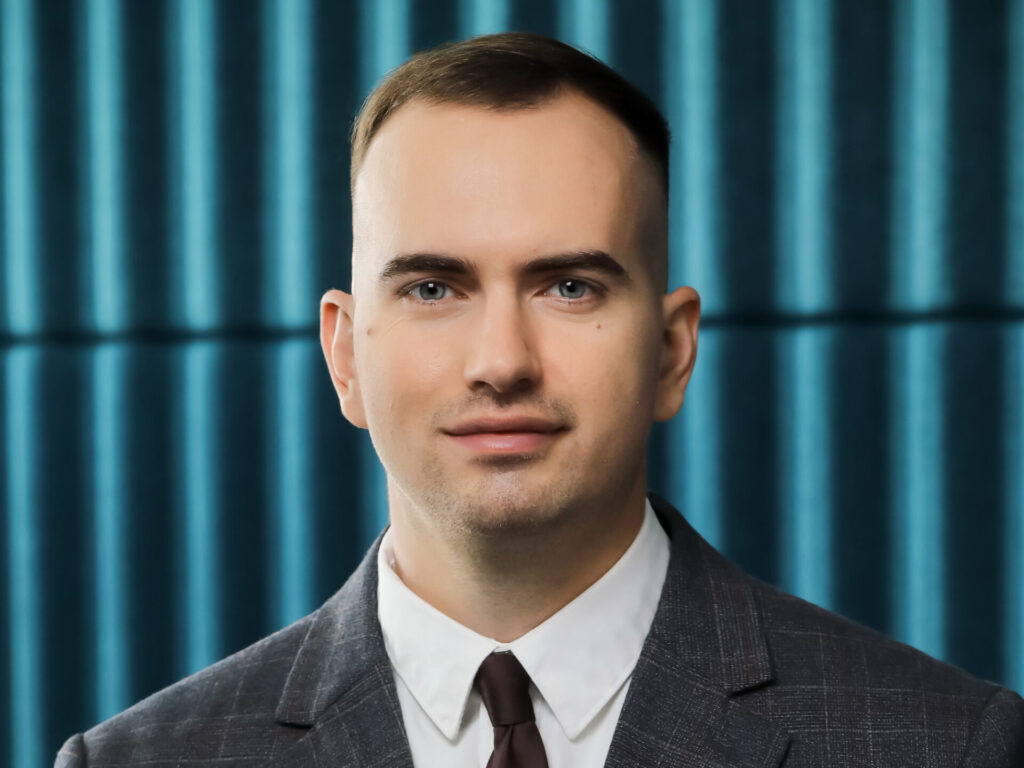
Healthcare is no exception to the transformative impact that AI has on various sectors of the economy. Konrád Keresztes, associate director of MSD Pharma Hungary Kft., shared some insights on this crucial trend.
We observe a strong commitment to embracing AI in healthcare in certain countries, such as the United Kingdom. Its National Health Service received a GBP 21 million (HUF 9.7 bln) funding from the Department of Health and Social Care in June 2023 to develop AI diagnostics, including an algorithm for lung cancer detection (which is one of MSD’s investments, through the global qure.ai’s software solution). Calculations showcase a one-year ROI on this investment due to expected delivery improvements and cost savings. Additionally, a previous decision was made to provide GBP 250 mln (HUF 115 bln) in 2019 to fund the NHS AI Lab and its initial program of work. At a more localized level, Nottinghamshire’s NHS is already planning to implement a robust digital transformation plan in 2026, with a specific focus on AI.
When it comes to Hungary, we also have good news to share: since earlier this year, the government has appointed a Ministerial Commissioner for AI, who has established the country’s first AI strategy, in which healthcare assumes a significant role. Although there is less funding compared to the United Kingdom, we have solutions currently being tested with promising results, such as the colorectal and mammography screening algorithms at Semmelweis University. Our government-run healthcare cloud, EESzT, will be opened in 2026 for AI application development, which could potentially put Hungary at the forefront of international AI research and development.
We can also discuss the successful use of AI in the pharma industry. Just three months ago, Insilico Medicine developed the first drug for idiopathic pulmonary fibrosis, where both the target and compound were discovered using generative AI. This represents a significant breakthrough in science and a fascinating development to observe. Such successes are not only happening abroad, but also in Hungary: if we look locally, there are already a handful of Hungarian companies developing AI solutions for the global healthcare scene, such as Turbine.ai, which focuses on accelerating drug development and repurposing.
Or take Genomate Health (a spin-out of Oncompass Medicine), which revolutionizes personalized medicine by comparing all available therapies for a given genetic set and selects those that would provide the best health outcome for a given patient. We are very proud to say that both qure.ai and Turbine.ai belong to our Global Health Innovation Fund’s investment portfolio, where we provide funds to create the health solutions of the future. AI is changing healthcare as we know it, and we are delighted that MSD is contributing to this development.
• Dennis A. Diokno, CEO and founding partner, FirstMed-FMC Kft.
• Dr. Róbert Lancz, chairman of the board, Doktor24 Zrt.
• Dr. Kornél Papik, managing director of Dr. Rose Private Hospital
• Konrád Keresztes, associate director of health policy and communications, MSD Pharma Hungary Kft.
This article was first published in the Budapest Business Journal print issue of July 11, 2025.


