



Malignant changes can be diagnosed early with proper education on self-examinations and regular, accessible screenings, significantly increasing the chances of recovery.
However, specialists from the Hungarian Society of Senology (the study of diseases that affect the breast) and the Internal Medicine and Oncology Clinic of Semmelweis University also emphasized that, in 10-15% of cases, there is a high risk of breast cancer recurrence within two-to-five years, making it essential for patients to access all available treatment options.
October is dedicated to the fight against breast cancer every year, aiming to raise awareness about the importance of prevention and early detection. In Hungary, breast cancer is the most frequently diagnosed type among women, although it’s important to note that it can occur in men as well.
Every year in Hungary, approximately 8,000 patients are diagnosed with some form of breast cancer. While the risk of developing the condition increases significantly, younger age groups are increasingly affected.
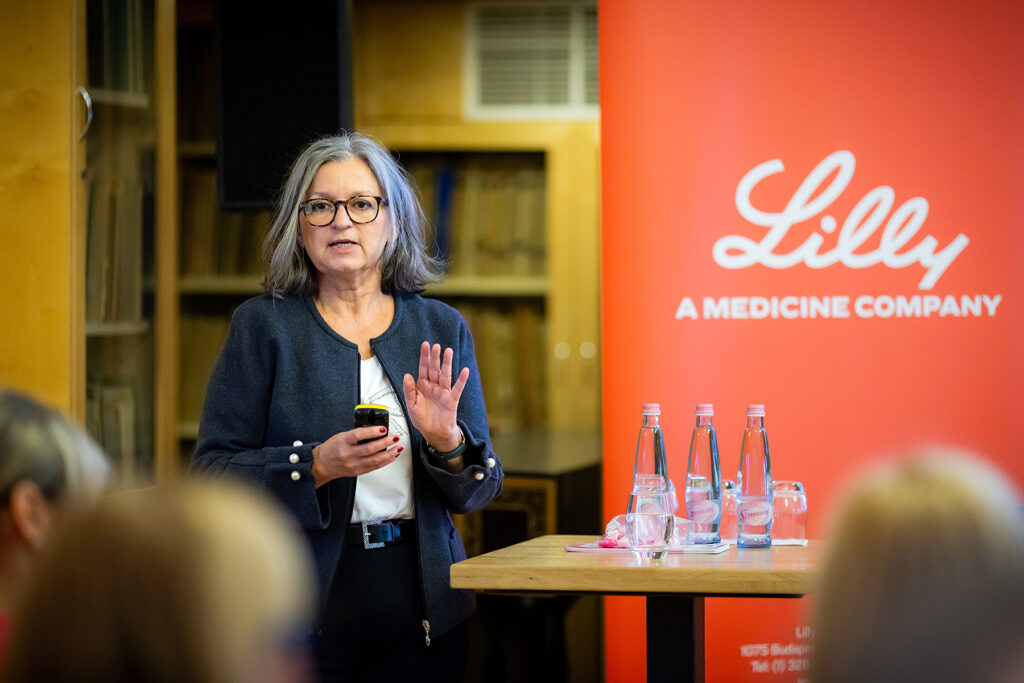
During the roundtable discussion organized by Lilly Hungária, medical experts stressed that education about prevention and symptoms is crucial, as misconceptions about the condition persist, such as the belief that using certain deodorants or wearing tight bras increases the risk.
Traditionally, risk factors include a family history of breast cancer, hereditary genetic mutations, and long-term use of hormone-based medications. However, environmental and lifestyle-related risks have also increased, such as delayed childbirth, unhealthy lifestyles, and particularly obesity and excessive alcohol consumption, which may contribute to the development of breast cancer.
“It’s important to be aware, especially if you belong to the at-risk group due to any of the above factors, of the symptoms and signs that warrant consulting a specialist,” emphasized László Landherr, president of the Hungarian Society of Senology.
“These include discharge from the nipples, inward turning or noticeable changes in the shape of the nipples, and irregularities in the skin of the breast, such as redness, rashes, or peeling. Pain in the breast or underarm that is not related to the menstrual cycle is also worth noting,” he added.
“The most well-known symptoms include tissue thickening or lumps in the breast area, as well as swelling in the underarm area; these are typically detected early through properly learned self-examinations at home,” emphasized Magdolna Dank, a physician at the Internal Medicine and Oncology Clinic of Semmelweis University.
“However, it’s crucial to participate in necessary screenings, as the disease detected in its early stages is often highly treatable,” the expert said.
“If the diagnosis is delayed and metastases appear, the goal of treatment is to manage the condition as a chronic illness, but unfortunately, this is not always possible. Additionally, it’s important to know that the later the disease is detected, the greater the chance of metastasis,” Dank added.
Hungary’s public health screening program recommends mammograms every two years for those aged 45-65, while breast screening with palpation and ultrasound is advised for younger individuals. This would be enough to put Hungary among the leading countries on the continent for screening, but participation rates fall significantly short of the EU average.
According to available data, the situation, unfortunately, worsens year by year, and reversing this trend is essential if breast cancer is to be detected as early as possible and for early detection and effective treatments to reduce the progression of breast cancer to a metastatic stage.
During a roundtable discussion, participating medical experts and patient advocacy groups, including the Mályvavirág Foundation and the Health Bridge Coalition Against Breast Cancer, highlighted that early-stage breast cancer is highly variable and recurrence remains a risk.
There are various options for preventing this, and patients must have access to these if necessary. It is also crucial from a mental health perspective. Following successful therapy, patients place their hopes on not having to go through the physically and mentally challenging fight again, and every effort should be made to give them that chance.
Exactly this sentiment was echoed by invited speakers Andrea Galló, a singer, and Judit Halász, an actress, who have both been affected by breast cancer.
This article was first published in the Budapest Business Journal print issue of November 4, 2024.


