


In the office market, the defining lettings this year were transactions that saw tenants moving into energy-efficient buildings in prime locations. These deals confirmed that high-quality space continues to attract demand. Skanska’s latest lease transaction is particularly noteworthy, according to Máté Szoboszlay, business development and investment director at Faedra Group.
Miklós Ecsődi, head of occupier services at Colliers Hungary, agreed that this significant pre-lease agreement for 22,000 sqm was a notable exception to the renegotiations that continued to dominate the market in 2025.
“This transaction clearly demonstrates that modern, well-located, and ESG-compliant office buildings can attract large-scale lease commitments, even in a market shaped by hybrid work trends and cautious occupiers,” he said.
“The largest single-tenant lease on the speculative market in this decade was secured this year at our 67,000 sqm H2Offices project, where a major international company committed to the entire second building,” says Aurelia Luca, Skanska’s executive vice-president of operations for Hungary and Romania.
“Achieving a full pre-lease within just months of construction start confirms that confident demand remains in prime Budapest locations, especially for efficient workplaces backed by strong sustainability credentials and transparent performance,” she says.
“What we see is clear: companies are consolidating into high-quality, ESG-aligned office buildings that help them attract talent and optimize operational costs. This ongoing ‘flight to quality’ continues to shape Budapest’s office market and clearly shows the strong demand for well-connected locations and buildings with measurable performance. While broader leasing trends vary across sectors, the H2Offices second building deal shows that the market responds decisively when theright product meets real needs, both for today and the long term,” Luca adds.
The project has achieved pre-certification for SmartScore and WiredScore and is also targeting LEED and WELL “Platinum” certifications, as well as Access4You “Gold” certification. H2Offices was the first project in Hungary where Skanska required Environmental Product Declarations (EPDs) from suppliers of major construction materials.
“Demand for modern, ESG-compliant, energy-efficient office buildings remained strong. We concluded several major leasing transactions this year, confirming that appetite for high-quality office space continues to be solid,” comments Tibor Tatár, head of residential and office development at Wing.
“At the rapidly expanding HOP Technology Office Park, eMotion Drive Technologies, ZF Hungária and Lightware all established their new headquarters. The Telekom Campus once again operated at full occupancy, and our mixed-use Liberty project reached close to 90% with new tenants such as DHL and Zenitech, supported by a diverse service offering and community-focused concept,” he adds.
Regina Kurucz, accredited healthy building consultant and managing director of Rewell Consulting, sees one of the most significant sustainability accreditations of the year as the WELL certification of Academia offices, which, she argues, represents a milestone on multiple fronts.
The “traditional” building wing achieved WELL “Gold” certification, a first in Hungary for a building containing UNESCO World Heritage-listed elements. Meanwhile, the modern wing became the first pre-existing building in Hungary to achieve WELL “Platinum” certification.
“This dual achievement demonstrates that rigorous health and well-being standards can be successfully applied across different building typologies, from heritage structures to modern office buildings,” says Kurucz.
Zoltán Ligetvári, investment director of ConvergenCE, which worked on the renovation of the Academia offices, was adamant that the trends here are clear.
“ESG and sustainability have set benchmarks in our markets and are determining quality levels that we need to deliver to our tenants, financing banks and at the end of the cycle: buyers,” he says.
“It is the key point of attention when it comes to planning a development. This is highly beneficial to an organization like ours, as we are rejuvenating mismanaged and aged office buildings and such standards allow us to revive office buildings to high norms,” Ligetvári insists.
“In terms of its impact on the market overall, we see it as positive as well; it cleanses the Budapest office market from aged buildings and puts Budapest on the map of globally recognized quality office providers, an ideal spot for a global or regional HQ for many who have already chosen it. WELL certification will lead to the property being more appealing to a wider set of potential buyers,” he comments.
Academia set a new benchmark by securing three certifications simultaneously: BREEAM In-Use, WELL Health-Safety Rating, and WELL Core. “Notably, both the new and refurbished building components were certified, demonstrating an exemplary model of sustainable refurbishment, future-proofing an existing structure while preserving its architectural heritage,” says Zsombor Barta, founding partner at Greenbors Consulting.
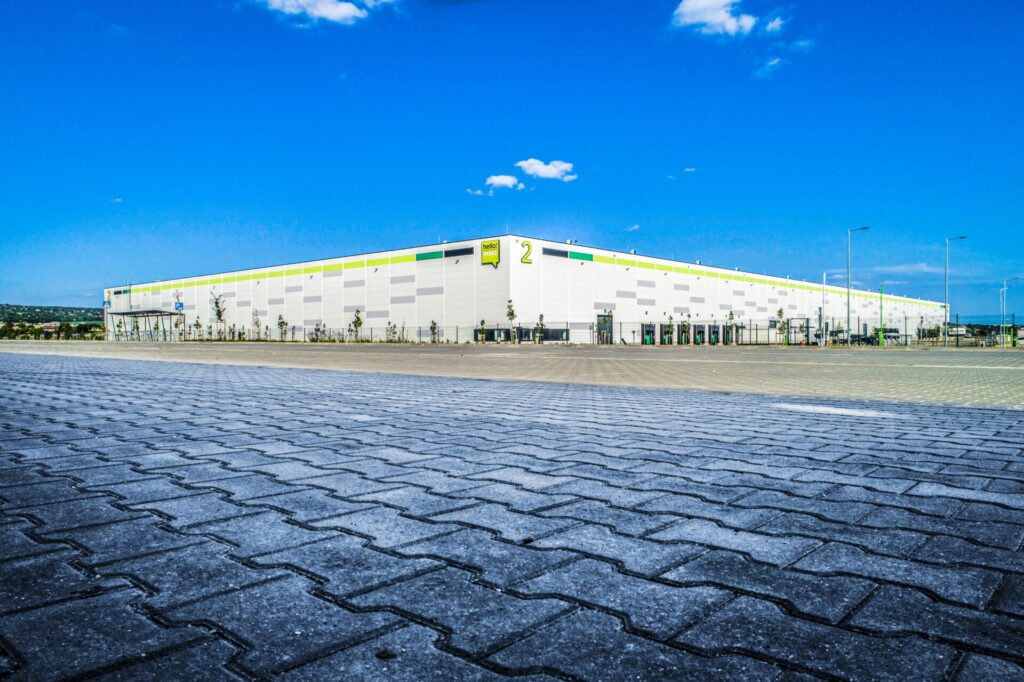
In a reported record-breaking deal for Hungary’s industrial real estate market, the Hungarian Erste Open-ended Real Estate Investment Fund acquired two warehouse buildings totaling 84,000 sqm of industrial and logistics space in HelloParks Budapest West at Páty (22 km west of central Budapest by road) for EUR 80 million-90 mln. The industrial arm of the Hungarian firm Futureal is developing the park.
“Among all the transactions, I would highlight the sale of HelloParks Páty. In this case, both the seller and the buyer are strongly committed to sustainability. The buildings not only achieved the highest BREEAM New Construction rating but also demonstrated full alignment with EU taxonomy,” says Norbert Szircsák, head of ESG advisory services at Colliers Hungary, on the transaction.
According to Ferenc Gondi, managing director of CTP Hungary, the market was defined by two key transactions in 2025. China’s Zoomlion signed a 55,000 sqm lease at CTPark Tatabánya as part of a EUR 100 million production investment. This was one of the largest industrial manufacturing deals of the year, and a clear signal of Hungary’s continued ability to attract major international investors seeking a foundation for their production facilities in the EU, he argues.
The year concluded with Hungary’s largest logistics transaction in 2025: a major global third-party logistics operator committed to an 80,000 sqm new BTS facility at the recently launched CTPark Budapest Érd. Gondi says this development will become one of the region’s key logistics hubs.
Zoomlion is a manufacturer of construction and agricultural machinery. The CTPark Tatabánya deal was one of the most significant concluded with Colliers’ involvement, according to Tamás Beck, head of industrial at the firm.
“The transaction stands out with its profile, diversifying the FDI demand, representing the construction and agricultural industry with a substantial size. This also reflects the strong inflow of Asian, and particularly Chinese, capital and interest in Hungary that has characterized recent years,” Beck says.
Meanwhile, László Kemenes, managing director of Panattoni Hungary, hailed the letting of the final two available units at Panattoni City Dock Törökbálint, achieving 100% occupancy for the park. Furthermore, the Panattoni Park Moson development was launched with a strong 70% pre-lease agreement secured before construction commenced.
“This success reflects the high demand for the park, which is strategically located near the Hungarian-Austrian-Slovakian border [at Mosonmagyaróvár],” Kemenes says.“The investment is being realized within the Recorde Panattoni RPM Real Estate Fund, managed by Recorde Fund Management. This highlights the increasing use of dedicated investment fund structures to attract institutional and private banking co-investors to high-quality, transparent projects,” he notes.
“The company has completed four development projects over the last four years, of which three were transacted in various investment structures. We managed to repeat transacting with OTP Real Estate Fund Management, and the one that stands out in terms of size is our common project in Üllő, with an approximate value of HUF 20 billion,” Kemenes adds. He notes that all of Panattoni’s completed projects in Hungary (at Törökbálint and Üllő, both part of the Budapest agglomeration, as well as Kecskemét, 96 km southeast of the capital, and Debrecen, 233 km to the east) were developed to meet BREEAM “Excellent” sustainability certification.
Prologis says several transactions in 2025 reflected sustained customer demand for well-located, high-quality logistics space, even in a high-vacancy environment. Transpack renewed and expanded its lease at Prologis Park Budapest–Sziget to 19,000 sqm. DSV signed a new 19,000 sqm lease, while Fast concluded a new agreement for more than 7,000 sqm. Inter Cars, a long-term Prologis customer, also expanded its operations.
“We have also had major renewal contracts, including a 40,000 sqm deal with Ennoconn,” says Zsuzsanna Hunyadi, director of leasing and customer experience at Prologis
“With Hungary’s logistics and industrial market facing elevated vacancy levels, the most significant deals in 2025 were those that demonstrated where real demand still exists: high-quality space in prime, well-connected locations,” she notes.
“In an environment shaped by years of speculative development, major leasing deals play a critical role in restoring market balance by driving meaningful absorption and clearly separating resilient, future-ready assets from the rest of the stock. From this perspective, sizeable new leases, along with renewals that combine contract extensions and additional space, have become one of the key stabilizing forces in the market, often more impactful than new development activity,” Hunyadi believes.
“When it comes to ESG, much of the attention tends to focus on the first letter, the environment. Making buildings sustainable and energy-efficient is undoubtedly very important. While new developments often receive the most attention for meeting advanced sustainability standards, it is equally, if not more important, to improve the standards of existing buildings, which represent the majority of the market,” she adds.
The standout lettings in the industrial and logistics sector were clearly BTS and pre-let projects, especially those linked to the automotive and EV supply chain, comments Szoboszlay of the Faedra Group. He says the countryside generated a larger share of activity than in previous years, alongside several significant deals in Greater Budapest.
The signs of recovery in the overall investment market are perhaps best demonstrated by the sale of the Marriott Hotel property, a deal said to have surpassed EUR 110 million.
“I would say the Marriott Hotel is the most significant investment deal because of its size and prominence. In 2025, we went through a positive trend with the market waking up and liquidity coming back, I hope sustainably,” comments Benjamin Perez-Ellischewitz, principal at Avison Young Hungary.
“We will close 2025 with a transaction volume of roughly EUR 1 billion, significantly above the initial expectations. Of this total, roughly EUR 800 mln represents investment deals. The share of local capital is stable at around 70%. Within the investment deals, we have roughly a 48% share for office, 24% for logistics, 20% for hospitality and 8% for retail,” he notes.
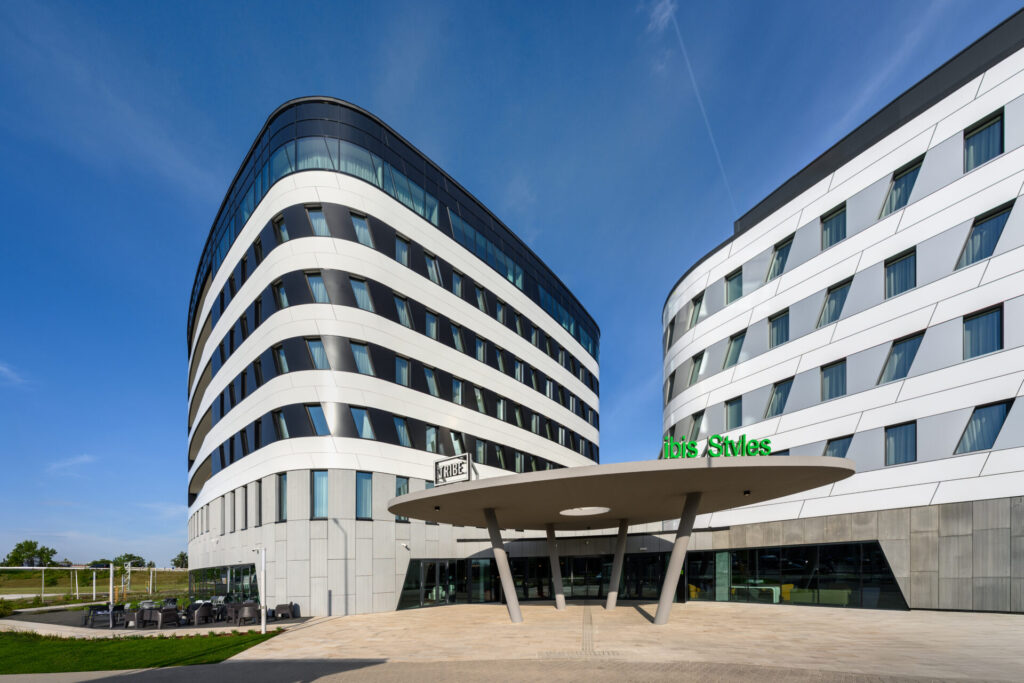
Another significant milestone in the hospitality sector saw the Tribe Budapest Airport Hotel and the dual-branded and Ibis and Tribe Budapest Stadium Hotel, close to the Groupama Stadium, earn the region’s highest BREEAM certifications for hotels. The Budapest Stadium Hotel became the first in Hungary to achieve the BREEAM In-Use “Outstanding” rating. While green certifications for hotel operations are common, certifying the building itself represents an important and innovative advancement for the sector, according to Barta, of Greenbors Consulting.
“At Wing, we believe ESG will remain a key driver of development activity. Market players increasingly see sustainability not only as a requirement but as a clear business advantage, as energy-efficient, low-emission buildings offer lower operating costs and stronger long-term value,” comments Noah Steinberg, chairman and CEO of the developer.
“In the development of our own buildings, we place great emphasis on energy efficiency and sustainability. Our latest projects, the dual-branded Ibis and Tribe Budapest Stadium Hotel, the first in Hungary and one of only four worldwide to achieve a BREEAM In-Use “Outstanding” rating, and the Liget Center Vitrum, a nearly zero-energy, carbon-neutral boutique office relying entirely on green electricity and heat-pump technology, exemplify this commitment,” he insists.
“In addition, our industrial portfolio already operates on green power with the goal of achieving full BREEAM certification, while residential projects such as Le Jardin, Római Park and Kassák Terrace deliver A/A+ rated, near-zero energy homes,” Steinberg adds.
Development activity in the retail sector remains subdued, mainly due to the government’s ongoing so-called “plaza stop” regulation, which limits the size of retail developments. In 2025, major completions include the 11,000 sqm Zenit Corso shopping center within the Zugló City Center project in the segment, and the 7,230 sqm Dera Park retail park in Szentendre (21 km south of central Budapest by road), according to Anita Csörgő, head of retail at Colliers.
“In the past year, several notable retail openings have taken place in the high street segment. A new three-story Müller store opened, covering 3,000 sqm, and The North Face flagship store opened, both located on Váci utca. These openings by strong international brands further confirm that, driven by strengthening consumer demand, the high street segment remains highly attractive for major retailers,” Csörgő comments.
Retail activity was led by neighborhood and strip-mall anchors, with strong performance from food and DIY tenants, according to Szoboszlay.
“Convenience-led retail continues to offer attractive entry points, although permitting remains a bottleneck for the sector. New strip-mall schemes have been introduced by regional and local players, and Faedra Group will also launch a project in 2026,” he says.
“In retail, grocery-anchored retail parks remained highly liquid and attractive to investors due to their stable income profiles and straightforward operating models. In general, supply is limited, although we expect several deals to close within the next 12 months,” Szoboszlay concludes.
This article was first published in the Budapest Business Journal print issue of December 12, 2025.


