


Despite this, opportunities persist for well-located, quality ESG-compliant projects and assets. Gary Morrell, real estate editor at the Budapest Business Journal, spoke to leading market players about prospects for the development process in Hungary.
Hybrid working models are now firmly embedded, leading occupiers to prioritize quality, sustainability, and efficiency over sheer size. We are experiencing a slight expansion of existing occupiers and several new entrants to the market. Developers have become selective, typically only launching projects with a pre-lease secured. However, in the mid- to long-term, moderating interest rates and improved financing conditions should support new investments. We expect a market defined by selective, smart, sustainability-focused speculative developments, ongoing tenant upgrades from older stock, and the repurposing of obsolete offices.
Across all real estate segments, developers face the burden of still-elevated financing, labor and construction costs, even if they are gradually easing. Sustainability and ESG compliance requirements add further pressure, as meeting international standards often entails additional upfront costs. In cases when the developers’ business model is to develop, lease, and exit, then the liquidity of the current market condition is a notable factor.

Kata Mazsaroff
Managing director
Colliers Hungary
At present, the most attractive opportunities lie in countryside retail parks, industrial/logistics facilities, and office-to-residential or office-to-hotel redevelopments in Budapest. These opportunities are highly location-sensitive: feasibility depends on the strength and suitability of each location. Under current market conditions, smaller developers with deep local knowledge and strong site selection capabilities are best positioned to capitalize on these opportunities.
In the office and logistics sectors, tenants increasingly expect at least some level of ESG compliance, typically in the form of a recognized green certification. However, they are less focused on actual KPIs. In the retail and hotel segments, tenant demand for ESG compatibility remains minimal. On the financing side, banks often require a green certification as a precondition for development financing, but this tends to be a “tick-box” exercise rather than a decisive factor influencing financing terms.
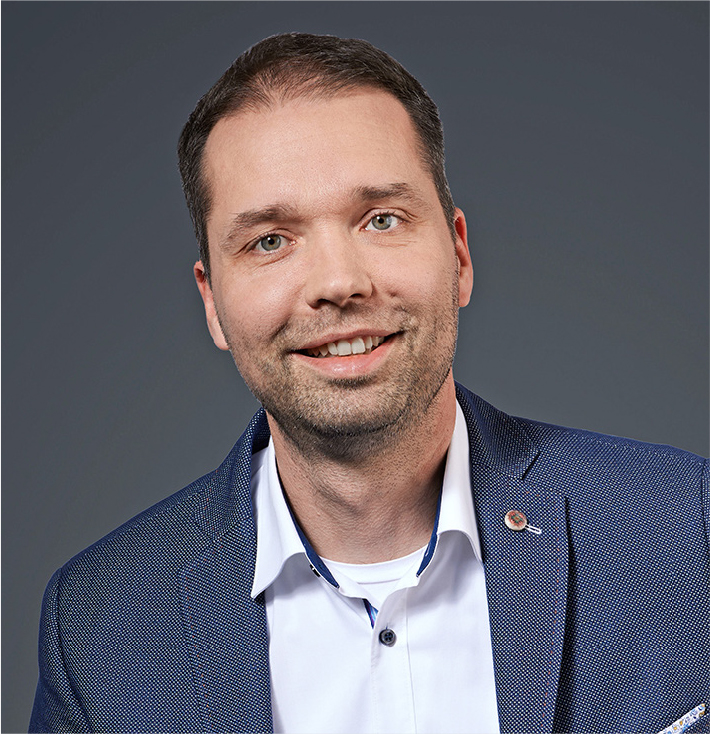
Attila Madler
Country chief asset management officer
CPI Hungary
In my view, ESG is no longer optional for development and redevelopment; it’s a structural part of project feasibility and value creation across office, industrial, hotel and retail. EU regulations (notably the revised Energy Performance of Buildings Directive, the EU taxonomy and the CSRD reporting regime) are raising minimum technical and disclosure standards, while capital markets and occupiers are pushing for measurable outcomes: lower operational carbon, climate resilience and tenant/guest well-being.
Practically, this means developers must design for higher energy performance and retrofitability, align capex and opex forecasts with net-zero pathways, and be prepared to demonstrate category-level alignment (energy, emissions, resilience) to secure financing and attract best-in-class tenants.
In Central Europe, and Hungary specifically, national implementation and incentives matter. There are funding programs and national transpositions that change the economics of renovation and new-builds, but market demand and lender/investor requirements are the real accelerant. Assets that demonstrably reduce energy use attract lower financing costs and stronger occupational demand.
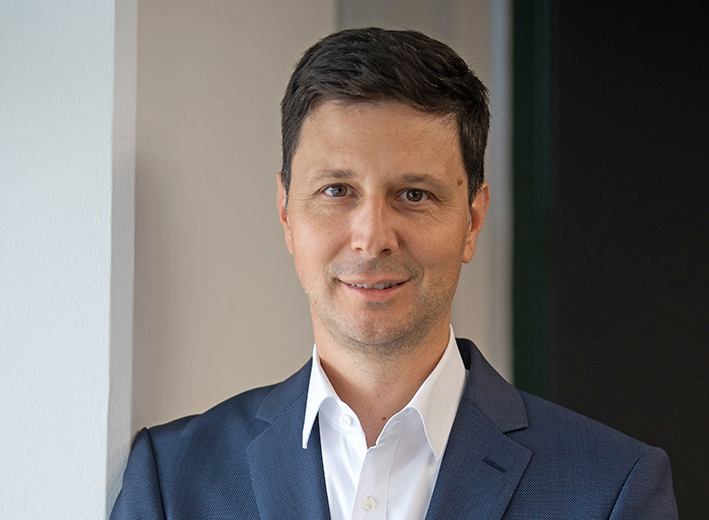
Zsombor Barta
Founding partner
Greenbors Consulting
The first major obstacle for developers is financing and yields. Higher-for-longer debt costs and stricter bank underwriting have resulted in de-risking via higher pre-lease/BTS ratios, phased capex, and green/sustainability-linked lending, which benefit from EU taxonomy alignment. Obstacle number two is letting risk in a slow economy with elevated office and some logistics vacancies. The response is to target prime micro-locations, flexible unit sizing, and spec-to-core value-add (retrofits) rather than purely speculative builds.
This year marks the first cycle of mandatory ESG/CSRD disclosures for many firms in Hungary, and lenders are increasingly tying pricing to EU taxonomy alignment. On the technical side, the recast EPBD raises the bar for energy performance and renovation pathways. Green design and credible data are now prerequisites for capital and tenant demand, not “nice-to-haves.”
The attitude to commercial real estate logistics schemes is cautiously optimistic, but hospitality offers the clearest near-term opportunities; office is a selective, upgrade-driven story; retail is steady via convenience/community formats.

Máté Szoboszlay
Business development and investment director
Faedra Group
All of HelloPark’s buildings are EU taxonomy compliant, a unique feature in the domestic market. We now compete with the largest companies in the sector. We employ solutions that enhance our tenants’ operations, making them more efficient and reducing their environmental impact. The company’s research and development and sustainability team has introduced numerous innovative solutions in the construction of new buildings. These include plastic fiber industrial flooring, reduced-carbon-footprint concrete structures, and the use of reinforcing steel from 100% recycled sources. Over the past five years, HelloParks has established a development model that simultaneously serves tenants’ efficiency needs and sustainability expectations.
HelloParks also leads in meeting the requirements for climate neutrality, having developed a detailed climate neutrality roadmap up to 2035. These buildings have already exceeded regional standards, achieving values typical of Western European developments. This year, the company has switched to 100% green energy use across its entire warehouse portfolio.
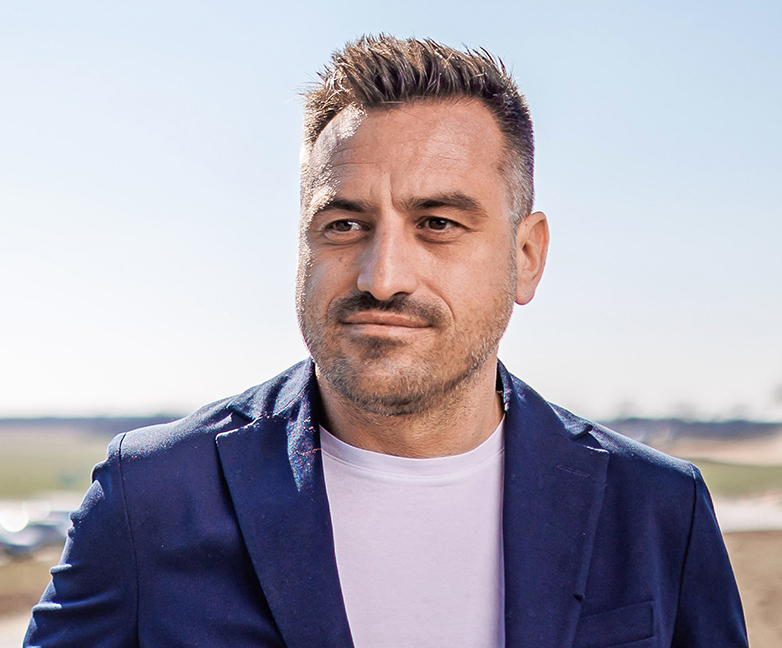
Rudolf Nemes
CEO
HelloParks
Generally, development financing of commercial property in the whole CEE region has become more difficult. This is because of legislative changes for banks, declaring that developments are riskier than they were before (due to cost overruns, interest rates, construction material or availability of general contractors in recent years). Consequently, developments require one-and-a-half times more regulatory capital than financing existing cash-flow producing buildings. This creates a»supply-side constraint on development loans, as regulatory capital is a scarce resource. In Hungary, providing development loans for residential projects might be an exception, due to the lack of modern housing and social programs that support their provision.
Obstacles to development include a lack of transactions, which creates uncertainties about market exit, strong government intervention, the economic situation and sluggish economic growth.
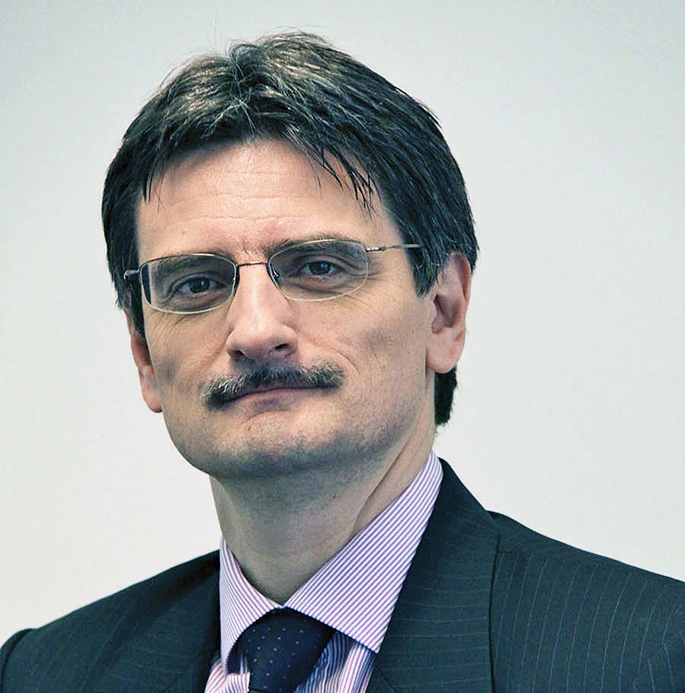
Péter Számely
Head of real estate finance CEE
Hypo Noe Landesbank
Concerning the division between speculative and BTS development, at Innovinia, we have always maintained a healthy balance. We have launched a new 31,000 sqm BTS project in Nyíregyháza and successfully delivered a total of 42,000 sqm of speculative space in Debrecen and Kecskemét, both of which were fully leased before completion.
Long-term developers typically aim to create flexible buildings that can be adapted for alternative uses, should tenant needs change. At the same time, industrial operations must also be considered, as they often require specific structural features, such as the installation of overhead cranes. Due to recent regulatory changes, converting land into development sites has become more difficult. This has created clear challenges for developers, while simultaneously allowing landowners to drive up the prices of suitable plots.

Balázs Czifra
Director of sales and asset management
Innovinia
The lack of foreign interest makes domestic investment decisions rather tricky, and local developers often need to take a leap of faith, hoping for improved market conditions. Debt financing is primarily available for de-risked projects only, and amortization rates are significantly higher than in peer CEE countries. Green loans provide an incentive to self-adopt stricter ESG standards, but they’re still in an infant state. For now, compliance with existing stakeholder policies is more important than long-term adaptation.
We put our money where our mouth is; over the last 18 months, we have been quite active and have a strong pipeline of opportunities that we are scrutinizing. We see prospects for development and redevelop-ment in office (very selectively), but we do observe attractive entry opportunities, as the pendulum seems to have swung back from mostly remote to more on-site work policies. Partly for this reason, we have just acquired a major office asset in Budapest, Science Park, where we see upside and value-add potential on several fronts.
Gábor Kutas
Founder & CEO
Recorde Asset Management
An upturn in office development depends on conditions, not a date. As financing costs stabilize and more occupiers consolidate into efficient, sustainable workplaces with lower operating costs and strong digital connectivity, we expect selective new starts in prime, transit-served submarkets. The shift we see is not about volume but about purpose. The next wave of office development will be driven by demand for spaces that combine efficiency, sustainability, and human experience, buildings that genuinely support productivity and well-being. Redevelopment will also play a growing role as owners upgrade existing stock to meet modern expectations.
With solid tenant interest and a proven development pipeline, we see strong potential for Budapest’s office market to continue evolving through quality-led, people-centered projects that create long-term value for the city. That opens up real opportunities for developers who can deliver lasting, measurable value. While modernizing existing buildings is still key, there’s definitely room for forward-thinking new developments that boost Budapest’s business scene and urban vibe.

Aurelia Luca
Executive vice president of operations for Hungary and Romania
Skanska Commercial Development Europe
At Wing, we expect demand for BTS industrial developments to remain stable, driven by factors such as the ongoing nearshoring trend, tenant demand for customization, and the shift in developers’ strategies towards mitigating risk. At this stage, BTS projects may carry lower risk and offer better returns, particularly when developers can secure commitments from quality tenants under long-term lease agreements. A recent example is East Gate PRO Business Park in Fót, where Wing Industrial, the industrial and logistics development sub-brand of Wing, delivered a fourth hall of 9,000 sqm. The facility, rated BREEAM “Very Good,” was fully tailored to the needs of its tenant, Packeta’s Hungarian subsidiary, under a BTS pre-lease arrangement.
Looking ahead, I expect that high-tech and energy-intensive manufacturing (such as battery production, electronics, and pharmaceuticals) will remain key drivers of demand, along with logistics. The market will remain stable; however, I do not foresee the same level of explosive growth we saw between 2020 and 2022.

Zsófia Korda
Chief sales officer general deputy
Wing Industrial
This article was first published in the Budapest Business Journal print issue of October 17, 2025.


