


New builds and redevelopments in all sectors must adhere to ever more all-embracing green regulations and sustainability-related market pressures at all stages of a building’s life cycle. There is a strong pipeline in the industrial, hotel and residential sectors, but speculative development in the office and retail sectors is expected to remain constrained.
Investment activity in Bulgaria, the Czech Republic, Hungary, Poland, Romania, and Slovakia is showing signs of picking up; Colliers has revised the 2024 CEE investment volume upwards to EUR 7 billion-7.5 bln, although this is 30% below the 10-year average.
“In the investment market, with the anticipated ECB interest rate cuts, lower financing costs could boost investor activity in the second half of 2025. Yield levels are expected to remain stable to ensure that the domestic market remains attractive compared to Western European markets and other CEE countries,” says Colliers.
CBRE sees prime CEE yields (the Czech Republic, Hungary, Poland, Romania, and Slovakia) moving in, reflecting a flight to quality across asset classes. Prime office and industrial and logistics yields for Budapest stand at around 7%.
Given the current market conditions, Colliers experts estimate that regional investment transaction volume could exceed EUR 10 bln in 2025. Investment activity is picking up in Poland and the Czech Republic, and the question remains when this will occur in Hungary.
CBRE predicts increasing CEE investment volumes with a possible EUR 9.5 bln concluded for 2024, around 50% of which was recorded in Poland. Further, several deals are in the final stages and are due to be closed in 2025. Hungary has still not seen this growth trend, however, with no pressure to sell from vendors and a pricing gap.
The acquisition of a portfolio of warehouse properties from 7R by the Czech fund Investika Real Estate Fund and its joint-venture partner, the private equity company BUD Holdings, represents the most significant transaction on the Polish warehouse market in the last two years.
In the Czech Republic and Slovakia, Blackstone has purchased a portfolio of 500,000 sqm of industrial assets, in addition to development potential assets, for EUR 470 million.
“The outlook for real estate in the CEE region remains positive, although it is not immune to external influences and macroeconomic factors that may affect markets and industries, particularly with regard to major trading partners,” says Silviu Pap, director of CEE & Romania Research at Colliers.
“Economic growth in CEE, especially in contrast to the recession in Germany, together with price stabilization and the return of institutional capital, signals more favorable conditions until 2026. Transactions are currently focused on value-add and opportunistic strategies, particularly in sectors where prices have adjusted,” he notes.
“However, significant price differentials remain, particularly in logistics. Looking ahead to 2025, optimism is cautious, driven by price stabilization and expectations of interest rate cuts by the European Central Bank, which could stimulate market activity,” Pap concludes.
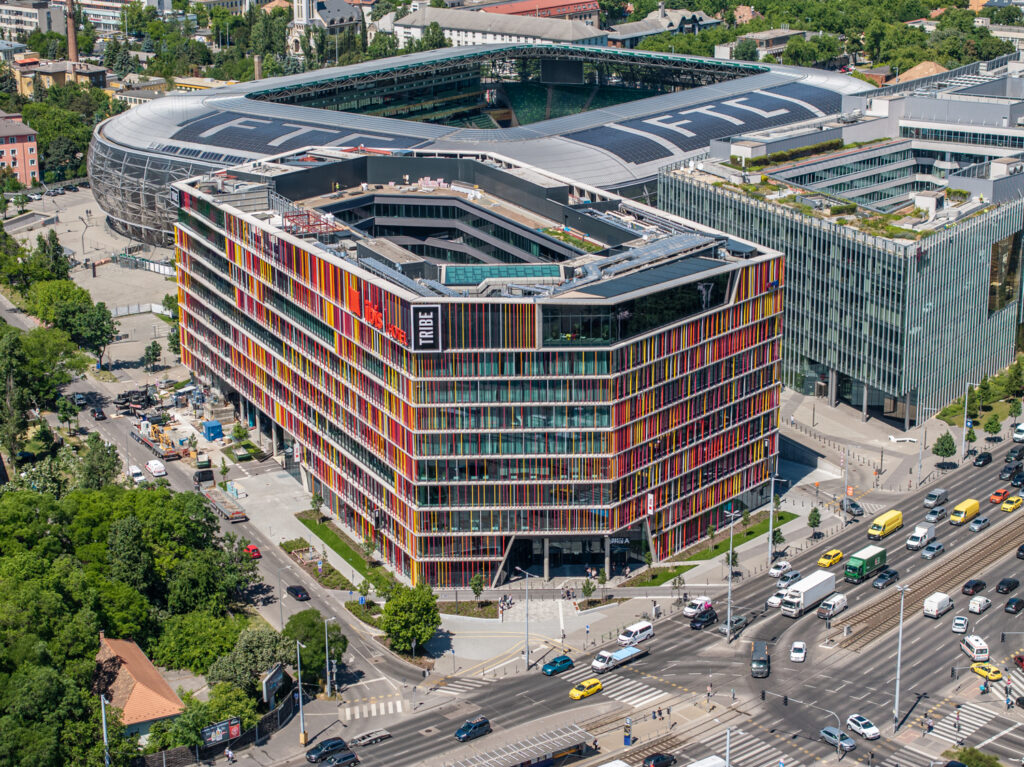
Attila Madler, chief asset management officer at CPI Hungary, does not expect speculative office developments this year, only the start of a few projects that can show significant preleases of at least 70%. However, as companies become more cost-aware, it is quite rare that they are willing to afford the rent level of approximately EUR 22 per sqm per month for new developments instead of moving into existing schemes for approximately EUR 16-17 sqm, he says.
CBRE has traced 100,000 sqm plus of space due to be delivered in Budapest in 2025, and 256,000 sqm for 2026, with a more than 90%-plus prelease ratio. “Office in CEE has not been this weak in 20 years,” notes the consultancy.
The vacancy rate in the Budapest office market could reach 15% by mid-2025, according to Valter Kalaus, managing partner at Newmark VLK Hungary. The long-term effects of home office and hybrid working have left their mark on the sector, with tenants increasingly rethinking their space requirements, with the result that rents are expected to plateau or even fall, he argues.
“On the office market, the supply side has started to adapt to demand trends; the amount of office space under construction is currently at a historically low level. Vacancy rates continue to rise and are expected to increase further. However, properties located in good areas and modernized to become ESG-compliant continue to attract demand; repurposing buildings could also come into consideration,” comments Colliers.
The changing dynamics of office space, with more flexible and collaborative environments due to shifting work patterns, will continue to influence the design and development of office buildings, argues Noah Steinberg, chairman and CEO of Wing.
“Our mission remains unchanged: to create and own buildings that meet the needs of their users. To do this, we need to consider what they want to do in the building and what is important to them. We develop our products based on this, so we work with a very complex set of criteria and needs,” he says.
“Another important consideration will be the ever-increasing emphasis on sustainability and energy efficiency. In the real estate market, energy-efficient solutions and sustainable practices will continue to be essential,” Steinberg adds.
The office sector will likely see an acceleration in value-add investments, particularly retrofitting assets to improve energy efficiency.
“Failure to adapt could render some buildings obsolete, especially as tenants and investors increasingly prioritize green-certified properties. Regulatory incentives or penalties may become a decisive factor in driving market behavior,” reckons Zsombor Barta, ambassador to (and a former president of) the Hungarian Green Building Council (HuGBC).
CBRE has traced a pipeline for the year of about 640,000 sqm of new space, 220,000 sqm of which is already under construction.
In the case of industrial properties, countryside plots are becoming increasingly valuable due to the significant inflow of FDI to date and anticipated future investments from the likes of BMW, BYD, and CATL. Colliers says This will likely increase demand for industrial and logistical properties.
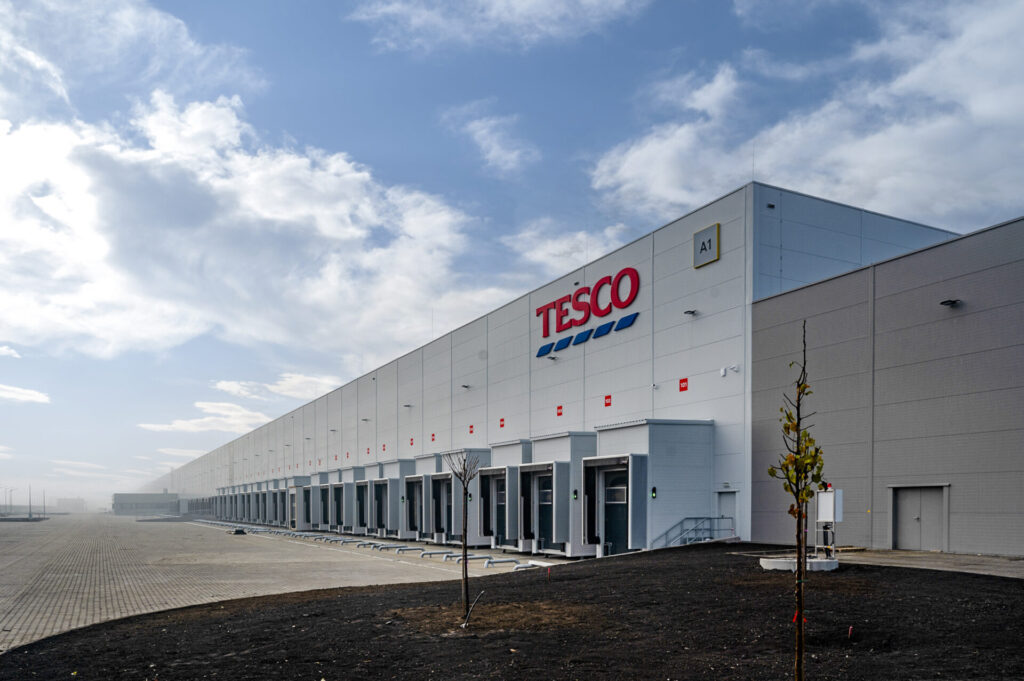
“In 2025, I expect stable demand in Hungary and an increased focus on regional markets, especially in the south. At CTP, we already see a healthy prelease ratio for our 2025 pipeline and even more for the years beyond. This is driven by nearshoring trends and increasing manufacturing demand,” comments Ferenc Gondi, managing director and country manager at CTP Hungary. He regards a major CTP milestone as the handover of Tesco’s 100,000 sqm complex distribution center at CTPark Szigetszentmiklós.
“Strategically located near Budapest, this facility combines cutting-edge automation with sustainable technologies to support Tesco’s expansive operations. This development strengthens Tesco’s Hungarian logistics network and sets new benchmarks for sustainable industrial property development,” Gondi says.
As the market continues to evolve, one key focus area will undoubtedly be sustainability. Development activity will increasingly prioritize energy-efficient buildings, renewable energy integration, and sustainable industrial property development, he concludes.
Madler, chief asset management officer at CPI Hungary, expects development in the county capitals, primarily driven by the expansion of the supply chains of the main automotive factories.
“To the background of a cooling in the industrial market, where overall availability has risen to 8-9% from a low of 2-3%, the BTS [built-to-suit] development option has become the preferred option as manufacturing and distribution hubs have become more important,” says Kalaus of VLK Newmark.
“In this way, developers and landlords increasingly need to develop in accordance with tenant-specific solutions, although this provides less flexibility from the perspective of landlords and developers with regard to future lettings. The development of a facility for a car manufacturer or supplier, for example, is very tenant-specific,” he adds.
There is an estimated pipeline of around 700,000 sqm in the coming year, 390,000 sqm of which is in the Budapest area and 300,000 sqm in regional hubs, according to Colliers.
“As of the end of the third quarter of 2024, speculative construction represents 44% of the CEE pipeline,” comments Blanka Vackova, head of research at iO Partners in the Czech Republic.
“In Hungary specifically, the speculative construction trend closely mirrors the regional average, with 43% of the circa 400,000 sqm of ongoing construction being developed without pre-existing tenant commitments,” she adds.
To maintain competitiveness, industrial developers must integrate sustainability features as standard, particularly for cross-border logistics hubs. Green financing could be a game-changer, enabling a wider adoption of renewable energy and smart technologies. A failure to address these challenges risks diminishing Hungary’s position as a regional logistics hub, argues Barta.
A few retail park developments and stand-alone single-tenant retail buildings will be launched, mainly in the countryside, according to Madler.
“Many retail properties are not ESG-compliant, leading to rising operational costs and diminished investor interest. Furthermore, the sector must navigate changing consumer expectations, requiring a balance between convenience, sustainability, and the growing demand for mixed-use spaces,” says Zsombor Barta.
“Retail developers and operators must prioritize diversification, blending shopping, leisure, and community-oriented spaces to remain relevant. Retrofitting and integrating green building certifications will be critical, as will addressing the energy efficiency gap in older properties. Those failing to innovate risk declining footfall and asset devaluation,” he adds.
The hotel sector in Hungary continues to stand out as an attractive development and investment opportunity. The country and the broader region remain popular tourist destinations, with guest nights steadily climbing back to pre-pandemic record levels. This recovery underpins strong demand for new and upgraded hospitality assets, particularly in Budapest, where the market benefits from a vibrant mix of leisure and business travel in the view of Máté Szoboszlay, partner for business development and transactions at Faedra Group.
CBRE figures indicate that 1,500 hotel rooms will be delivered in Hungary over the year, 1,200 of which are in Budapest. There is also a strong pipeline in spa towns outside the capital; the Balaton region has a healthy pipeline, with 700 rooms scheduled to be delivered by the end of 2027, including the Le Meridien Resort.
The critical challenge is adopting sustainable technologies, such as geothermal heating and water recycling systems, which is still uneven across the sector. Smaller operators, in particular, struggle to meet sustainability expectations without access to affordable financing or technical expertise, according to Barta of the HuGBC.
“To maintain growth, the sector must embrace sustainability not just as a marketing strategy but as an operational imperative. Hotels that incorporate advanced energy-saving technologies and green certifications will attract not only environmentally aware travelers but also institutional investors. Those that fail to adapt risk losing competitiveness in a market increasingly shaped by ESG compliance,” he adds.
“In 2025, we expect the transaction volume to increase, especially in the hotel segment. The office segment will also see an uplift in transaction volume as the pricing uncertainty should ease,” concludes Madler.

Although the framework is quite broad and not yet formally mandatory, it seems that in some European countries, especially the Nordics and Germany, ESG standards are a must when investment decisions are made. This trend is growing in Hungary, too, notes Szoboszlay.
In practice, this means that developers and investors who do not take ESG aspects into account may face difficulties raising capital, and this will also likely be the case when it comes to leasing or selling assets in the future.
So, ESG will remain a key trend in 2025, and the increasing importance of sustainable development impacts all real estate sectors and their supply chains. A noticeable trend is that investors, banks and occupiers are all looking for certified energy-efficient properties, Szoboszlay adds.
Looking ahead to this year, the Hungarian real estate market must address three critical areas, argues Barta. The first of these is bridging the retrofitting gap.
“Upgrading older assets is essential to remain competitive, but developers and owners will need stronger financial incentives and technical support to achieve this,” says the HuGBC ambassador.
The second area is driving green financing adoption. “Access to affordable, sustainability-focused financing will be crucial for developers and operators, particularly in sectors like industrial and residential,” Barta argues.
The third is leveraging policy and regulation. Clearer regulatory frameworks and incentives will be vital in accelerating the market’s transition toward zero-carbon goals.
“Hungary’s real estate market holds immense potential, but the path forward requires collaboration between stakeholders to address the sustainability challenges ahead. Those who innovate and adapt will be well-positioned to thrive in the evolving landscape, ensuring long-term value while contributing to a more sustainable built environment,” Barta says.
“Across all sectors, sustainability is no longer a differentiator but a necessity. Hungary’s alignment with EU taxonomy and ESG reporting requirements is shaping investment decisions, tenant preferences, and regulatory frameworks. However, significant challenges remain, particularly in retrofitting existing assets and financing sustainability upgrades,” he concludes.
This article was first published in the Budapest Business Journal print issue of January 10, 2025.


