


Guest nights for Hungary are returning to the record 2019 levels, and Budapest continues to be one of the most visited tourist destinations in CEE, the consultancy says.
“In the first quarter of 2025, international tourist arrivals in Europe recorded a 2% year-on-year increase, with the CEE region outperforming at 8% growth,” comments Gábor Borbély, head of research, CEE and Hungary at CBRE.
“In Budapest, weekend and holiday periods continue to drive robust demand, supported by the growing popularity of the pre- and post-season. These trends are contributing to a more evenly distributed visitor traffic throughout the year. By year-end, Budapest is expected to reach, or potentially surpass, pre-pandemic visitation levels recorded in 2019,” he adds.
The CEE and Southeastern European regions have seen notable growth in tourist numbers from Germany, Austria and Italy, in addition to substantial numbers from the United Kingdom and France. An increasing number of visitors are also being drawn from the Middle East, attracted by the premier and wellness hotel segments.
Budapest hotel occupancy rates have risen to 71%, the average daily room rate has grown to EUR 123, and revenue per available room is up by 22%.
“Budapest’s hotel sector concluded 2024 on a strong note, and the market outlook remains positive amid sustained demand recovery,” notes Balázs Csörget, associate director of hotels at CBRE Hungary.
“Each year, new high-quality hotel developments are entering the market, not only supporting further increases in average daily rates, but also enhancing the overall competitiveness and appeal of the city as a tourist destination,” he adds.
CEE and SEE are witnessing an expansion in the number and quality of rooms with a focus on four- and five-star development. There is a focus on upscale to upper midscale hotels, notably in the leading capital cities: Budapest, Bucharest and Warsaw. Budapest is expected to reach pre-pandemic levels by 2 2025. Belgrade has already surpassed its 2019 visitor numbers.
Prague and Budapest maintain strong per capita spending, particularly in gastronomy, cultural attractions and wellness. Overnight visitors for 2024 were 6.5 million for Prague and 3.7 million for Budapest.
Hungary has around 60,000 hotel rooms with the majority in Budapest. The sector is seeing a notable growth in five-star hotels in redevelopments of historic buildings in the center, while outside the capital, the market is dominated by the three-star strata. The tendency is for higher-category deliveries in the country’s provincial centers, while in Budapest, the trend could be for the development of more apartment hotels.
Investment volumes in the CEE hotel sector increased significantly in 2024, rising by approximately 12% year-on-year, and continue to show momentum in 2025. Some EUR 417 million was transacted in Q1, according to CBRE
“From an investment perspective, Budapest maintains a leading position within the CEE region, underpinned by resilient demand fundamentals, well-developed infrastructure, and rising pricing levels. Currently, nearly 20 hotel projects are in the planning or development phase, with the majority involving the redevelopment of existing hotel assets or the conversion of non-hospitality properties into hotel use,” concludes Csörget.
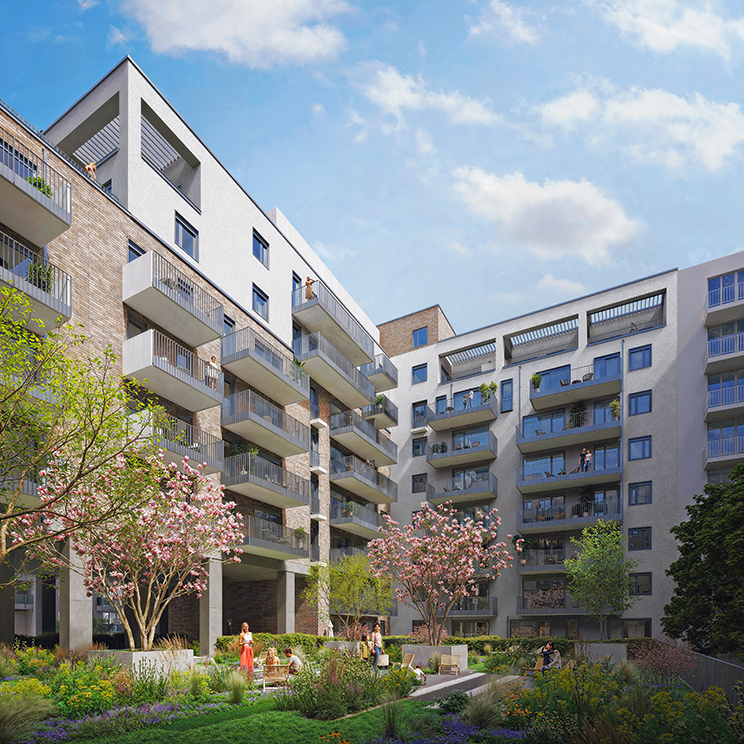
Residential sales of apartments at Park Rise West, the fourth and final phase of the 900-unit downtown Park West residential park, have begun. The development by Living, the residential development arm of Wing, is located in District XIII and offers 195 modern apartments on nine floors, ranging from studio apartments to five-room penthouse apartments and are scheduled for delivery in late 2027.
“The first phase of Park West residential park was completed in 2022. Since then, we have delivered phase two, and phase three will be ready this year; this shows that there is a strong demand for high-quality apartments with great transport infrastructure near the city center,” comments Tibor Tatár, head of office and residential development for Wing in Hungary.
“Park West Rise is one of the last newly-built residential properties in the fully rehabilitated Szabolcs utca in District XIII, which makes it a milestone both for our company and for the development of Ferdinánd Quarter,” he adds.
Park West Rise offers environmentally friendly solutions. The temperature will be controlled year-round by a heat-pump system and surface heating and cooling. This will be supported by triple-layer glazing of the façade doors and windows, as well as a 15-cm thick heat insulation layer.
The greenery of the inner courtyard will also contribute to the well-being of residents, says Living. Due to the brownfield location, private individuals can reclaim the 5% VAT on Park West Rise apartments.
The number of Living apartments delivered since the company’s establishment in 2017, including those currently under development, is close to 2,000, with more than 1,700 apartments already sold. Completed projects include Kassák Passage, Kassák Residence, and Kassák Terrace, Metropolitan Garden, Park West 1 and 2, and the first phase of Le Jardin (also in District XIII). Still underway are Park West 3, Park West Rise, Le Jardin 2, and Római Park in District III. All residential developments are located in areas offering excellent transport options and a wide range of services, and all feature outstanding technical standards and sustainable solutions, according to Living.
This article was first published in the Budapest Business Journal print issue of July 25, 2025.


