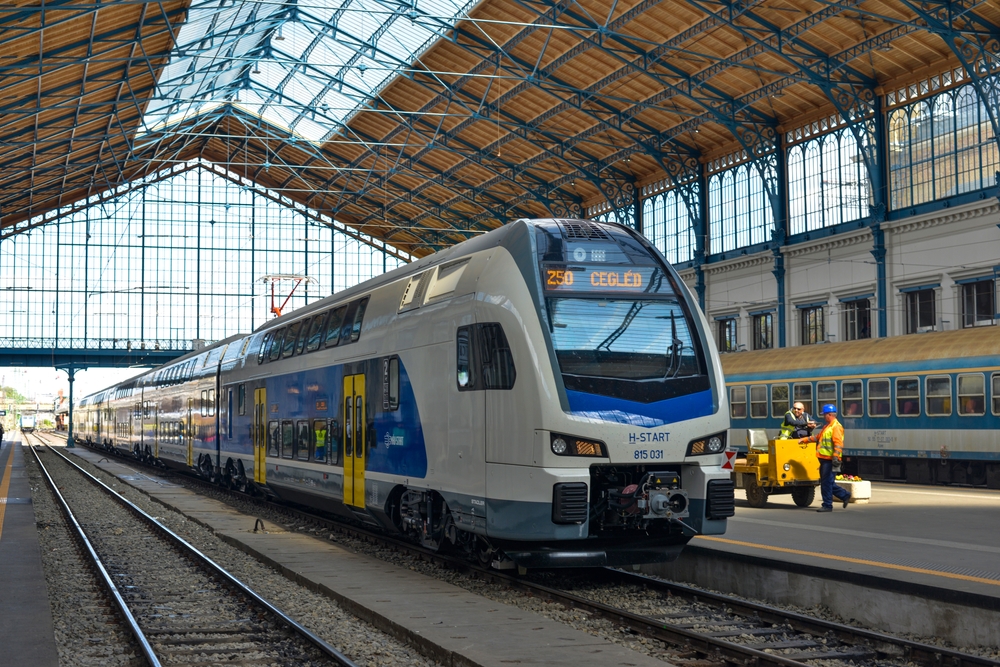
Bálint Nagy said MÁV Group will be divided into a track operator, called MÁV Pályaműködtetési Zrt., while MÁV, Volánbusz, and MÁV-HÉV, which provide passenger rail, bus, and suburban rail services, will be merged into a passenger unit named MÁV Személyszállítási Zrt. Another entity, MÁV Szolgáltatóközpont Zrt., will handle services for MÁV, he added.
Nagy emphasized that rail and bus services will not compete with each other but will collaborate to better serve passengers.
He noted that around half of the tracks used for passenger trains currently have speed limits due to technical problems. Funding from Brussels that could address the issue is being “held back for political reasons,” he said. As a result, Hungary plans to rely on its own resources and credit, with plans to secure a €1 billion loan for railway developments from the European Investment Bank (EIB).
The renovation of 100 trains has already begun, including half of the InterCity fleet, Nagy said, adding that these trains will be returned to service no later than the end of 2025.
He also forecasted an increase in passenger numbers due to changes in ticket and pass pricing as well as discounts. Sales of the recently introduced county and country passes have already surpassed 13 million, he noted.
Producing journalism that is worthy of the name is a costly business. For over 30 years, the publishers, editors and reporters of the Budapest Business Journal have striven to bring you business news that works, information that you can trust, that is factual, accurate and presented without fear or favor.Newspaper organizations across the globe have struggled to find a business model that allows them to continue to excel, without compromising their ability to perform. Most recently, some have experimented with the idea of involving their most important stakeholders, their readers.
We would like to offer that same opportunity to our readers. We would like to invite you to help us deliver the quality business journalism you require. Hit our Support the BBJ button and you can choose the how much and how often you send us your contributions.