

Listen to the audio version of this article (generated by AI).
Listen to the audio version of this article (generated by AI).

The list of challenges confronting the automotive sector in Hungary has seen two more items added: stricter rules on foreign labor and changes to the subsidy scheme will both make things harder for stakeholders.
Hungary’s automotive sector is far from down and out, but it has surely seen better days. With exports at up to 90%, the vehicle industry feels the impact of sluggish global demand.
This is a sector of strategic importance, as it accounts for 6% of GDP. Add in the supplier ecosystem, and that figure is closer to 10-12%.
Domestic industrial production has been in decline for three years in a row, and it seems that ever more stakeholders can’t handle the pressure. According to data from Allianz Trade, the number of insolvency cases has been rising. Among large corporations with a market value of more than EUR 25 million, the automotive sector is the fifth riskiest in this regard, following energy and chemicals.
The insolvency wave isn’t affecting the OEM level domestically yet, but rather Tier-2 and Tier-3 suppliers, where smaller margins, ballooning costs and weaker cash-flow positions are causing most of the trouble. Even so, on top of the vulnerability of supply chains and the advance of Chinese competition, all players are struggling to deal with the consequences of the green transition and disproportionately high energy prices.
The latter is a more pressing issue than many would think: While Hungarian families enjoy highly subsidized energy bills, businesses pay some of the highest in the EU, not least because the central budget requires them to pick up the slack from the households.
Whether there might be a change for the better, from the corporate perspective, in that department remains to be seen; the new government hasn’t given any hint thus far that it intends to do so.
However, in two other crucial areas, it has already sent a clear message as to what to expect, and neither is likely to make automotive executives smile.
On the one hand, the government has enacted a suspension on issuing new work permits for third-country (non-EU) workers, effective June 1, allowing only renewals of existing permits under much stricter oversight. The measure shouldn’t have caught anyone by surprise; the ruling Tisza Party had explicitly stated in its manifesto before the April 12 election that “we would not allow foreign guest workers to take the jobs of Hungarians and push down salaries.”
Now that the election promise has been fulfilled, some of Hungary’s largest foreign investors are sounding the alarm, as they fear a sudden ban could hit output in an already tight labor market.
Randstad’s managing director for the Czech Republic, Hungary and Romania, Sándor Baja, emphasized the risk of such a step to international news wire Reuters.
“An outright ban on workers from outside the EU would not be viable in the long run,” he said, noting that within the upcoming decade, Hungary’s active workforce is set to shrink considerably as masses of people retire. “I sincerely hope that (Minister of Economy and Energy István) Kapitány’s team will allow economic rationality to prevail here,” Baja told the news agency.
Migration has been a hot topic in Hungary since the Europe-wide wave in 2015, and the Orbán regime became well-known for refusing to accept any mass influx of foreigners. In parallel, the number of guest workers has increased in recent years, although their share remains just 2% of the workforce. Even so, today, certain sectors, such as manufacturing and services, could hardly function without third-country workers. Enter any restaurant in Budapest or drive around in the city, and you will inevitably encounter waiting staff or food delivery personnel from abroad.
This policy hits the automotive and manufacturing sectors where it hurts most. Elite assembly operations and Tier-1 suppliers report up to a 20% structural reliance on foreign guest workers imported from India and Southeast Asia to bridge the domestic labor gap.
Hungary already faces structural labor shortages with more than 60,000 unfilled vacancies, with 23,000 in manufacturing alone. The longer term shows a worsening prognosis: up to 500,000 foreign employees may be needed in the next decade, not least to staff the mega automotive projects from CATL, BMW, and BYD.
The newly sworn-in Hungarian cabinet plans yet another step that could adversely affect the sector. Péter Magyar’s administration has signaled a clear break with its Fidesz predecessor, moving from the carte blanche approach to FDI subsidies to much greater accountability.
The Orbán government was heavily reliant on upfront, unconditional cash grants that mostly favored high-volume, low-wage assembly lines and battery plants. Future incentives will be tied to EU Regional Aid guidelines and strictly monitored through milestone achievements, with a focus on technological innovation. Funds are also expected to be diversified into domestic tech, local SME integration and green energy grid investments.
Top-tier assembly plans will be immune to this shift. However, mid-component manufacturers and suppliers had better get ready for some belt-tightening. Smaller sub-assembly operations planning secondary expansions will no longer receive generous state cash buffers. Without these financial incentives to offset rising local energy overheads and logistical costs, mid-sized foreign suppliers could increasingly look to alternative regional locations like Poland or Romania.
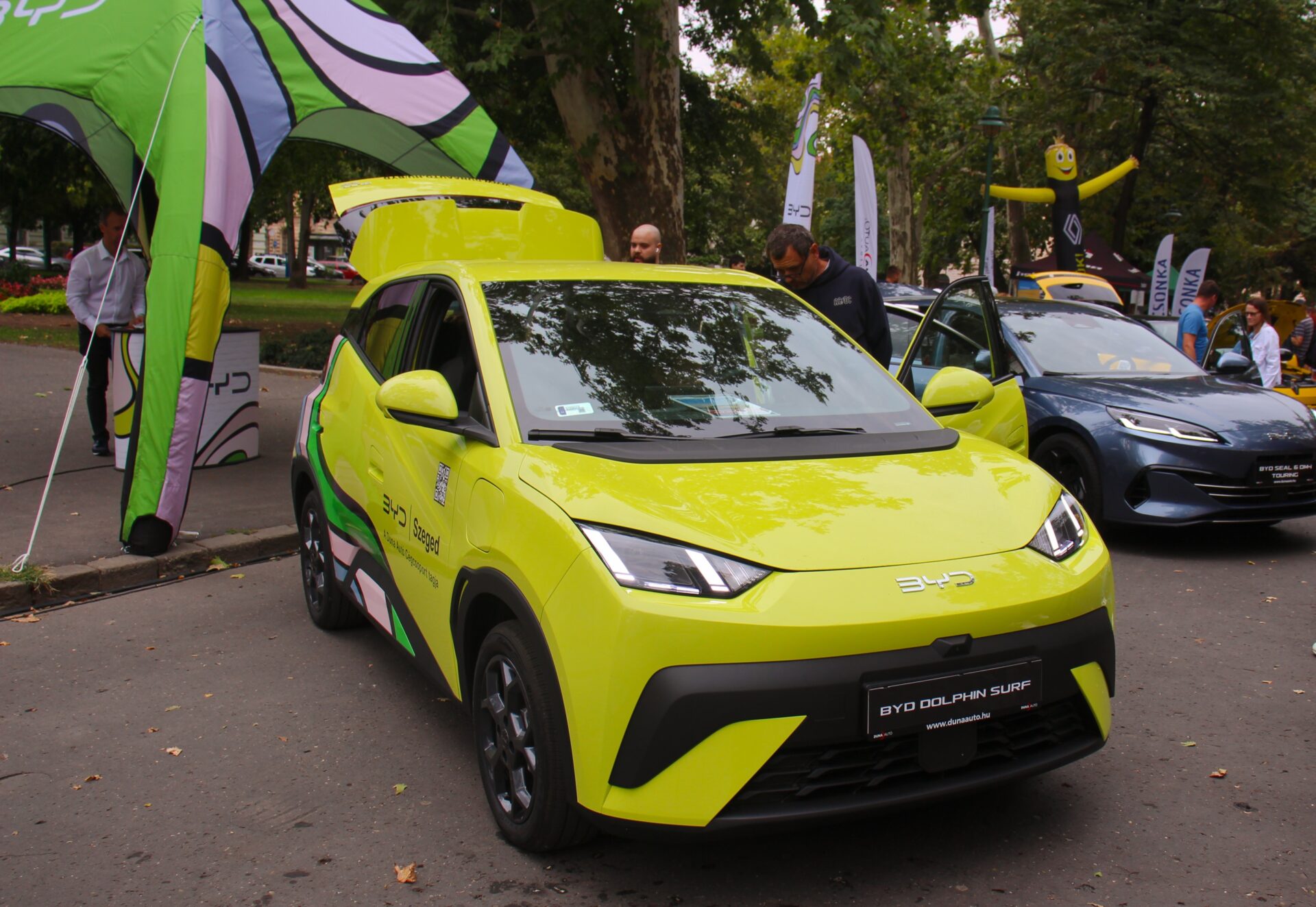
The immediate future of local automotive does give reason for hope. CATL’s EUR 7.3 bln battery plant in Debrecen is systematically ramping up its massive capacity, BMW’s EUR 2 bln Factory, located in the same city, reports record orders and will produce 150,000 EVs per year. Albeit with around a one-year delay, BYD’s gigantic EV plant in Szeged is scheduled to begin production in Q4 2026.
As these new assembly facilities go live, Hungary’s automotive industry is set to rebound and provide solid momentum to GDP, as forecast by the European Commission earlier in May. Executives, economists and consumers alike can’t wait for that to happen.
This article was first published in the Budapest Business Journal print issue of June 19, 2026.
Producing journalism that is worthy of the name is a costly business. For over 30 years, the publishers, editors and reporters of the Budapest Business Journal have striven to bring you business news that works, information that you can trust, that is factual, accurate and presented without fear or favor.Newspaper organizations across the globe have struggled to find a business model that allows them to continue to excel, without compromising their ability to perform. Most recently, some have experimented with the idea of involving their most important stakeholders, their readers.
We would like to offer that same opportunity to our readers. We would like to invite you to help us deliver the quality business journalism you require. Hit our Support the BBJ button and you can choose the how much and how often you send us your contributions.


