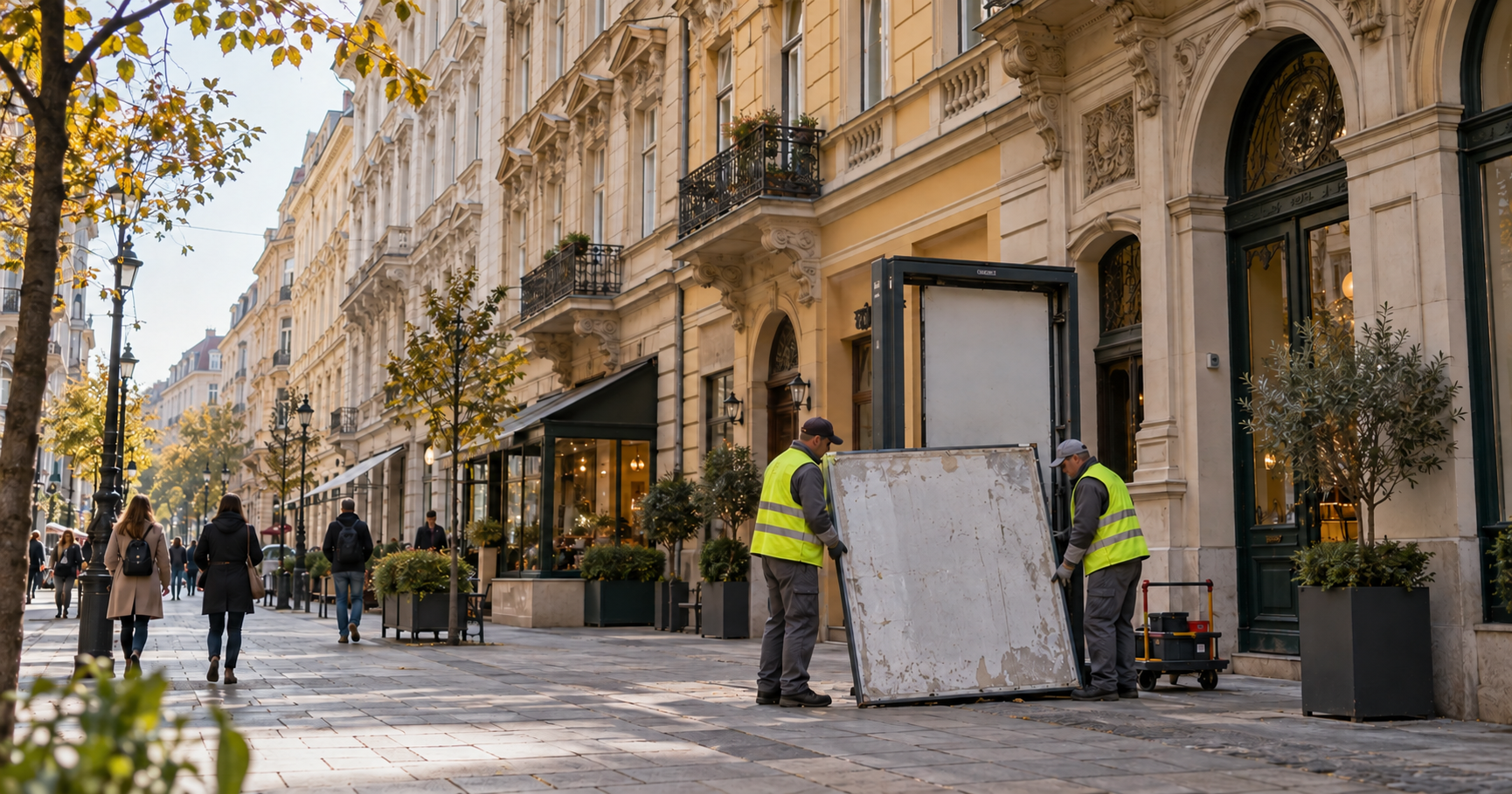
The decree takes effect today, with exemptions for certain signs and displays used by local businesses.
The district, which lies partly within a UNESCO World Heritage Site, has received repeated complaints about advertisements covering building facades and overwhelming public spaces in the tourist-popular neighborhood.
“The advertising ban helps to preserve the character of the World Heritage Site. The removal of billboards, advertising banners and advertising structures in public spaces will improve the townscape,” according to the impact assessment accompanying the amendment.
The document described advertising clutter in the district as exceptionally high. The National Media and Infocommunications Authority’s registry lists 314 advertising devices in Terézváros.
According to the assessment, feedback at a local forum and subsequent comments indicated residents supported the measure.
The ban does not extend to advertising displays used by local shops and hospitality establishments unless they contain brand advertising. Shop signs and company boards may continue to be installed under existing rules.
The assessment argued that removing street advertising could benefit local businesses by reducing competition for attention with their products and services. Companies affected by the ban would face minor adjustment costs associated with dismantling and removing advertisements, it said.
The document noted that similar restrictions had previously applied under a temporary moratorium in townscape protection legislation, while heritage protection rules also prohibit such advertising in protected areas.
The municipality has no advertising contracts, so the ban will not affect its budget, according to the assessment. No loss of local tax revenue is expected either, as no local entrepreneur was engaged in the advertising activities covered by the ban.
Producing journalism that is worthy of the name is a costly business. For over 30 years, the publishers, editors and reporters of the Budapest Business Journal have striven to bring you business news that works, information that you can trust, that is factual, accurate and presented without fear or favor.Newspaper organizations across the globe have struggled to find a business model that allows them to continue to excel, without compromising their ability to perform. Most recently, some have experimented with the idea of involving their most important stakeholders, their readers.
We would like to offer that same opportunity to our readers. We would like to invite you to help us deliver the quality business journalism you require. Hit our Support the BBJ button and you can choose the how much and how often you send us your contributions.