Listen to the audio version of this article (generated by AI).
Listen to the audio version of this article (generated by AI).

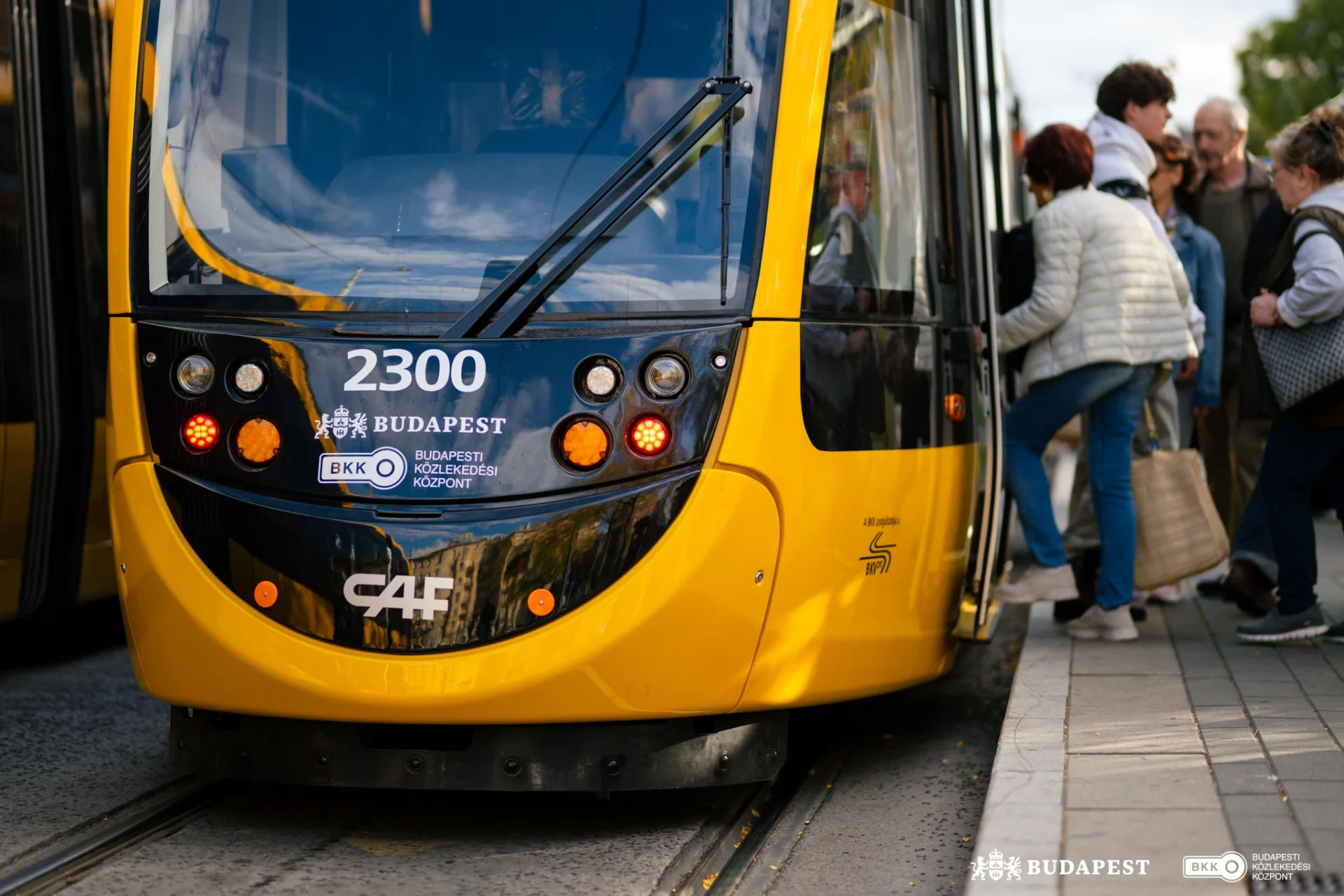
The vehicle is the 44th short tram commissioned under the latest order for 51 new CAF vehicles.
Tram No. 2300 began carrying passengers after completing technical inspections, trial runs and regulatory approval procedures. It expands Budapest’s modern, low-floor fleet, supporting more accessible, comfortable and energy-efficient public transport.
Budapest received 56 short CAF trams through earlier procurements in 2015-2016 and 2020-2021. The latest order includes 46 short and five long vehicles. Two short trams remain to arrive under that order and will carry fleet numbers 2301 and 2302.
The short and long CAF vehicles use separate numbering systems. A long tram recently delivered from Spain carries fleet number 2118.
Other new vehicles are at various stages of testing and approval, with deliveries continuing. The program will bring the proportion of low-floor trams in Budapest’s fleet to more than 40%, BKK said.
The 51-vehicle procurement is supported by EU funding. A nonrepayable grant of HUF 42.863 bln covers 45 trams, while the remaining six vehicles continue to be financed through the IKOP Plusz program.
The project forms part of Hungary’s Recovery and Resilience Plan.
The fleet expansion will allow more CAF trams to operate on routes already served by the vehicles, including lines 1, 3, 17, 19, 42, 50, 56, 56A and 61.
Once all 51 new vehicles enter service, and subject to the availability of EU infrastructure funding, BKK plans to introduce modern trams on lines 24 and 62 and deploy additional low-floor vehicles on lines 14 and 69.
BKK and Budapest transport operator BKV are also examining the infrastructure requirements for introducing the vehicles on lines 47 and 49.
Further investment is needed to accommodate the new trams and modernize the network. Planned work includes power supply upgrades, modifications along routes and at terminals, and expanded depot facilities.
These investments would support the introduction of low-floor trams on additional routes, improve platform accessibility and prepare depots to store and maintain the new vehicles.
Producing journalism that is worthy of the name is a costly business. For over 30 years, the publishers, editors and reporters of the Budapest Business Journal have striven to bring you business news that works, information that you can trust, that is factual, accurate and presented without fear or favor.Newspaper organizations across the globe have struggled to find a business model that allows them to continue to excel, without compromising their ability to perform. Most recently, some have experimented with the idea of involving their most important stakeholders, their readers.
We would like to offer that same opportunity to our readers. We would like to invite you to help us deliver the quality business journalism you require. Hit our Support the BBJ button and you can choose the how much and how often you send us your contributions.