


In 2021 Ferenc completed a dual MBA at Corvinus and Maastricht universities. In 2022, he was appointed country head and managing director, with a focus on business development and construction.
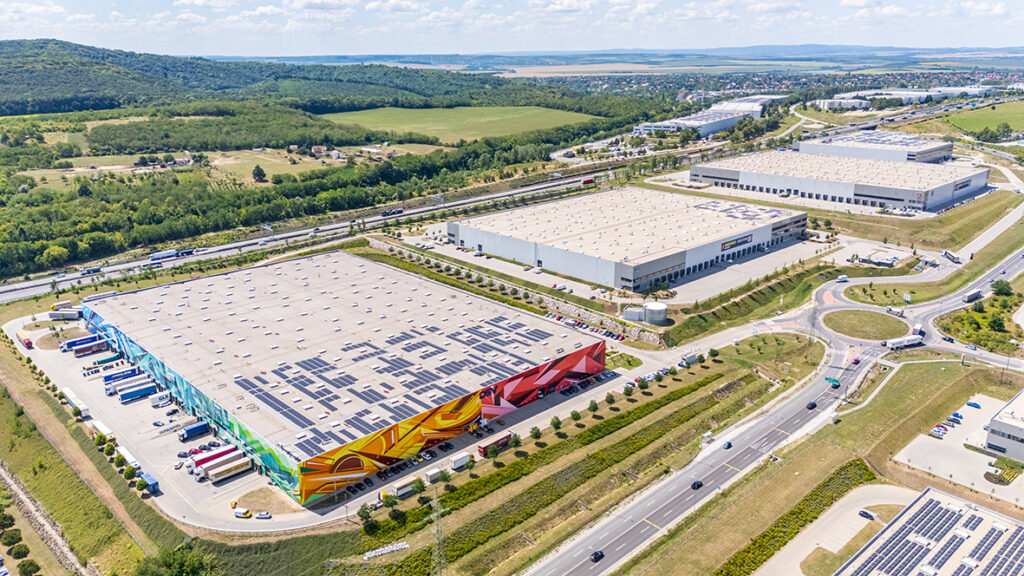
Under his leadership, CTP has strengthened its position as the leading logistics and industrial real estate developer in the country, operating 17 parks with more than 1.4 million square meters of total leasable area. The company achieved a net rental income of EUR 78.5 million and reported leasing activity totaling 320,000 sqm in 2025. These results reflect the success of CTP’s ESG-compliant, award-winning, high-tech logistics and production spaces.
What sort of impact do you expect the formation of a new government to have on the real estate market in Hungary?
The new government can have a significant impact on market confidence, which is one of the most important drivers of FDI activity. In the short term, we already see stronger interest from international occupiers and investors who are closely monitoring the direction of economic and regulatory policies. However, long-term capital inflow will depend on predictability, transparency, and the government’s ability to create a stable business environment that supports development, infrastructure investment, and industrial growth.
Which real estate project you have worked on are you most proud of, and which competitor project are you most envious of?
From both a personal and professional perspective, I am most proud of the projects where we were able to create successes where no one before us had dared. Long-term economic value beyond the buildings themselves in developments that contributed to local employment, infrastructure, and community growth. At CTP, most of our large-scale industrial and logistics parks in Hungary represent this philosophy. As for competitor projects, I appreciate developments that successfully combine urban integration and long-term vision. The entire industry benefits when high-quality projects raise the standard for the market as a whole.
What effects do the conflict in Iran and the blocking of the Strait of Hormuz, and the continued war in Ukraine, have on the real estate business in Hungary?
Geopolitical conflicts primarily affect the market through energy prices, supply chains, financing conditions, and investor sentiment. Rising transportation and energy costs can directly increase construction and operational expenses, while uncertainty typically makes investors more cautious. At the same time, Hungary and the wider CEE region continue to benefit from nearshoring and supply chain diversification trends, particularly in the industrial and logistics sector, as companies seek stable European production and distribution locations closer to their end markets.
How do you judge the public perception of the real estate industry in Hungary? Do steps need to be taken to improve it?
The perception is mixed regardless of segments. While the sector plays a major role in economic development, job creation, and infrastructure improvement, public discussions often focus only on short-term negative aspects. I believe the industry needs to communicate more about its long-term economic and social value, especially regarding sustainability, brownfield regeneration, energy efficiency, and the role modern developments play in supporting local communities and businesses.
Which are the most active real estate sectors in 2026 and why?
The industrial and logistics sector remains one of the strongest-performing segments in 2026, driven by nearshoring of manufacturing investments, as well as the growth of e-commerce and supply chain restructuring across Europe. For example, in Germany, data centers and energy-related infrastructure developments are increasingly active due to the growing importance of digitalization and AI-driven technologies. In addition, well-located residential and mixed-use developments continue to attract attention in urban areas where demand fundamentals remain strong, with particular focus on build-to-rent solutions.
Domestic and CEE money has dominated the investment landscape in Hungary in recent years. What is required to bring back significant international funding?
International investors primarily look for stability, transparency, liquidity, and long-term predictability. Hungary has strong fundamentals, including strategic location, industrial capacity, and competitive infrastructure, but attracting larger volumes of institutional international capital, as seen in recent years in the Czech Republic, will require a more predictable regulatory and macroeconomic environment. Strong regional hubs could play a major role in balanced, long-term domestic growth, as we see in Brno, for example. Clear development policies, stronger investor confidence, and consistent economic performance are essential to secure global capital.
If you could change anything about Budapest’s urban cityscape to improve it, what would it be?
One of the biggest opportunities for Budapest is the large-scale revitalization of underutilized industrial and brownfield areas. The city has enormous potential to create modern mixed-use districts that combine residential, commercial, green, and community functions more sustainably. At the same time, improving transport infrastructure, public spaces, and connectivity between outer districts and the city center would significantly enhance both livability and long-term economic competitiveness.
This article was first published in Top 50 Executives – Real Estate Businesses 2026.


