



The seminar featured presentations and roundtable discussions that offered participants fresh perspectives through research findings, shared knowledge, and practical experience. The discussions aimed to equip attendees with tools to address future challenges more effectively. The “Feeling Good” survey revealed significant stress among respondents, yet over 70% reported managing despite the pressures. The study highlighted that in Hungarian culture, it is considered normal to be overwhelmed and busy, but dissatisfaction is rarely openly acknowledged.
Using a newly developed measurement tool, individual and corporate stress levels can now be quantified, with tailored recommendations for action plans provided for leaders and organizations.
Experts from Hammel Hochreiter emphasized that workplace well-being and conscious leadership are critical to the sustainability and long-term success of companies. This sentiment was echoed by participating psychologists, social psychologists, and organizational development specialists, who underscored the importance of individual choices.
Speakers agreed that self-aware leaders who embrace authenticity are essential for a stable organizational strategy. Presentations and case studies showcased the effectiveness of interim management solutions, particularly those modeled after Dutch practices employed by Hammel Hochreiter. These approaches support companies during critical situations, such as leadership shortages, knowledge gaps, crises, or transitions. While widely applied in international manufacturing firms, these tools are adaptable to various corporate cultures and industries.
Interim management services have proven especially effective in reshaping mindsets, preparing businesses for sale, or navigating generational transitions—challenges that are often emotionally and strategically taxing for family-owned businesses. These situations can lead to significant losses or gains in the short term.
The partnership between Hammel Hochreiter and the Institute of Directors Hungary, bolstered by decades of experience and an international network, enables companies to successfully navigate complex transitions while preserving their legacies and ensuring future growth.
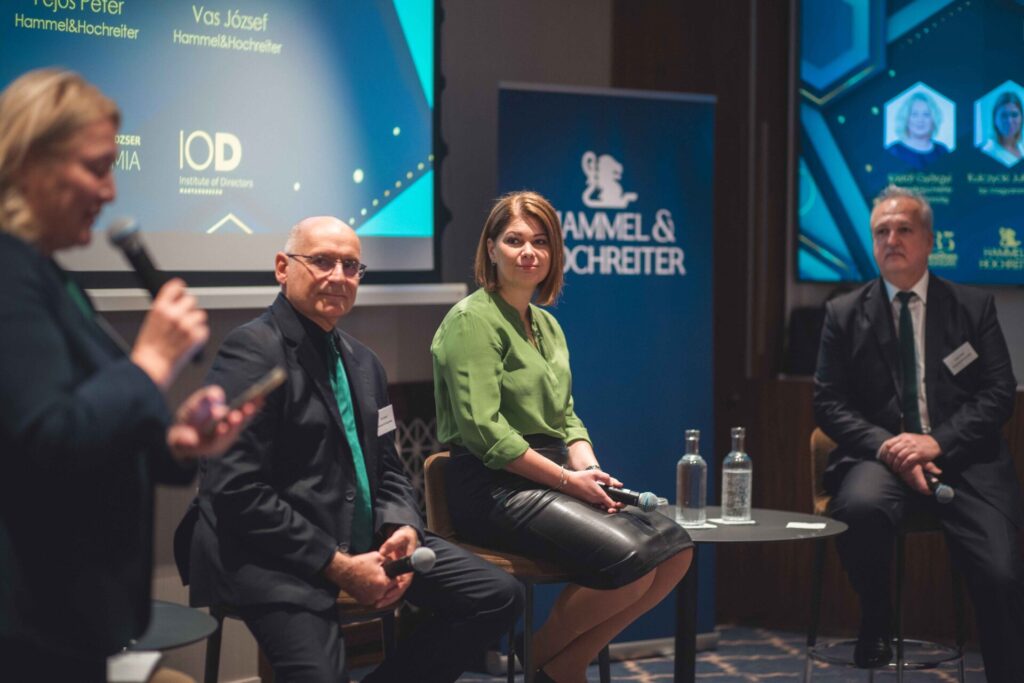
“My experience in interim management has shown that this work is not just about solving problems but about creating and preserving real value,” said Kristóf Györgyi, managing director of Hammel & Hochreiter Kft. and newly elected president of IoD Hungary. “Events like our seminar are particularly important for the business community because they provide an opportunity to exchange experiences and share best practices. I believe that building a strong community and fostering knowledge sharing is the key to supporting both Hungarian and international companies in Hungary over the long term. Together, we can create a business environment where companies, employees, owners, and leaders can all truly thrive.”
The experts stressed the importance of separating ownership and operational roles in Hungarian companies, as many owners are still heavily involved in day-to-day management instead of focusing on strategic decision-making and long-term growth. Within the ESG framework, the governance (G) pillar is particularly critical, as environmental (E) and social (S) goals cannot be effectively pursued without strong governance.
Programs and resources from IoD Hungary, the Hungarian Business Leaders Forum, and the Budapest Stock Exchange (BÉT) offer immediate solutions, tools, and support to help owners, board members, and executives embrace new mindsets.
Participants agreed that companies need not only expertise but also supportive communities, conscious leadership, and a commitment to workplace well-being to maintain their market positions. Programs and training offered by IoD Hungary, Hammel Hochreiter, and the Interim Manager Academy play a pioneering role in fostering sustainable business environments. The awareness and openness of leaders and owners at all levels are not only foundational for sustainable operations but also pillars of corporate competitiveness.


