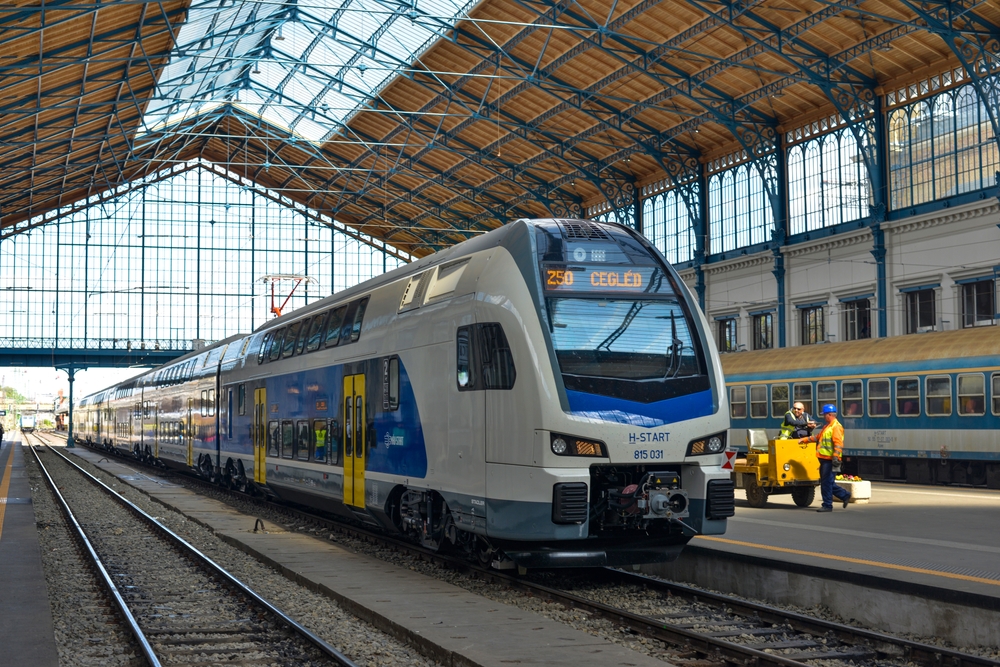
“I am in continuous talks with the Swiss. There is a serious chance that Hungary will purchase a significant fleet of motor trains from the Alpine country,” Lázár said in an interview with Boon.hu, according to news site Telex.
He highlighted the reliability of Swiss trains, noting that while Hungary’s train punctuality rate is around 75%, Swiss trains achieve 90-100% punctuality.
Lázár attributed this difference to Switzerland’s modern infrastructure and rolling stock. “Let’s not forget that they have good tracks, modern locomotives, and rail cars. While we are operating trains that are 40-50 years old, they replace theirs after just 10 years,” he explained.
Following Lázár’s comments, business daily Világgazdaság provided an overview of the rolling stock operated by Switzerland’s federal rail operator, SBB (Schweizer Bundesbahnen), which could form the basis of Hungary’s purchase. The options include:
Switzerland is set to receive the latest generation of Stadler Flirt trains beginning in 2026, making it likely that older models will become available for sale around the same time.
This potential acquisition aligns with Hungary’s broader strategy to overhaul its rail fleet. Earlier in January, Lázár announced plans to replace every second electric locomotive by the summer of 2026, addressing the outdated state of Hungary’s rail system. Of the 200 electric locomotives currently in operation, 150 are between 40 and 60 years old.
Additionally, Hungary plans to purchase 100 refurbished and 285 new InterCity rail cars as part of its modernization efforts.
Producing journalism that is worthy of the name is a costly business. For over 30 years, the publishers, editors and reporters of the Budapest Business Journal have striven to bring you business news that works, information that you can trust, that is factual, accurate and presented without fear or favor.Newspaper organizations across the globe have struggled to find a business model that allows them to continue to excel, without compromising their ability to perform. Most recently, some have experimented with the idea of involving their most important stakeholders, their readers.
We would like to offer that same opportunity to our readers. We would like to invite you to help us deliver the quality business journalism you require. Hit our Support the BBJ button and you can choose the how much and how often you send us your contributions.