

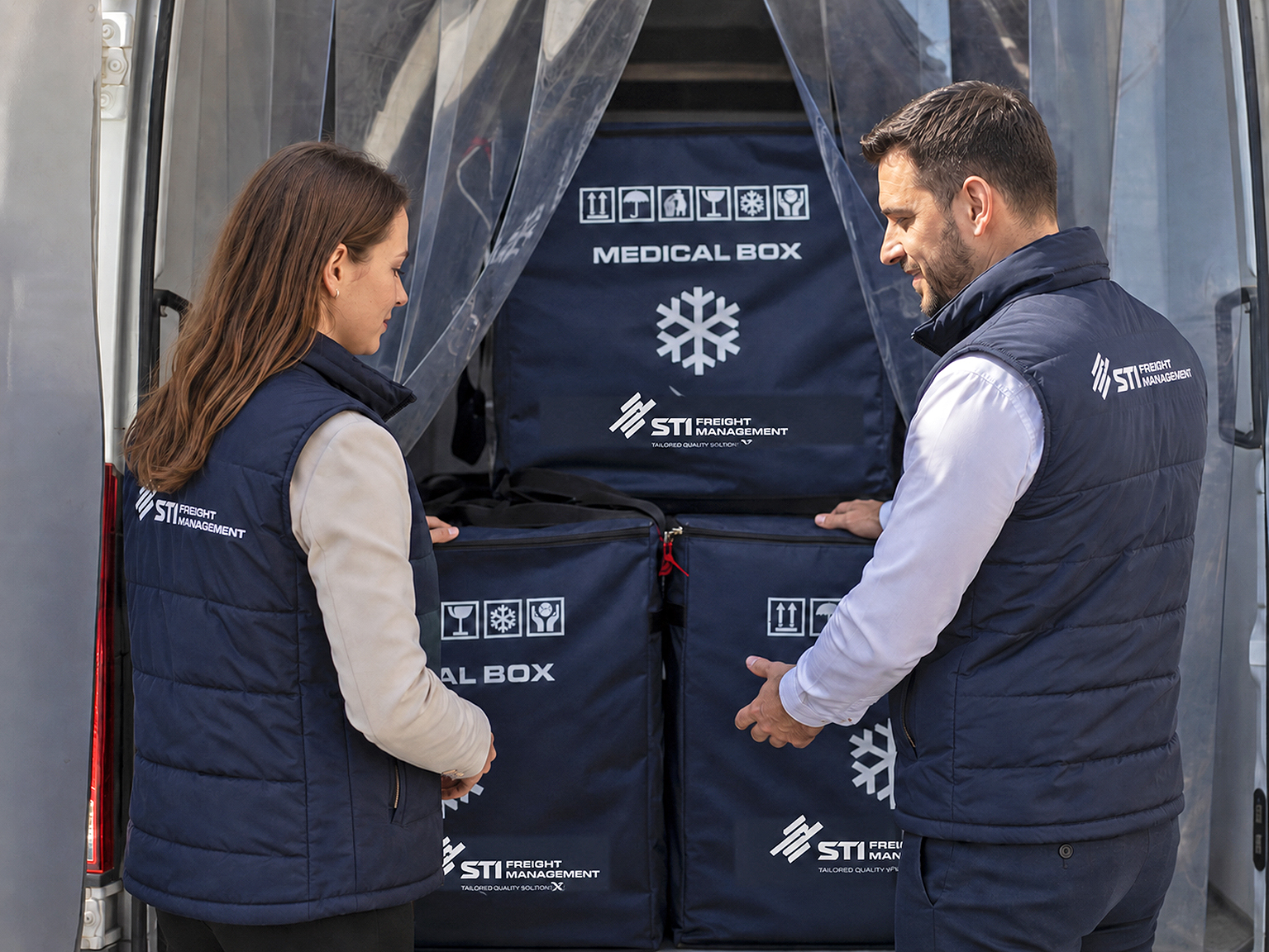

The transaction gives STI Hungary control of CTR, a temperature-controlled logistics solution developed in Hungary for the safe transport of sensitive pharmaceutical products. The system can keep vaccines, biotechnology products and clinical trial materials at temperatures as low as -80°C (-112°F) without an external power source for up to seven days.
The deal goes beyond a conventional logistics acquisition. It combines several decades of Hungarian pharmaceutical logistics expertise with the international background of STI Freight Management, a group with more than 42 years of logistics experience. For STI Hungary, the acquisition strengthens its presence in a high value-added segment where temperature stability, regulatory compliance and operational reliability are critical.
“This acquisition is not only a service expansion for us, but also the integration of a special pharmaceutical logistics competence that carries significant international growth potential. Our goal is to build on the STI Freight Management network and develop the Hungarian know-how over time into a scalable service at a regional and later international level,” said Péter Csipes, managing director of STI Hungary Kft.
Pharmaceutical logistics has changed significantly in recent years as biotechnology products, vaccines and clinical trial materials have become more important within the healthcare value chain. Many of these products require strict temperature control during transport. A single temperature deviation can make an entire shipment unusable and cause major financial losses, which has increased demand for specialist cold-chain logistics solutions worldwide.
The CTR system is based on passive temperature-controlled technology. Specially prepared, preconditioned thermo systems use dedicated heat-storage elements to maintain a stable temperature during road, air or sea transport. The units are available in various sizes and can be handled manually or on pallets, allowing the system to serve different logistics needs without external power during transit.
“The CTR business line is backed by several decades of special pharmaceutical experience, development and operational know-how. It was especially important for us that this knowledge become part of an international network where it can develop in the long term and reach wider markets. STI Hungary’s professional background and international network provide a stable foundation for this,” said Roland Homoki, creator of the Complex CTR technology and managing director of Complex 3H Kft.
The acquisition includes the thermo system asset base and the know-how required to operate it. A specialist expert team is also being integrated into STI Hungary’s organization. To support operations, the company has created a dedicated preparation laboratory and office area at its Alsónémedi site.
The company says the new business line is expected to account for roughly 10-15% of STI Hungary’s current pharmaceutical activity by volume. Over the medium term, it expects revenue from pharmaceutical operations to increase by 20-25%.
The acquisition also positions STI Hungary in a narrower segment of the logistics market. Several providers offer specialist cooling or packaging solutions, but complete end-to-end pharmaceutical logistics services are less common. These include preconditioning, special packaging, multimodal transport, temperature monitoring and good distribution practice-compliant operation, designed to preserve the integrity of medicinal products during storage and distribution.
For STI Hungary, the broader value of the transaction lies in the opportunity to scale a Hungarian-developed pharmaceutical logistics model through a wider international network. STI Freight Management aims to introduce the specialist equipment into other national markets over time, potentially turning the CTR system into a regional and later international service.
The CTR acquisition shows how a domestic specialist technology can gain wider market access through an international corporate platform. For Complex 3H, the transaction gives the technology a larger network in which it can continue to develop. For STI Hungary, it adds a differentiated pharmaceutical logistics service at a time when customers increasingly need documented reliability rather than general transport capacity.
The commercial test will be the execution. Scaling a specialist pharmaceutical logistics model across borders requires standardization, training, quality control and the ability to reproduce local operational discipline in different markets. Temperature-controlled logistics leaves little room for approximation. The service must remain reliable across routes, product categories and regulatory environments.
For Hungary’s healthcare and logistics sectors, the deal points to an area where local know-how can move into international value chains. The model is not centered on laboratory research, hospital care or drug manufacturing in the narrow sense, but it is still directly tied to modern healthcare delivery. Vaccines, biologics and clinical trial materials depend on secure logistics infrastructure, and that makes cold-chain capability part of the healthcare system’s business backbone.
If STI Hungary succeeds in integrating and scaling the CTR system through the wider STI Freight Management network, the acquisition could become an example of how Hungarian pharmaceutical know-how can reach broader markets through specialist logistics services. In a healthcare market increasingly dependent on sensitive products and tightly controlled supply chains, temperature-controlled transport is a strategic capability rather than a technical add-on.
This article was first published in the Budapest Business Journal print issue of July 17, 2026.
Producing journalism that is worthy of the name is a costly business. For over 30 years, the publishers, editors and reporters of the Budapest Business Journal have striven to bring you business news that works, information that you can trust, that is factual, accurate and presented without fear or favor.Newspaper organizations across the globe have struggled to find a business model that allows them to continue to excel, without compromising their ability to perform. Most recently, some have experimented with the idea of involving their most important stakeholders, their readers.
We would like to offer that same opportunity to our readers. We would like to invite you to help us deliver the quality business journalism you require. Hit our Support the BBJ button and you can choose the how much and how often you send us your contributions.


