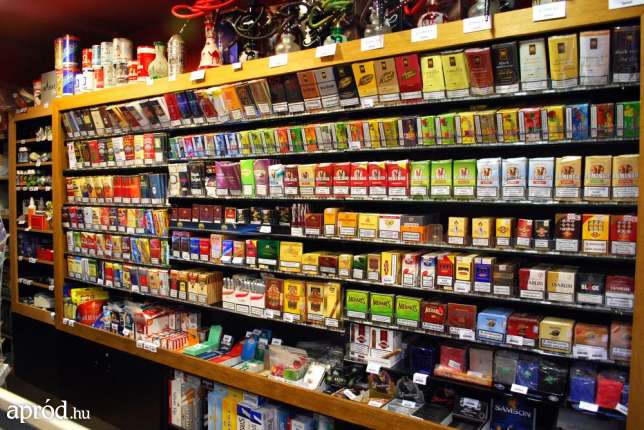
However, BBJ again applies the asterisk with which these particular figures will seemingly henceforth always require: Since March 10, KSH has relied solely on data from the National Tobacco Sales Non-Profit (NTSN), the umbrella comptroller organization for the central government. While certainly NTSN would have little reason to cook the books on tobacco sales in Hungary, any decrease seen in the months post-national shop scheme will likely no longer be so evident.
Along with the official release of the statistics, KSH noted that “Except for a 0.3% increase in 2011, retail sales volume in Hungary dropped every year between 2007 and 2012.” With the favorable tweak now applied to retail sales, the 6.5% jump y.o.y. in January and February (each traditionally low-volume consumer-purchase months internationally) combined is certainly an indication that 2014 will ultimately see perhaps the greatest “rise” in Hungarian retail sales since the change in political system.
KSH reported that food sales rose 8.2% y.o.y. and 0.4% month-on-month; herein, food is defined as “food, drinks and tobacco,” a grouping that now comprises a reported 49.9% of all retail in Hungary.
For February, retail sales rose 0.4% month-on-month.
Sales at non-grocery outlets were reportedly up 4.7% y.o.y.; industrial goods rose 12.3%; clothing and footwear sales were up 9.0%; furniture and technical goods sales climbed 8.4%; pharmaceuticals and cosmetics sales increased 1.4%.
Fuel sales were up 6.4% y.o.y. for February and stayed flat month-on-month.
Producing journalism that is worthy of the name is a costly business. For over 30 years, the publishers, editors and reporters of the Budapest Business Journal have striven to bring you business news that works, information that you can trust, that is factual, accurate and presented without fear or favor.Newspaper organizations across the globe have struggled to find a business model that allows them to continue to excel, without compromising their ability to perform. Most recently, some have experimented with the idea of involving their most important stakeholders, their readers.
We would like to offer that same opportunity to our readers. We would like to invite you to help us deliver the quality business journalism you require. Hit our Support the BBJ button and you can choose the how much and how often you send us your contributions.