



On a day when the subject matter ranged from Hungary’s drive to become a center for battery production and research via the value of batteries for grid stability to the potential impact of American import tariffs on the European industry under the forthcoming Trumpian presidency in the United States, one message was underlined by several early speakers.
None were more forceful than Thore Sekkenes, European Battery Alliance (EBA) Program Director.
“The temporary setback on sales of EVs is just that, temporary. It will happen; the fantastic achievements made mainly in China on EVs will ensure that we will be driving EVs in the future; there is no doubt about that. So, let’s not talk about slowing down; that is nonsense!” he thundered in his early keynote address.
Somewhat less stridently, Péter Kaderják, executive director of the Hungarian Battery Alliance (Huba), argued in his welcoming address that the current weaker business performance of the battery segment is part of the normal business cycle.
Citing figures from the International Energy Agency, he said the outlook for electric vehicles is “promising,” with global numbers set to grow “from the current 43 million to 500 million by 2035, a 12 times increase.”
With this outlook in mind, and given that the EU is forecast to remain the second largest market for electric vehicles, Kaderják said it has become increasingly clear that Hungary intends to build further upon its current global ranking as the fourth largest battery cell-producing country.
Pointing to existing and planned EV and battery production facilities in cities across the country, Hungary’s “dedication to becoming climate neutral” is proven by government policies to support the green energy transition.
“We have in place a complex support team for electromobility, including tax advantages, purchase discounts and parking fee waivers for electric passenger cars, and for cleaner heavy-duty trucks, a large discount for highway tolls is provided from this January,” he said.
As a result, EV sales have increased by more than 50% this year, and the share of electric and hybrid cars in use has risen to 12% of the total.
The rapid growth of solar energy, which could reach up to 25% of the total generation this year, the second highest rate in Europe after Greece, has created a need for battery storage to assist grid balancing, Kaderják noted.
As a response, the government launched a successful tender worth some EUR 1.1 billion for energy storage and is now concluding contracts for 56 winning projects.
“Once completed, these projects will help improve the management of the domestic electricity system by increasing battery electricity storage capacity from the current 50 MWh to about 1.3 GWh within three years,” he said.
Huba, whose membership has grown by 30%, from 79 to 103 full members in the last year, has three immediate priorities.
While the share of value-added in battery production in the country has been in the range of 16-20% in recent years, there is “clearly significant room for improvement for Hungarian companies” in this respect.
Huba was also determined to promote improvements in the sector’s environmental performance, and supports government efforts to streamline licensing and “to establish environmental standards for the sector that meets German standards.”
In addition, the association seeks to further “the development of a well-functioning and sustainable end-of-life battery management system in the country,” he concluded.

István Joó, CEO of the Hungarian Investment Promotion Agency, understandably also lauded Hungary’s investment successes, although he first noted the woes of Swedish battery-maker Northvolt and ACC, a joint venture of Stellantis, Mercedes and TotalEnergies, both of which are struggling to survive.
“What is the moral of all this chaos?” he asked. “As a former Northvolt chemical engineer put it bluntly: The Chinese are better, and we are late to the party.”
China is at the heart of the revolution in electrification, and if Europe is to regain its competitiveness, “we must embrace this fact,” Joó argued. “Currently, out of the 10 battery companies that cover about 95% of the market, six are Chinese, three are South Korean, and one is Japanese, but none are European. So, it’s clear that the East has taken over the industry on a global scale,” he said.
Furthermore, these Asian companies achieved success through collaboration, he said, and if European industry is to survey, it must do the same, particularly around battery technology, if it is to catch up, once again citing an industry insider, in this case, Andy Palmer, the former CEO of Aston Martin.
It is this same business philosophy that has underpinned the government’s (and Hipa’s) efforts to attract FDI via its Eastern Opening policy, Joó said, stating that, with the agency’s support, a total of 59 projects related to battery manufacturing had received positive investment decisions since 2016.
“These projects represent approximately EUR 24 bln in investment and are expected to create close to 33,000 jobs,” he said. “In 2023, Li-iron batteries represented 6.4% of Hungary’s exports, which means that batteries are the most significant export product of our country.”
As Joó noted, Samsung SDI last year launched the largest R&D project (valued at almost EUR 62 million) in the time Hipa has been operating.
“It is now beyond dispute that Hungary has become one of the global leaders of the new automotive era,” he asserted. Hipa intends to keep it that way: it is the first of five primary objectives set for the period up to 2030.
“We are committed to maintaining Hungary’s position among the top five global players in battery production throughout this decade, [with a] second goal to establish the country as the leading research and development center for battery technology in Europe by 2030,” he said.
Along the way, the intention is to make Hungary the leading country in Europe regarding registered patents in the European battery sector while simultaneously making it one of the leading European centers for battery industry-related higher education and vocational training.
“Last but not least, our vision includes Hungary being a hub for business service centers in the battery industry. Hungary aims to be the base where financial, legal and HR operations related to the battery industry are managed, further solidifying our position in the sector,” Joó declared.
“These are, of course, ambitious objectives,” the agency chief said, “but they are all attainable […]. We invite everyone to work together towards achieving these goals.”
Thore Sekkenes, program director for the European Battery Alliance, an association of 800 companies involved in the sector, praised Hungary’s “go-go success” in battery production. However, he was more subdued than Hungarian speakers in his assessment of Europe as a whole.
Sekkenes recognized that in the past decade there has been a “monumental industrial shift in a very short time” within the European industry. Despite past achievements, however, the continent faces significant challenges in meeting targets.
The continent has “a big gap in several areas,” namely in the active, upstream materials, skilled people across the value chain, manufacturing equipment and affordable energy.
More pertinently, today there is “an additional question which is a geo-political layer on top of everything else, which sharpens the global competition by some regions fueling their industries with intensive subsidies” he said.
He illustrated his point with a slide which depicted China as having provided both direct and indirect subsidies totaling EUR 221 bln to its battery sector in 2019. The same slide indicated the United States as having allocated some EUR 179 bln in the same year.
Both figures dwarfed the EUR 13 bln-14 bln in state subsidies awarded to each of the German and French battery industries in the same period. The less-than-level playing fields implicit in the numbers clearly create a source of irritation for the EBA and the European Commission.
The European car industry employs some “14 million people, depending on how you count them, who produce, more or less by coincidence, 14 million cars annually,” Sekkenes said.
Within Europe, this is currently served by about 100 GW h of battery production installed in the past decade.However, this is one-tenth of the EBA’s estimated demand by 2030 of 1,000 GW h.
“If we continue what we’re doing, we believe that we could possibly double the current capacity by 2030,” he said, a value vastly inadequate to meet the needs of European automakers.
“This will mean that the car industry will be going down in Europe. We will lose many jobs in the car industry,” Sekkenes intoned.
“However, if we act decisively and forcefully, enhancing cooperation across borders, companies and across continents […], then we believe that we could probably quadruple the capacity that we have today, perhaps going to 400-500 GWh,” he reasoned.
Though far less than ideal, such a result would support the European car industry, and it would also meet the 40% target set in the Net Zero Industry Act, the EBA estimates. The association has identified six key areas needing urgent action to achieve this.
“We need to accelerate and implement the new battery regulation to establish this well-discussed level playing field and set the standards [while] increasing production support for European cell manufacturers. The EUR 3 bln [already earmarked] is a good symbol, but it is a symbol. It is not very much compared to [the support for Asian players],” he pointed out.
Equally, there is a desperate need for what Sekkenes termed “temporary, intelligent protection measures. Just as a young tree in your backyard needs nurturing, a temporary protection is needed, intelligently applied,” he reasoned.
And from the other direction, the EBA advocates for incentives for European-made EVs and battery applications, to boost local demand and innovation.
As the fifth priority, Sekkenes spoke of the need to “secure the upstream supply chain. Ensuring access to the raw materials and the active materials for the European battery makers and OEMs is essential,” he said. However, he did not detail how this broad priority could be achieved.
As to the final point, Sekkenes identified cooperation. “We have always been talking about cooperation, and we’re doing a lot, but we need to raise that to another level to enable cross-sector collaboration,” he said. “These six actions; if we do these things, we believe that this industry can prosper,” he added. “I’m very hopeful that this will be the case.”
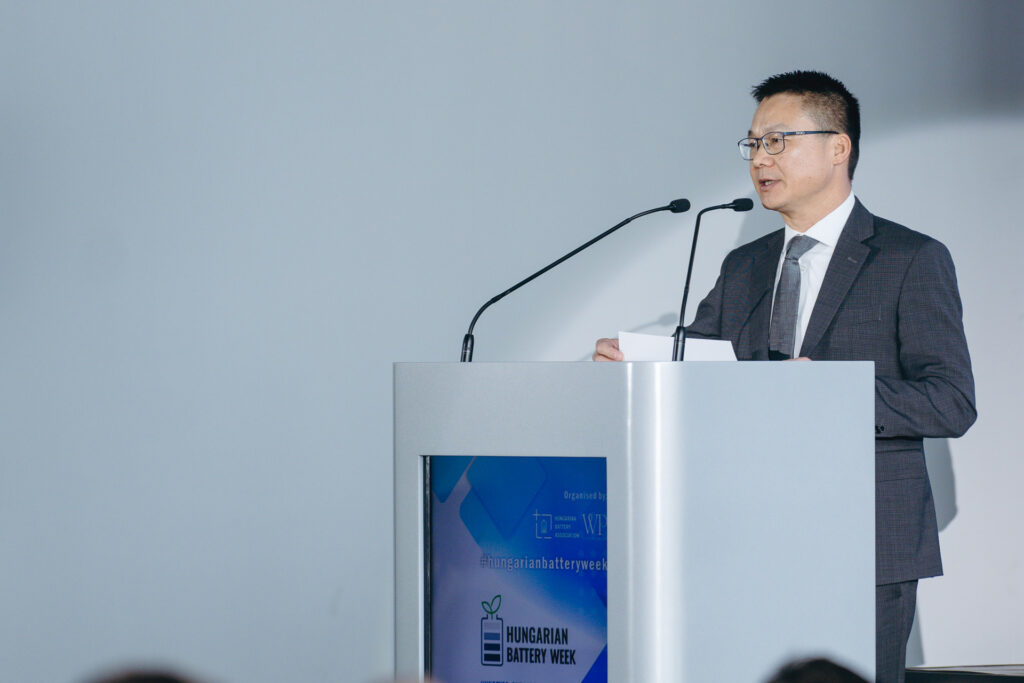
“We are rated number one leader both in e-mobility and energy storage […] CATL has developed a safe, efficient and economical chemical energy storage system. Our annual investment in R&D has been steadily growing. In 2023, it was USD 2,590 mln, and our six R&D centers, with 20,000 employees, are contributing to sustainable battery [production] and life-cycle research […] Our company, engaged in scientific and technological and in collaboration with 68 leading universities, by the end of 2023 has a total of 9,987 issued patents.”
Jason Chen general manager of operations for CATL Europe
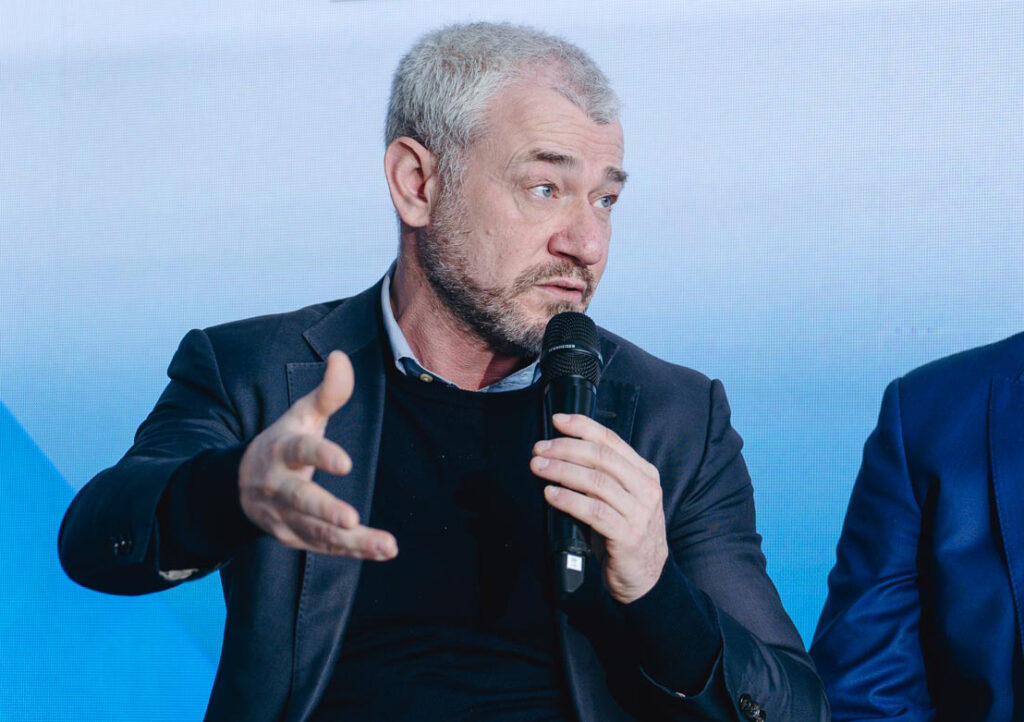
“If you look beyond the early adopters of electric vehicles, many people are still not sure that they want to buy one now, or they cannot afford it, or they are waiting for better technology to come. It’s called the iPhone effect. Sometimes, you wait for the better iPhone. […] The charging infrastructure across Europe is not developing well unless you are in Germany, France or Belgium. If you go down to Spain, Italy and other countries, you see a much different situation.”
Fabrice Stassin secretary-general, the Batteries European Partnership Association

“Given it’s a green environment that we want to establish in Europe, and I have two kids, I completely agree with that, they should inherit something worth living for, but obviously, there’s only 1% of the world that is thinking about this, because you have to be able to pay for that. So, I really think that capacity in recycling, re-collection and all the systems in Europe has to have some sort of additional funding [for] those players, irrespective of whether European or Asian players are coming into Europe because the capacity, technology and competencies need to be increased.”
Ákos Nagy senior counsel, Kinstellar regional law firm
This article was first published in the Budapest Business Journal print issue of November 15, 2024.


