



Meanwhile, dozens of smaller transactions quietly reshaped the industrial, manufacturing, and IT landscapes.
2025 will likely be remembered in Hungarian corporate history as a year when a handful of very large transactions, some state-led, some private, reshaped major sectors of the economy. While the headline-grabbers are few, their scale and strategic implications have been significant: aviation and infrastructure, defense industry consolidation, media consolidation, and sizeable energy and industrial moves all figure prominently.
Together, they also help explain why official tallies of M&A value in Hungary have been volatile: a few mega-deals move the needle for an entire year. Below, we take a look at the most important deals in each sector.
The most talked-about and highest-value transaction affecting Hungary in the 2024–25 timeframe remains the deal around Budapest Ferenc Liszt International Airport. The sale, announced and, for the most part, executed in 2024, continued to shape 2025 as the state and partners implemented the takeover and outlined development plans.
A consortium led by state-owned Corvinus (on behalf of the Hungarian state) took majority control of Budapest Airport, with Vinci Airports agreeing to take a minority stake. Public filings and Vinci’s press materials put the equity component of the transaction at about EUR 3.1 billion (more than HUF 1.2 trillion), with roughly EUR 1.2 bln of net debt rolled into the transaction, thereby materially increasing the enterprise value. The airport concession will run for decades, giving long-term operational control.
While the core work around the sale and the signing of the sales contract itself was completed in mid-2024, implementation and strategic decision-making have continued through this year. Hence, the airport deal continued to dominate discussions around Hungarian M&A and remained in the headlines throughout 2025.
As for the current state of the deal, operational control is in the hands of the new ownership structure, and the government has announced ambitious development plans, most notably a proposed third terminal and linked transport projects, intended to be delivered over the coming years.
Market commentators have described the transaction as a strategic, sovereignty-oriented move rather than a simple private buyout; it also heavily influenced annual M&A value metrics due to its sheer size.

A second significant 2025 storyline has been the consolidation around state-linked defense assets, centered on agreements between the Hungarian state and 4iG (a large local IT and telecoms group whose leadership is close to the government) regarding the commercial parts of national defense industry holdings.
The transactions were described in official notices as the transfer of commercially viable defense-industry assets into 4iG-controlled entities. Public company filings and announcements from 4iG reported a net present value of purchase consideration of HUF 72.1 bln for the suite of transactions. The package is framed as a consolidation of defense industrial assets under a single private-sector operator, though the state retains oversight and non-commercial functions.
Writing on X in June, Gellért Jászai, chairman of 4iG, said, “I am pleased to announce that 4iG Space and Defense Technologies has signed a term sheet with N7 Holding Ltd. to establish Hungary’s first public-private defense industry holding company. This marks a significant milestone not only for the 4iG Group but also for the broader Hungarian and international defense landscape.”
Jászai went on to add, “The cooperation aims to substantially enhance export potential and global competitiveness, while also ensuring long-term supply security. Through this partnership, we are laying the foundation for a space and defense industry portfolio that could become unique on a global scale, a true testament to Hungary’s innovation capacity and strategic vision.”
Announcements and disclosures by 4iG published in October describe the agreed economic parameters; the transaction process (in other words, the signings and regulatory approvals) has followed a timetable into late 2025 and may, depending on authority clearances, continue into 2026.
According to a report by state news wire MTI published on Oct. 6, 4iG STD is to acquire direct or indirect ownership in six companies through three transactions.
N7 Holding will transfer its ownership stakes in the defense industry companies Aeroplex, Arzenal Fegyvergyar, Colt CZ Hungary and Rheinmetall Hungary Munitions as an in-kind contribution to N7 Defense. 4iG SDT will acquire a 75% plus one vote stake in N7 Defense.
4iG SDT will buy a 100% stake in mortar and ammunition maker Hirtenberger, and thereby acquire its shares in its subsidiaries.
In the third transaction, N7 Holding will transfer its 49% stake in Rheinmetall Hungary as an in-kind contribution to its subsidiary, VAB Kft. Next, 4iG SDT will acquire a 75% plus one vote stake in VAB Kft., and, through that, an indirect minority stake in Rheinmetall Hungary.
The deal reorients a part of Hungary’s industrial base, moving more of the commercially exploitable defense value into a single private group with the capacity to scale and export, and marks one of the most significant domestic industrial consolidation moves not just in 2025, but in recent years.
One of the most controversial private-sector transactions of 2025 was the acquisition of Ringier Hungary’s assets by Indamedia Network Zrt. (a media group controlled by investors with close government connections, according to multiple journalistic accounts, which operates 18 online publications, including Index.hu, that draw close to five million users a month).
In late October, Indamedia announced and closed the purchase of Ringier Hungary, taking over a portfolio that includes several of the country’s best-known newspapers. The parties did not disclose the financial terms publicly. The acquisition was widely reported and has been interpreted by many observers as a significant consolidation of reach in the domestic news and tabloid markets.
The new owner has begun integrating the acquired titles into its group and rebranding steps, where applicable, quickly followed. The transaction triggered staff departures at some titles and prompted debate domestically and abroad over media plurality and press independence. The financial details remain undisclosed. Under the deal, Indamedia acquired Blikk, the country’s leading tabloid daily and one of the most visited online portals, along with magazines such as Glamour and Auto Bild, and several television program guides.
Beyond the direct business rationale, the takeover has been framed in political terms by critics, both from the domestic opposition and several international commentators, due to its timing ahead of the April 2026 national elections and the buyer’s political proximity to the government.
Energy remains a strategic sector in which large Hungarian corporations have been active. MOL, Hungary’s integrated oil and gas group and one of Hungary’s four blue-chip companies on the Budapest Stock Exchange, remained a central acquirer and investor across 2025, pursuing both traditional midstream/upstream logic and new renewable capacity.
Company presentations and market pieces highlighted significant purchases and targeted investments (including acquisitions of power and photovoltaic assets in Hungary and the region). The company also publicly signaled ambitions for sizeable annual M&A allocations going forward.
Deals announced during 2025 varied in size and date; for example, in late 2025, press reports indicated acquisitions of solar assets and market chatter suggested strategic moves on regional refinery assets amid the shifting European energy landscape. Deal values for MOL’s Hungarian renewables buys were reported in some outlets but tend to be smaller than the country-level mega-deals, and, in many cases, are still subject to finalization and approvals; several transactions remain subject to regulatory review or are expected to close in subsequent quarters. Market watchers see MOL as an active consolidator in energy amid geopolitical shifts in regional supply chains.
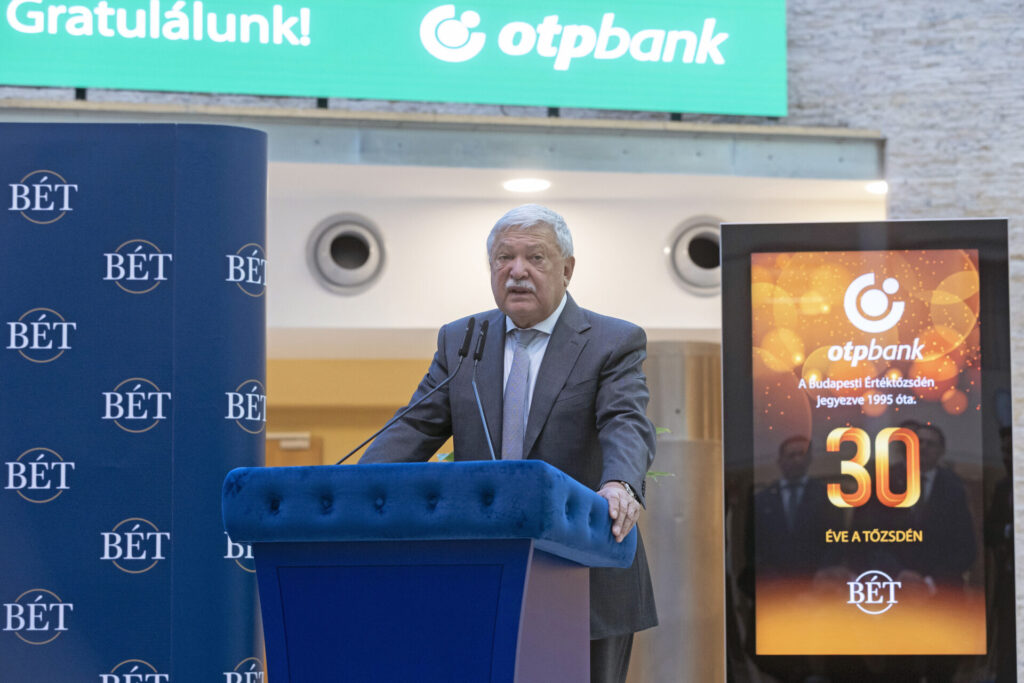
In 2025, Hungary’s banking sector saw limited large-scale M&A activity, but the domestic champion, OTP Bank, stood out as the region’s most active consolidator. Regional analyses describe OTP as “the most active acquirer bank in the region,” though no broad, headline-grabbing Hungarian bank takeover was reported last year. Instead, OTP focused on portfolio optimization, share repurchases and capital-allocation strategies, positioning itself for future growth despite macroeconomic headwinds.
At the same time, 2025 was marked by significant regulatory and tax pressures on banks. OTP itself reported that extra banking levies and transaction taxes weighed heavily, in the first nine months alone, special taxes reduced its profit by more than HUF 111 billion.
Even so, the sector’s structural transformation accelerated. According to a 2025 review by PwC Hungary, the domestic payments infrastructure hit record levels: contactless card usage soared, POS and ATM networks expanded, and digital services (neobanks, instant payments) saw rapid adoption.
In late November, MBH Bank announced it would sell its own shares, roughly 7% of its capital, via a public offering on the Budapest Stock Exchange. The offer was open to both retail and institutional investors, with a cap price of HUF 3,848 per share. The bank said the move aims to strengthen its stock-market presence and broaden its investor base ahead of broader strategic plans.
All in all, 2025 for Hungary’s financial sector was less about bold acquisitions and more about adaptation, banks reorganizing portfolios, absorbing regulatory costs, and investing in digital transformation to stay competitive in a rapidly evolving fintech environment.
In November, Fagron NV, a global pharmaceutical compounding leader headquartered in Waregem, Belgium, announced that it acquired the Hungarian business of Magilab. The deal is part of Fagron’s strategy to strengthen its EMEA footprint and to consolidate its presence in hospital-pharmacy compounding raw materials in Hungary, the company said at the time.
According to the announcement, the acquired business is expected to contribute “mid-teens” million euros in annual revenues, with the EBITDA margin above Fagron’s existing portfolio, indicating a strategic fit and expected profitability.
In a more recent deal, on Dec. 1, Talentis Group Zrt., which is part of the Mészáros Group, signed a purchase agreement to acquire a majority stake in MiND Klinika Zrt. MiND Klinika is a private, premium-category healthcare provider founded in 2019, and the transaction expands Talentis’s portfolio into the private-sector healthcare market. Talentis and the Mészáros Group form part of the business empire of the plumber-turned billionaire investor Lőrinc Mészáros, who has made the bulk of his fortune since Fidesz returned to power in 2010 and is a key ally of Prime Minister Viktor Orbán; the two men were childhood friends.
As part of a broader 2025 policy reshaping public vs. private provision of diagnostic imaging, the National Directorate General for Hospitals (OKFŐ) purchased 16 imaging devices (including CT and MRI scanners, as well as ultrasound, X-ray, and mammography units) from a large private diagnostic provider. The equipment purchase price was approximately HUF 976.5 mln.
In addition, a public procurement contract signed at the beginning of the year allocated HUF 6.747 bln to the acquisition of CT/MR machines for several public hospitals. From November, private providers will no longer be allowed to perform state-funded imaging diagnostics, so the state is re-centralizing imaging capacity within public hospitals.
Taken together, independent professional surveys and consultancy reports show that 2025 saw a rebound in disclosed M&A activity in Hungary relative to the previous year’s baseline, but the distribution of deal value is skewed: a few very large transactions (notably the Budapest Airport matter and, more directly for 2025, the defense industry consolidation) counted for a disproportionate share of total value. Big Four consultancy EY’s regional reporting and local market commentary indicate that 49 publicly disclosed transactions were recorded in the first half of 2025, with manufacturing and IT among the most active sectors.
If 2025 taught investors one lesson, it is that Hungary, despite its small domestic market, can still attract and generate transactions of international significance. The combination of state policy, private ambition, and regional energy and infrastructure pressures suggests that 2026 will likely see continued sovereign-scale projects and private-sector consolidation. Watchlists for the year ahead include further strategic moves in energy (both hydrocarbons and renewables), additional restructuring in defense industrial assets, and potential follow-on M&A in media and finance.
This article was first published in the Budapest Business Journal print issue of December 12, 2025.


