



But it is not only the state that has been active in the M&A market in 2024.
In the past year, there was one deal that inevitably dominated the local M&A market, which, to no one’s surprise, involved the Hungarian state. However, despite geopolitical uncertainties, the domestic transaction market remained active, according to a report by EY evaluating corporate mergers and acquisitions.
In 2023, although the number of deals decreased, their estimated value increased in Hungary compared to 2022. The most attractive investment target last year was the technology sector, while this year, it was the manufacturing industry that gained momentum in the first six months. Then, in June, the largest transaction in the history of the Hungarian economy was completed.
Some 111 transactions were announced in Hungary in 2023, worth USD 6.4 billion. The number of deals decreased, but their combined value increased by almost 10% compared to the 137 announcements in 2022, which resulted in a total of USD 5.9 billion that year.
The proportion of transactions directed towards Hungary increased to 41% last year. The number of investments also shows an increasing trend: in 2022, investments directed abroad accounted for barely 22% of transactions, in 2023 for 29%, and, in the first half of 2024, for 35% of all transactions.
At the same time, the number of domestic transactions is decreasing year by year; last year, these transactions accounted for only 30% of all disclosed cases. Domestic companies most often invested in Poland, Serbia, and Slovenia. Among the companies investing in this country, the United States, the Netherlands, Austria, and Germany were at the forefront.
“The proportion of financial investors in Hungary has increased significantly this year. We expect that more and more similar transactions will be implemented on the market in the coming period,” the EY report cites Márton Paulovits, director of EY’s M&A practice, as saying. “This trend is supported by the nearly 1,000 high-performing mid-cap companies that can be attractive targets for both financial and strategic investors,” he adds.
In terms of the number of transactions, the most attractive sector in 2023 was technology (18 transactions), followed by the manufacturing and financial sectors. In the first half of this year, manufacturing took the lead, with 11 deals completed.
In the first six months of 2024, a total of 43 acquisitions were closed and announced in Hungary. This includes the largest and most complex transaction in the decades since the change of regime in 1990, the re-purchase of Budapest Ferenc Liszt International Airport. After more than a year of intensive negotiations, the purchase agreement for Budapest Airport Zrt. was signed on June 6. After nearly 20 years, the airport was once again under majority national ownership, the Ministry of National Economy announced following the deal. The purchase price was put at EUR 3.1 bln, and the EUR 1.44 bln loan taken out by the previous owners has also been extended.
The negotiations between Corvinus International Investment Co. and Vinci Airports took place in two rounds. The deal was concluded with an international group of sellers: AviAlliance, GIC and CDPQ. An agreement was also reached with the foreign creditors financing the airport to close the transaction. The purchase transaction represents a record size even in Central Europe. Thanks to the agreement, the Hungarian State acquired an 80% ownership stake in Budapest Airport Zrt., and the French co-investor Vinci acquired 20%.
The Hungarian state has also been active in the energy sector, with another “strategic deal” announced in June. Minister of Foreign Affairs and Trade Péter Szijjártó said in Baku, the capital of Azerbaijan, that the South Caucasus state and Hungary had reached an agreement on the purchase of a stake in the Shah Deniz natural gas field, which is one of the largest of its kind in the world.
The Hungarian state-owned energy company MVM purchased a 5% stake in the production-sharing agreement for the Azerbaijani gas field and a 4% stake in the gas sales company. After the signing of the contract, Minister of Energy Csaba Lantos, whose ministry controls MVM, emphasized that this was the most significant investment in the history of the Hungarian energy company, for which it did not receive any state budget support, financing the deal entirely from its own resources.
It seems the appetite of Hungary’s 4iG was not satisfied with what could be called the “Deal of the Year” in 2023, namely the purchase of 100% of the shares of Vodafone Magyarország Távközlési Zrt. This year, among other deals, it further strengthened its presence in the telecommunications market. In July, Antenna Hungária Plc., a subsidiary of 4iG Group, signed a sale and purchase agreement to acquire the regional telecommunications operator PR-Telecom. The Hungarian-owned PR-Telecom had its own network infrastructure and provides television, internet and fixed voice services in 10 counties and nearly 200 settlements. This acquisition would add 250,000 households to the 4iG Group’s access network, 55,000 new customers to the customer base and 3,400 km of fixed infrastructure, 4iG said. The transaction is expected to close in the final quarter of this year following the approval of the Hungarian Competition Authority (GVH).
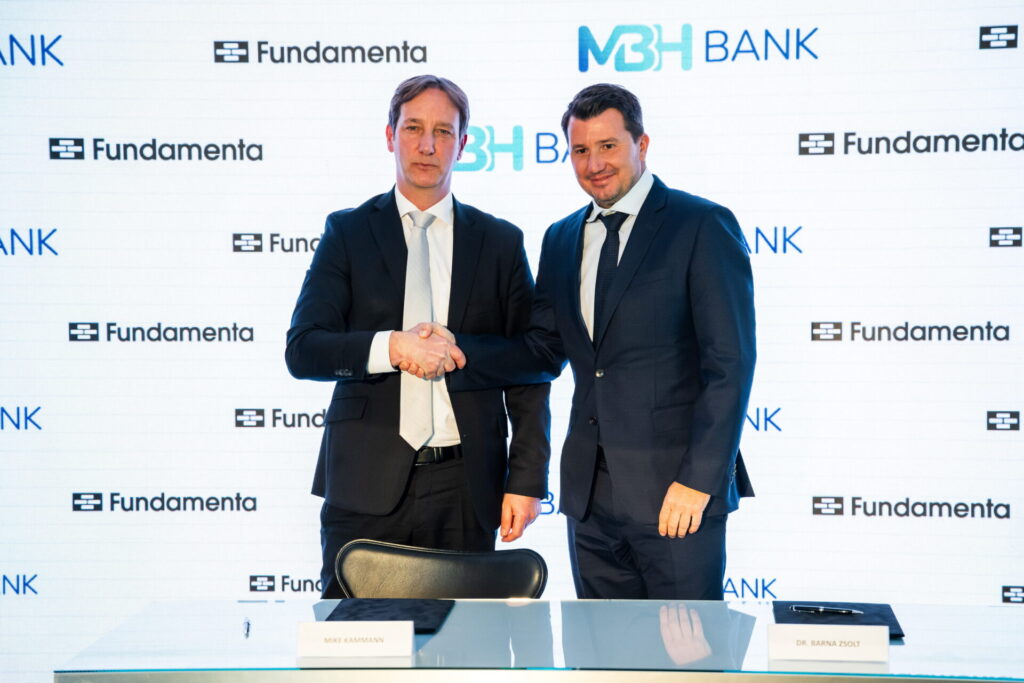
One of the largest transactions, although fusion might be a better word for it, which involved a state presence, was the creation of the Hungarian Bank Holding (MBH Bank), the lengthy process of which was completed last year. Following the successful closure of the deal, the bank has announced further plans for expansion. In March 2024, it acquired a 76.35% stake in Fundamenta-Lakáskassza Zrt. aiming to become a leading player in the domestic savings and housing loan market by integrating with the Fundamenta Group through existing and untapped synergies between the two companies. In November, MBH Bank signed a purchase agreement with Generali Insurance to purchase a 14.88% stake in Fundamenta-Lakáskassza, further increasing its stake in the housing savings bank. After obtaining the necessary regulatory approvals, the credit institution will hold a total stake of 91.23% in the company.
On July 8, 2024, Gránit Biztosító, a 100% subsidiary of Waberer’s International, signed a sale and purchase agreement to acquire 66.925% of Hungarian Post Insurance & Hungarian Post Life Insurance. The transaction was completed on Nov. 29.
“The insurance business has already played a significant role in our strategy announced two years ago, in which we have had a decisive interest through Gránit Biztosító,” Barna Erdélyi, a Waberer’s board member, told business news portal Portfolio in a recent interview. “The Waberer’s Group has not been exclusively a logistics group for a long time, and since 2016-17, it has been explicitly striving to ensure that its insurer not only insures its own fleet but also succeeds in the broader market of motor and other non-life insurance. The current further diversification is an organic continuation of our efforts so far.”
With the largest acquisition to date in its history, AutoWallis announced in November that it has bolstered its presence in the Czech retail market. It acquired 100% of the Czech Milan Král Group, comprising six companies at five sites and employing 200 people. Prior to that, in July, the listed Hungarian retailer successfully closed another purchase after acquiring three BMW dealerships of the Czech player Stratos Auto after meeting all closing conditions, following previous approval from the Czech Competition Authority.
With the acquisition, the group is now firmly present in the Czech car retail market (in addition to Hungary and Slovenia), in Prague, Hradec Králové and Pardubice. In the first step of the transaction, AutoWallis purchased 80% of the company owning the three BMW dealerships. That will increase to 100% within two years by acquiring the remaining share, the company said.
The Hungarian oil and gas giant MOL has signed an agreement with one of the largest and most dynamically developing vehicle fleet management companies in Hungary, Mercarius Fleet Management, the company announced in November. MOL Fleet Solution and Mercarius will establish a joint holding company, which will continue to operate as MOL Mercarius. The new company will manage more than 20,000 vehicles operationally as the second-largest player in the fleet market. Previously, in December 2023, MOL announced that it had signed an agreement with Indotek Group to purchase a 15% stake in Waberer’s. That deal was sealed in April 2024.
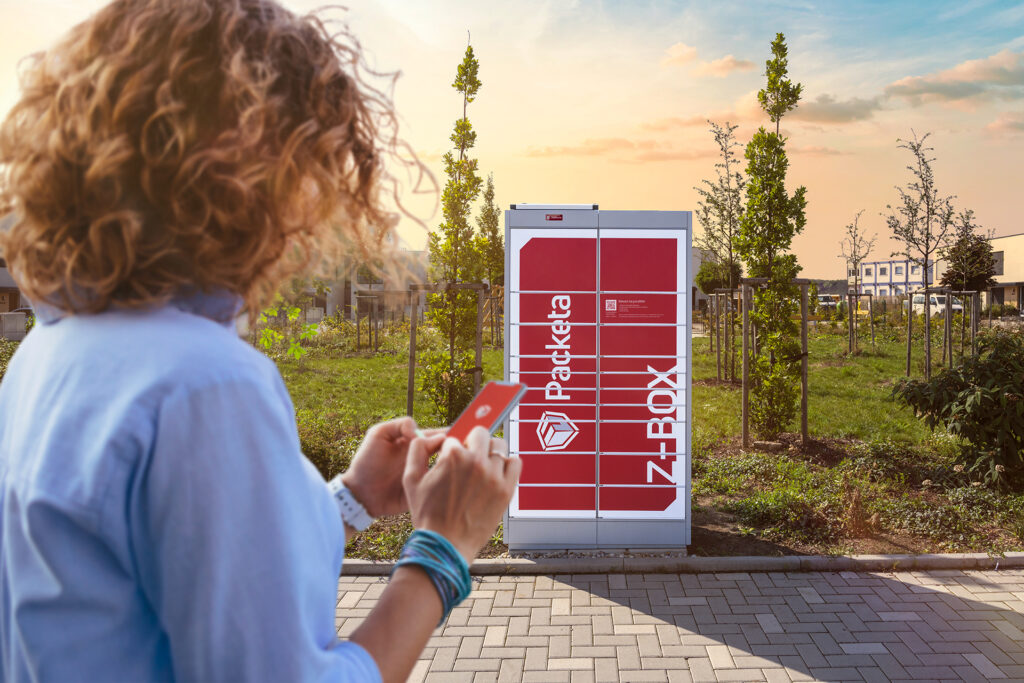
Hungary’s parcel market has seen some changes this year, too: the acquisition of the Foxpost delivery company was completed at the end of August. Foxpost announced the change of ownership at the beginning of the summer: it was then revealed that the previous owners, Wallis Group and Trueway (formerly known as Finext), would sell the startup to an investor consortium that also owns the Czech peer Packeta. The value of the deal has not been disclosed. Following the merger of Packeta and Foxpost, the owners decided to keep the local brand in Hungary.
All obstacles have been removed for the acquisition by businessman Dániel Jellinek (founder and CEO of Indotek Group) of a stake in Auchan Magyarország Kft. The Hungarian competition authority GVH approved the deal in November, thus indirectly fulfilling the government’s goal of significantly increasing the domestic ownership share in retail. The government took a similar attitude to the banking, energy and telecommunications sectors. In addition to the 47% stake in the retailer, the real estate investor will also take over the operational management of the Auchan chain.
Auchan, which currently accounts for around 6.8% of Hungarian retail sales, has 19 large hypermarkets and five supermarkets in Hungary, with a total store area of more than 250,000 sqm. The chain also has 19 petrol stations. Jelinek stated that he does not plan to sell the stake he has just acquired in the next five years, nor does he want to bring in a partner. Indotek Group announced a year ago that it would acquire the 47% stake in Auchan Magyarország and become the sole owner of the retail premises occupied by Auchan stores through the acquisition of Ceetrus Hungary Ltd. and Nhood Services Hungary Ltd. The latter transaction is currently being closed.
This article was first published in the Budapest Business Journal print issue of December 13, 2024.


