


The ground gained by electric vehicles, as well as surging demand in the past years, the evolution of electromobility, and the associated paradigm shift in the industry represent some of the biggest challenges for the automotive sector in recent decades. But challenges always bring opportunities, too, through which companies can ascend to new levels and pave the way for continuous development in the coming decades. “Traditional” automotive OEMs and supply-chain entities are either already participating in this process or are exploring how to position themselves within the electric vehicle supply chain.
The question is how Hungarian members of corporate groups can increase their influence within the group. How can they leverage various government aid resources to enhance the prestige of the Hungarian subsidiary, by positioning it for a larger slice of the current or upcoming investments, developments, and research and development (R&D) paths?
In conversations with the leaders of our automotive clients, it has become clear that the shift towards electromobility, the related investments and developments, as well as positioning Hungarian subsidiaries within groups are among our clients’ top priorities.
The transition to electromobility has brought significant investments to the region in recent years, particularly to Hungary. Of these, OEM investments are especially noteworthy, as are the Chinese and South Korean battery manufacturers and their supply chains; it is also very important to mention that automotive companies already operating in Hungary have diversified their product portfolios and strengthened their R&D activities.

Many companies, previously manufacturing components for traditional vehicles, have started electromobility investments or are getting ready to make decisions on this strategic shift.
However, after the initial rush, momentum was slowed by a number of factors; first by COVID, and now after a short upswing, corporate groups are again facing a temporary market slowdown in 2024. Our experience tells us that a lot of companies have put their plans on ice, with some of them even rethinking planned investments, possibly altering original plans.
The slowdown deserves a closer look, especially compared to previous forecasts. If we examine the 2024 forecasts on electric vehicle manufacturing in Europe, production was estimated to be 2.7 million units but is currently projected to be 2.5 million electric cars, which is still 600,000 more than the 2023 figure. Taking long-term forecasts into account, by 2030 Europe could reach 4.3 times the 2024 output, with 10.5 million fully electric cars being produced. The same growth trend is expected in North America, while in China, a 60% increase in production is anticipated for 2024, obviously taking into account their reference point of already significant magnitude of 7.6 million units, according to LMC – Global Data.
Forecasts indicate that the current volatility in electromobility and electric car manufacturing is likely to be temporary, and growth is expected by the end of the decade. Consequently, the investments and developments that seem uncertain in many cases at the moment are expected to materialize within corporate groups. The question is what share Hungary and Hungarian automotive companies can secure for themselves, helping to ensure their long-term growth in line with the new transportation trends.

One of the main drivers behind these investment decisions, whether it’s asset investments or establishing an R&D center, is the return on investment. The government aid regime can provide significant assistance to Hungarian subsidiaries, primarily through cash grants and tax credits. This creates a win-win situation for both companies and the state, as in exchange for the support, businesses ensure the creation of high-value-added jobs and continuous wage growth, which in turn increases the purchasing power of the Hungarian population.
Return on investment is influenced by numerous economic and market factors, but exposure to these can be effectively influenced by the involvement of government funding. Let’s look at the support for asset investments. In these, up to 60% of the money spent on expansion and development can be available as a cash grant or corporate tax credit, depending on the location of the investment. The government has recently favored tax credits for such projects. Although tax credits do not have an immediate or investment-phase cash-flow effect, they still represent significant value, as they can be utilized in the year the investment is completed and can reduce the already uniquely low 9% corporate tax rate to 1.8%. Considering these incentives when making investment decisions is extremely important in strengthening the competitiveness of Hungarian subsidiaries.
We have had many chances to see the favorable impact a well-compiled and presented government aid package can have at group level when deciding on an asset investment. Numerous Hungarian companies have already risen to occupy a prominent place on their group’s investment map, partly because of how quickly developments brought here can achieve a return on investment thanks to the efficient use of funding opportunities.
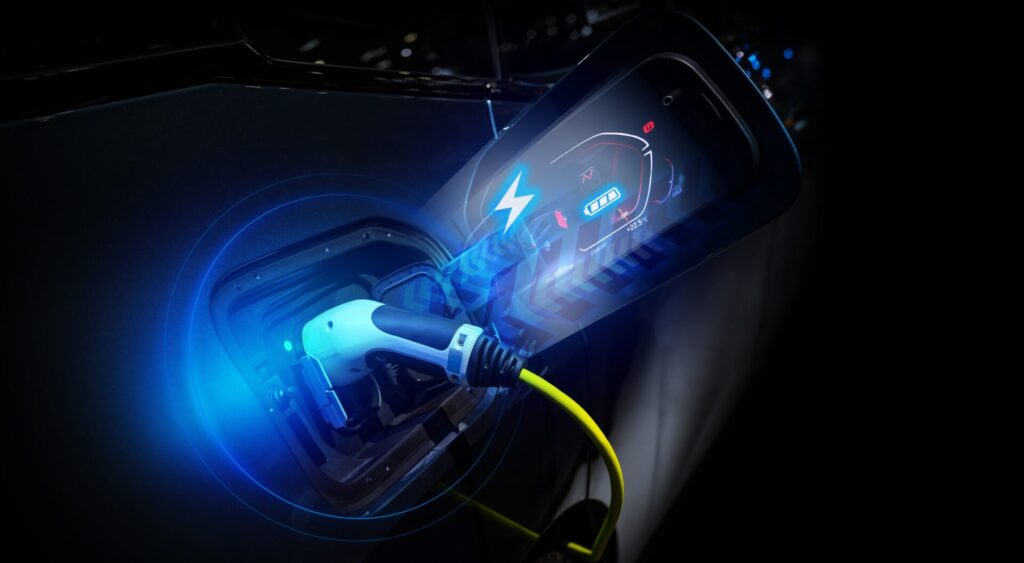
Government aid for high-value-added R&D activities deserves special attention, as this also has a significant impact on R&D investment decisions and the allocation of R&D projects within corporate groups. The Hungarian system provides extensive opportunities for R&D investments and operational cost support. This means that Hungarian companies can significantly increase their influence when groups decide on the establishment of R&D centers or on the allocation of projects.
Before we review the R&D incentives system, one important thing to highlight is that EY’s automotive clients are quite conservative in assessing their development activities. Nine out of ten clients start the conversation by stating that they certainly do not have any R&D activities, as the dedicated development team is part of the parent company and they only do engineering work. However, we can often identify a large number of R&D projects, and through this, significant savings for companies. This is because R&D is a broad concept, including testing projects or developments, which are routine activities in themselves but are incorporated into a comprehensive R&D project in collaboration with foreign group companies. This is not trivial at all, and local developers do not think of their seemingly routine activities as falling under the R&D umbrella. We often find that developers working at Hungarian subsidiaries, who have significant experience in a particular area, do not realize the high value-added their own work produces. Automotive companies should definitely review their current activities from this perspective, as we have already achieved significant savings for many clients this way, and ones that can be realized particularly quickly too.
So, let’s look at these options and the extent of the benefits available. The investment support mentioned earlier (cash grants and/or tax credit) can also be applied to R&D investments, which can be of significant assistance in allocating or expanding R&D infrastructure in Hungary. The uniqueness of R&D incentives is that they also significantly support operational costs. This means they can greatly enhance the role of Hungarian subsidiaries not only in decision-making on manufacturing infrastructure but also in the placement of R&D projects within groups.
To win R&D projects, one of the main considerations we find, in addition to the talent pool, is the cost rate per hour of the R&D staff. This can be significantly reduced by cash grants and “above-the-line” tax credit that reduces employer tax burdens. The maximum extent of R&D incentives also depends on the location of the R&D activity, but in summary, for every euro spent on R&D operational costs in Budapest, funding of more than 35% can be obtained, while in other parts of the country the figure is more than 50%. This can be increased further if not only the experimental development phase (e.g. tests) but also the preceding industrial research phases are carried out by the Hungarian subsidiary. It is particularly noteworthy that the Hungarian Government pays special attention to supporting high-value-added activities, especially R&D. This can be seen both in the continuous development of the incentive regime and in the amount of cash grants awarded for R&D activities.
In conclusion, forecasts suggest that the progress of electromobility, and most importantly the manufacturing of electric cars, will slowly but surely increase their already visible role in the industry. Corporate groups that enter this field can effectively now gain a significant advantage over their competitors, although this strategic shift requires significant investments and a substantial strengthening of R&D activities. It is crucial how big a part the Hungarian subsidiaries of corporate groups can carve out for themselves in this process. This involves fierce competition to secure long-term competitiveness. These advantages can be ensured by relying on a well-planned and thought-out package of government aid measures, whether for investments or R&D projects. This can really help our companies rise to a higher level within their corporate groups.
This article was first published in Top 50 Executives, Automotive Industry on October 4, 2024.


