



It took an embarrassing amount of time to realize that what I was reading was probably part of the PR for “The Brutalist” movie. After garnering glowing reviews and seven Golden Globe awards on Jan. 5, “The Brutalist” arrived in Hungarian cinemas last week.
Brutalist architecture emerged in the 1950s as part of post-World War Two reconstruction. Minimalist and modernist, using unpainted raw concrete or brick and a limited color palette, brutalism claimed to be a reaction against 1940s architectural nostalgia. U.K.-based Hungarian-born architect Ernő Goldfinger was an early evangelist.
The name Goldfinger is perhaps most familiar as the arch-villain who gives the 1964 Bond movie its title. The real-life Goldfinger, born to Jewish parents in Budapest in 1902, was apparently a man with a sense of humor bypass, known to fire assistants who dared to be too cheerful.
When Ian Flemming’s book “Goldfinger” was published in 1959, the real Goldfinger threatened to sue but backed down after the author threatened to rename the character “Goldprick.” The book inspired the third film in the Bond franchise; the movie celebrated its 60th anniversary in September last year.
Brutalism became popular in socialist Hungary in the 1960s. It was utilitarian, low-cost and modern. To socialist architects, acres of concrete emphasized equality. The “panel” housing developments in Hungarian towns and cities are brutalist. Today, panel apartments are snapped up as they’re cheaper to heat and maintain than more traditional housing.
Searching for a deeper connection between Hungary and brutalism led me to Marcel Breuer, born in Pécs in 1902 to a Jewish family. The furniture and buildings designed by the fictional László Tóth in “The Brutalist” are inspired by Breuer but his character most definitely is not.
Marcel Breuer was one of the first and youngest students at the Bauhaus, the German school that aimed to reunite art and craft in a style that was often geometric, angular and abstract. The movement’s goal was to combine the artistry of the individual with the demands of function and mass production. In the 1920s, Breuer pioneered the use of tubular steel in furniture.
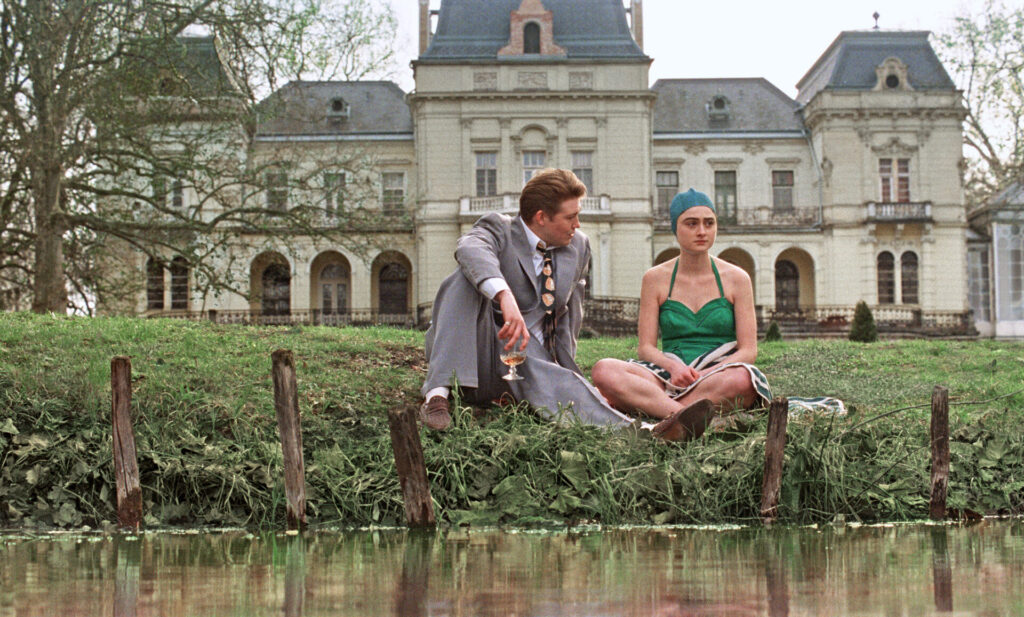
Breuer’s 1925 “Wassily” chair, named for his artist friend Wassily Kandinsky, is clearly the model for the chair that Tóth designs for his cousin’s furniture store in the movie. The “New York Times” named the original one of the chairs of the century. Apparently, its design was inspired by Breuer falling off his bicycle and realizing how strong the handlebars were. I’d guess all of us have sat in a Breuer-designed chair at some time.
After furniture and interior design, Breuer expanded into architecture. He moved to the United States in 1937 and became a naturalized citizen in 1944. Like the brutalists, Breuer loved raw concrete. Unlike them, he used it to create modern, shapely buildings such as the Geller House II in New York, the Amstrong Rubber Company HQ in New Haven and the Whitney Museum of Modern Art in New York.
Breuer became a leading exponent of the utilitarian, functional and minimalist International Style, which began in Europe in the 1920s and dominated until the 1970s. His work was sometimes controversial. When it was unveiled in 1966, the Whitney Museum was described by architecture critics as “oppressively heavy” and “an inverted Babylonian ziggurat” (a pyramidal stepped temple tower). But his personal life seems to have been pretty uneventful, certainly compared to that of Tóth as portrayed in the film by Adrien Brody, son of noted Hungarian-American photographer Sylvia Plachy.
Interviewed by the Dezeen website, Brady Corbet, the 36-year-old wunderkind director of “The Brutalist,” said that brutalism “was the correct style of architecture in terms of the film’s visual allegory and what it is exploring thematically.”
Corbet’s rationale is that brutalism wasa style practiced by Jewish immigrants to the States and the United Kingdom, such as Breuer and Goldfinger. The response to, say, the Whitney building “provokes the same feelings [in the community] as it does about their new neighbor coming from a different background.”
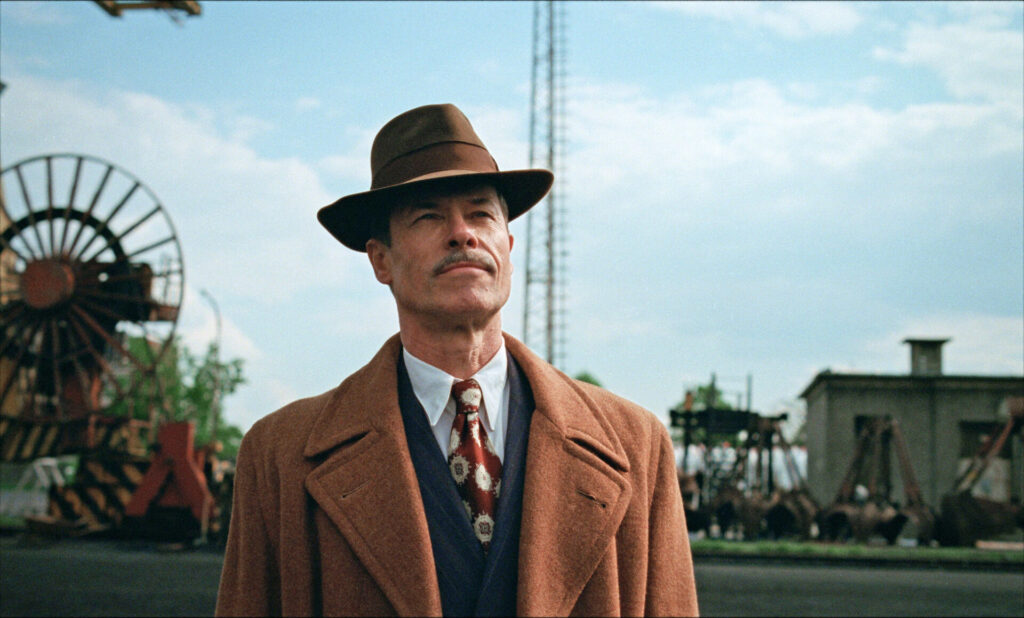
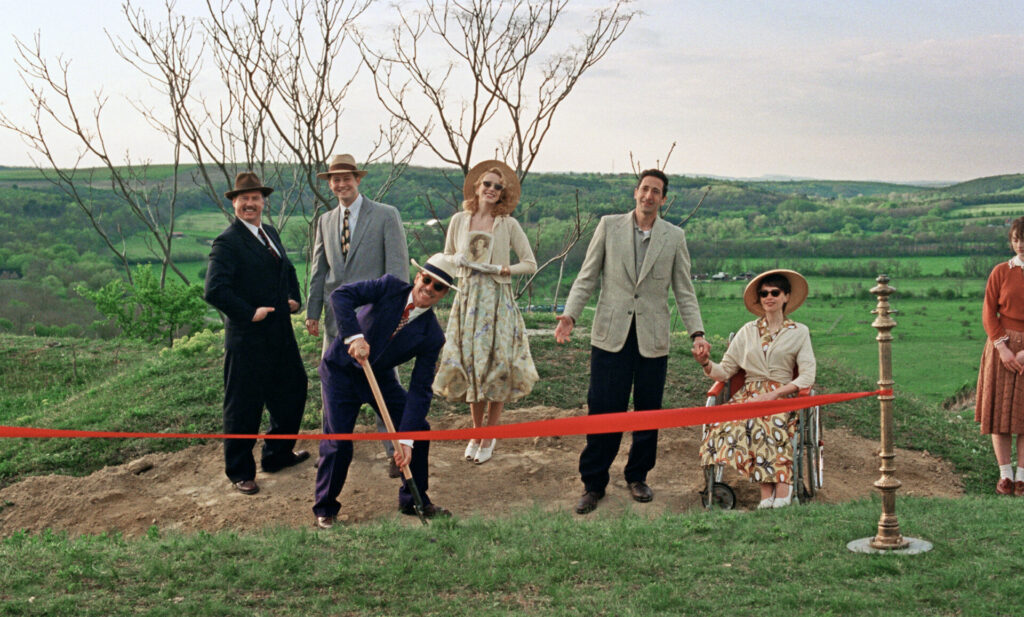
Hence, the public response in the movie when Tóth and his patron, filthy rich industrialist Harrison Lee Van Buren (played by Guy Pearce), show their designs for the community center they plan to build.
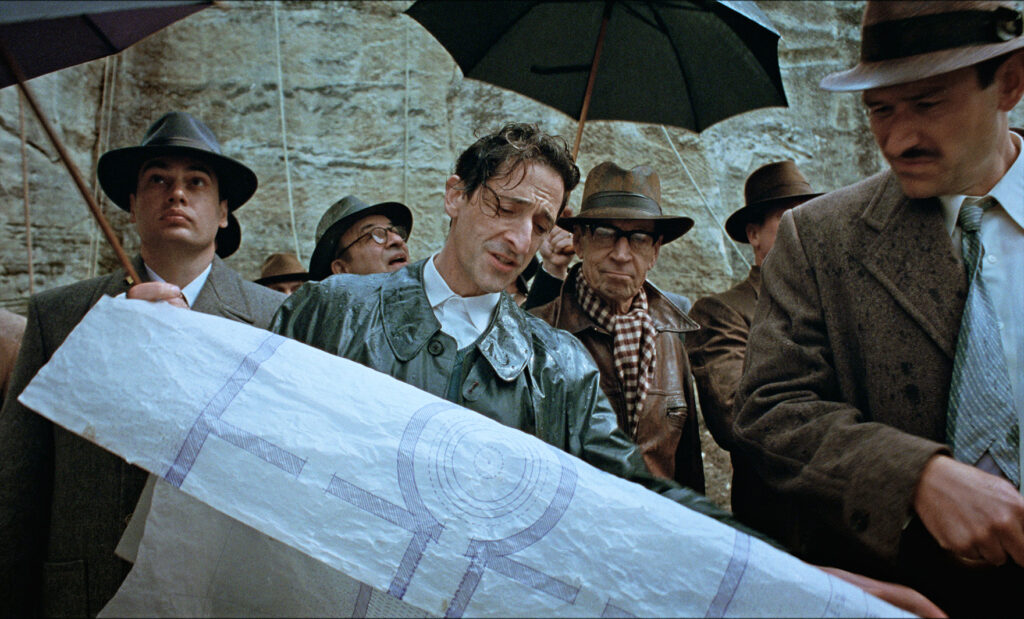
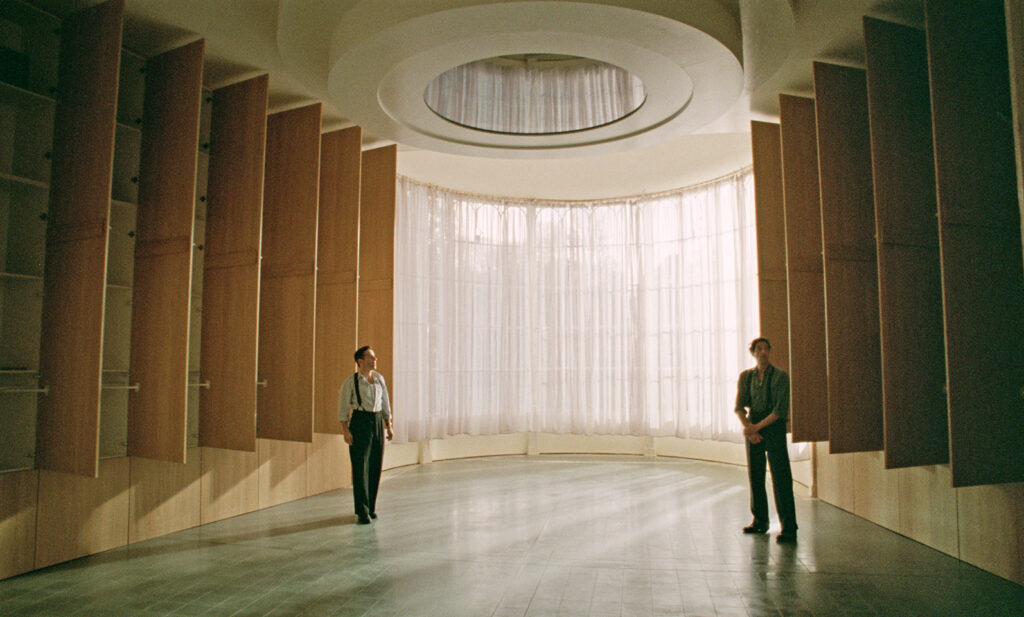
The monumental building, created by the perfectionist and not especially likable Holocaust survivor Tóth for the unsavory Van Buren, is almost a character in itself. Production designer Judy Becker tapped into her own knowledge of brutalism to design a building that included a community center and Protestant chapel while smuggling in references to the concentration camps Tóth and his wife Erzsébet had spent time in. Studying bird’s-eye images of concentration camp plans, Becker noticed that they were primarily designed in “kind of a T shape. It was a T, but it was also a cross, and I really started thinking about the symbolism.”
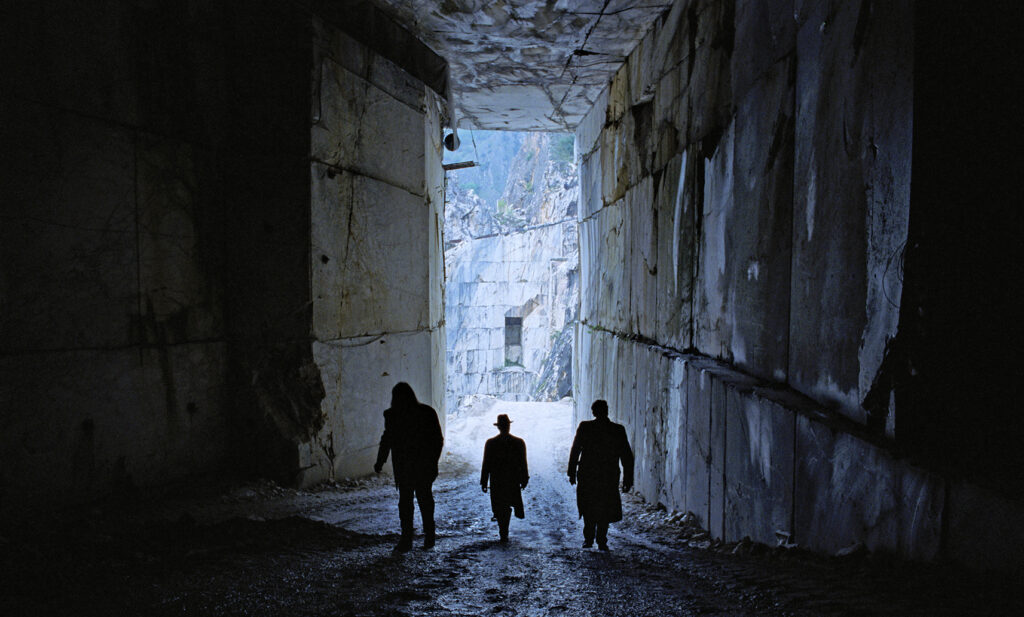
The building Becker designed for the movie was built in Hungary, where “The Brutalist” was mostly shot, apart from a sequence in the massive marble mines of Carrara, Italy, where Van Buren assaults Tóth, bluntly articulating the theme of the movie: art abused by commerce.
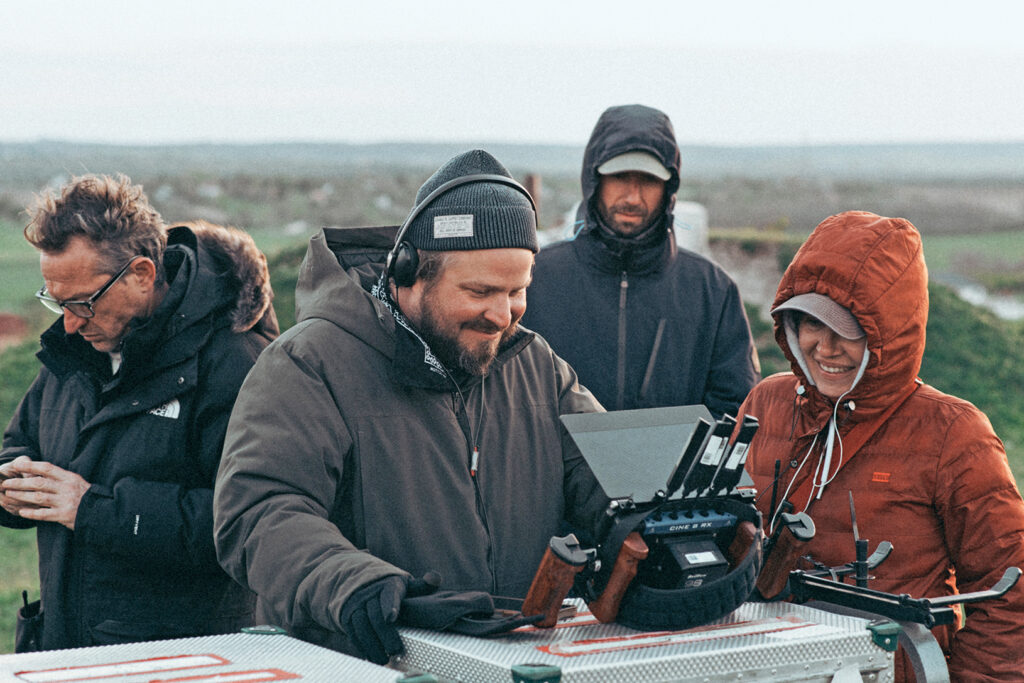
As for “The Brutalist” itself, I was impressed by the fact that its budget was a measly USD 10 mln, and by the acting. But even at an epic three and a half hours, it felt like it had been hacked down from a much longer length. So, I was surprised to read Corbet’s remarks about creative freedom when he accepted the movie’s Golden Globe award for Best Dramatic Film.
“My partners on this film were incredibly supportive, and I didn’t have any antagonists in the process,” he said. These partners included Budapest-based Proton Cinema.
And to be fair, even if “The Brutalist” feels to me like a series of set pieces strung together, it’s never boring.
This article was first published in the Budapest Business Journal print issue of January 24, 2025.


