



The first Hungarian animation, by István Kató-Kiszly, was made in 1914. Fast forward to the 1930s, and there was a dramatic rise in the number of Hungarian animation studios as artists such as László Moholy-Nagy and Sándor Bortnyik returned from studying abroad.
In the 1930s, advertising studio Coloriton led the way in Hungarian animation. Founded by Gyula Macskássy, János Halász and Félix Kassowitz, Coloriton made animated commercials to show in cinemas.
With the Hungarian anti-Jewish laws of the 1930s, everything changed for Coloriton. Halász left for England where, in 1954, with his wife Joy Batchelor, he directed a chilling animated feature based on George Orwell’s anti-totalitarian classic “Animal Farm.” Félix Kassowitz, who was Jewish, was sentenced to forced labor before being deported from Hungary with his wife in 1943. He returned after World War II but not to animation.
The third member of the trio, Macskássy, was to have a significant influence on the history of Hungarian animation.
In the 1950s, animation found favor with the country’s communist leaders, who realized its propaganda potential and created a Hungarian school of animation.
Macskássy had continued in animation. His “The Sport Contest in the Forest” and “The Diamond Half-Penny of the Little Rooster” were highly artistic but eye-wateringly expensive propaganda. Hungary’s political rulers began to balk at the costs.
Devoted to animation as an art form, Macskássy came up with an ingenious idea. He proposed to the communists that animation be funded by making commercials for Hungarian and foreign companies.
As Ráduly put it, “He had the smart idea to create longer animated films and cut them to use as commercials for clients.” For example, the 20-minute “The Mouse and the Lion” was edited down into a two-minute commercial for toothpaste, which had the mouse showing the lion how sharp his teeth are because he brushes them nightly. “The Greedy Bee,” about a bee hungry for honey, became a one-minute commercial for, yep, honey.
“Thanks to Macskássy’s genius, the public was able to see wonderful animated features funded by the commercial side,” Ráduly says.
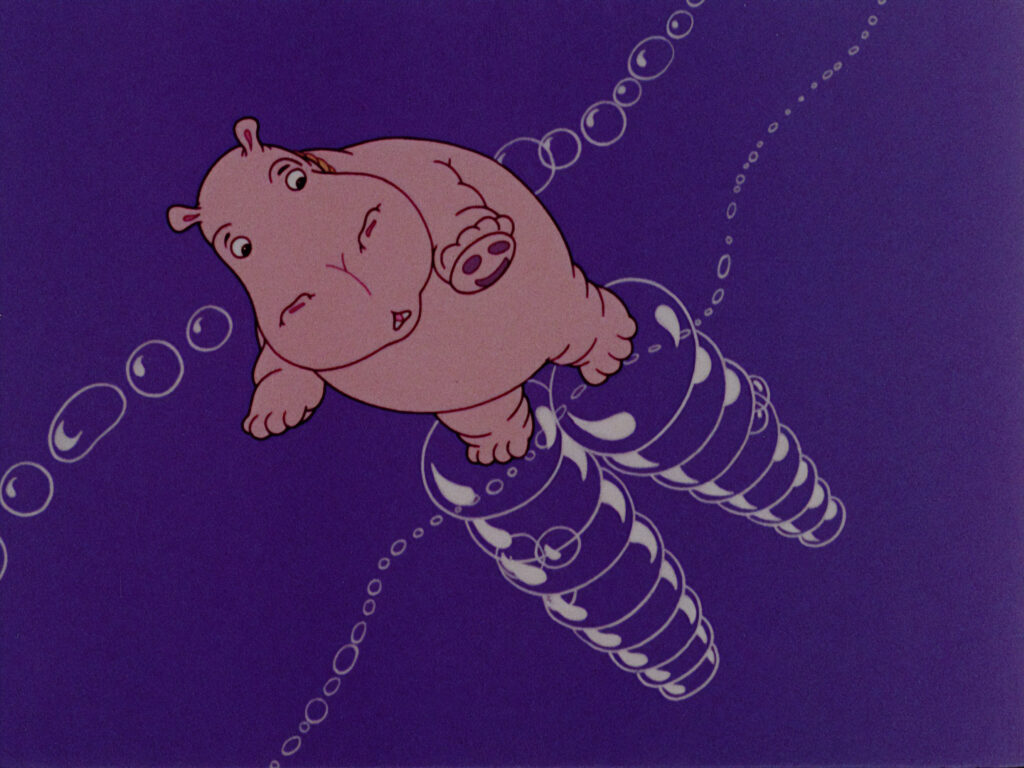
“In 1958, Macskássy founded the Pannónia Filmstúdió, and in the 1960s, ’70s and ’80s, Hungary produced an incredible quantity and quality of feature animations, TV series, short animations and international co-productions such as “Hugo the Hippo” (1975) with the Americans, or 1982’s “Masters of Time,” a French co-production directed by René Laloux. We’ll be showing restored versions of these classics at the festival,” Ráduly notes.
Hungarian artists of all stripes have punched above their weight, so I shouldn’t have been surprised when Ráduly listed the animators from this country who have impacted the global scene. But I was. I could picture Ráduly rubbing his hands with glee as he took a deep breath and began to enumerate the Hungarians who influenced world animation. Here are just three of the examples he gave me.
Emigrating to the United States from Hungary at the start of the 20th century, Margaret Winkler founded her own animation production company in 1921 to distribute the hugely popular “Felix the Cat” cartoons. She would go on to launch Walt Disney’s career and become the first female member of the Motion Producer’s Guild.
In 1933, Béla Gáspár invented Gasparcolor in Berlin. This used a three-color process on one strip of film and was behind some of the most innovative animations of the period, including Len Lye’s great “Rainbow Dance.” Gasparcolor was later sold to Technicolor.
Years later, Pannónia animator Zoltán Maros would find success in France. He’s best known for working on the Asterix cartoons and being the lead animator on “Hercules” (1997), “The Hunchback of Notre Dame” (1996) and “A Goofy Movie” (1995).
Bringing things up to date, Kecskemétfilm recently did all the animation for “The Most Precious of Cargoes,” the latest feature by French director Michel Hazanavicius.
Pannónia entered the 1980s riding high. Its biggest client was Hungarian Television, for which it made the hugely popular “Gusztáv,” aka “Gustavus,” and “Vuk” or “The Little Fox” series dubbed into French, Spanish, Italian and English. However, the collapse of communism in 1989 meant Hungarian TV stopped commissioning animation, causing a financial crisis at Pannónia.
The 1990s saw the rise of small, flexible and dynamic Hungarian studios, following the European trend. Successful studios worked for foreign companies.
For instance, Budapest’s Varga Film Studio’s production showreel includes the “Mr. Bean” animated series for the United Kingdom. Pécs Film Studios in the city of the same name made commercials for Red Bull energy drink.
In parallel with studios looking for clients outside Hungary, the country’s animation scene became more focused on the artistic aspect. “The Moholy-Nagy University of Art on the Buda side is today the most active incubator for Hungarian animation. Today, it’s more talent- than industry-focused. The NFI FilmLab also has an active animation department,” Ráduly says.
I ended by asking Ráduly why he thought Hungary was so influential in the animation industry.
“From the earliest days of cinema, we’ve jumped into the middle of the action,” he said. “It’s probably also a question of culture. As part of the Austro-Hungarian Empire, we were a bastion of culture with a strong emphasis on theater. This gave us a tradition of telling stories using pictures. This is my humble point of view.”
To find out what’s on offer at the Budapest Classics Film Marathon, head for filmmaraton.hu/en. There’s a promotional video on YouTube in Hungarian with English subtitles. The Budapesti Klasszikus Film Maraton 2024 also has its own YouTube channel.
This article was first published in the Budapest Business Journal print issue of September 6, 2024.


