


The shopping center, which has operated for more than 25 years and receives 18 million visitors annually, has been transformed while remaining fully operational through a EUR 10 million development program, according to the Gránit Pólus Group.
“As part of the transformation project, Budapest’s largest rooftop solar park, covering 6,500 sqm, has been built on top of Westend’s parking garage; the heating and cooling systems have been renewed, mechanical systems have been modernized, and an AI-based automated building management system now regulates the building’s energy consumption,” Gránit Pólus says.
Following these developments, the building’s energy consumption has dropped by 38%, CO2 emissions have fallen by 81% compared to the 2019 baseline, and the share of solar energy in overall energy consumption has risen to 80%, according to the firm’s figures.
Westend’s solar park was inaugurated in June and produces 1.53 GWh of electricity annually. This on-site energy production is complemented by a long-term power purchase agreement (PPA) with Solar Markt’s Szihalom solar plant, bringing the total renewable energy available to the complex to approximately 17.53 GWh per year. The AI-driven building management system optimizes heating, cooling, ventilation, and energy supply in real time, based on nearly 300 data points per day.
The shopping center has achieved an “A+” energy rating, while the Crowne Plaza Hotel and the Westend Office Building, which form part of the same complex, have achieved an “A” rating, meeting EU taxonomy requirements. Westend is expected to obtain BREEAM In-Use “Excellent” and “Outstanding” certifications later this year.
As part of the transformation program, Westend’s 1.5-hectare rooftop garden, the largest public green space in District VI, will also be renewed and expand by around 1,000 sqm, with native, drought-tolerant and pollinator-friendly plants introduced, says Gránit Pólus.
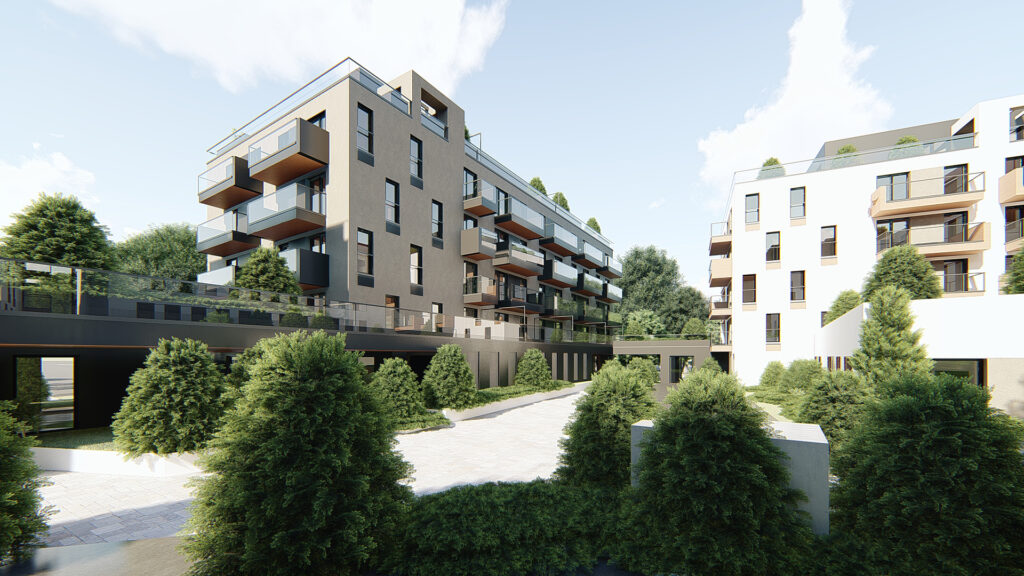
The BAM Living Újpest residential project has been awarded BREEAM New Construction “Very Good” accreditation, the first residential development in Hungary to achieve it.
The developer, BAM Development Kft., co-owned by Tibor Orosz and Dr. Andrea Orosz-Lánczi, is a good example of a pioneer, says Regina Kurucz, managing director of Rewell Consulting. The Újpest project was the first multifamily residential project in Hungary to achieve BREEAM certification. Notably, it was pursued after the units had already been sold, meaning it was not done for marketing purposes.
The sister BAM Living Kispest project, a 251-unit residential development, was the first in Hungary to register for WELL Residence, the healthy residential building certification. BAM Development Kft. clearly treats third-party certification as important, even in the residential sector, she notes.
In Kurucz’s view, residential is currently where sustainability and wellness certification is least established compared to offices. She expects adoption to accelerate gradually, rather than suddenly, for two reasons.
First, residential development in Hungary is largely driven by buy-to-sell economics, not long-term asset management. So, unlike an office landlord who benefits from a certified building’s operating performance for years, a residential developer often sells the units and moves on. That reduces the immediate financial incentive to certify, unless, as with BAM Development, it is a deliberate credibility choice rather than a marketing one.
Second, homebuyers are not yet asking for certification the way corporate tenants ask for WELL or BREEAM in office leases. Until buyer demand catches up, driven by growing awareness that indoor air quality, light, and acoustics affect daily well-being at home even more than at work, Kurucz expects adoption to stay limited to a handful of forward-thinking developers rather than becoming the norm across the sector.
“That said, once EU taxonomy-aligned financing and stricter building performance regulation reach residential more fully, I would expect the pace to pick up meaningfully,” she concludes.
Futureal Energy Partners (FEP) has acquired a portfolio of battery energy storage system (BESS) projects in Latvia from Aretis Group (AG), marking the company’s entry into the rapidly growing Baltic energy storage market. The transaction comprises two standalone BESS sites in Riga with a combined capacity of 45 MW / 120 MWh.
The portfolio includes the Bolderaja and Bisuciems projects, developed from the greenfield stage by Latvian renewable energy developer Aretis Group. The projects have already secured key development milestones, including grid connection agreements and building permits. Commercial operations are targeted for November.
Located in the Riga metropolitan area, the projects are strategically positioned to capitalize on the Baltics’ evolving electricity market dynamics, according to FEP.
“The Baltics have rapidly emerged as one of Europe’s most attractive energy storage markets,” says Daniel Szentirmai, co-founder and CEO of FEP. “This acquisition is fully aligned with our strategy of investing in flexible energy infrastructure in markets where storage can play a vital role in supporting grid stability and accelerating renewable energy integration. Latvia offers strong long-term market fundamentals, and we see considerable further opportunities across the region.”
The acquisition is seen as further strengthening FEP’s expanding European renewable energy portfolio, which includes solar PV and battery storage investments in Finland, a large-scale solar project in Hungary, and a 45MW onshore wind project currently under construction in Poland.
Futureal Energy Partners is the energy division of Futureal Group and is responsible for electricity trading and the full-cycle development of energy investments. Its mission is to provide affordable green energy to group companies, real estate developers, and third-party clients using state-of-the-art technology.
This article was first published in the Budapest Business Journal print issue of September 18, 2026.


