Listen to the audio version of this article (generated by AI).
Listen to the audio version of this article (generated by AI).

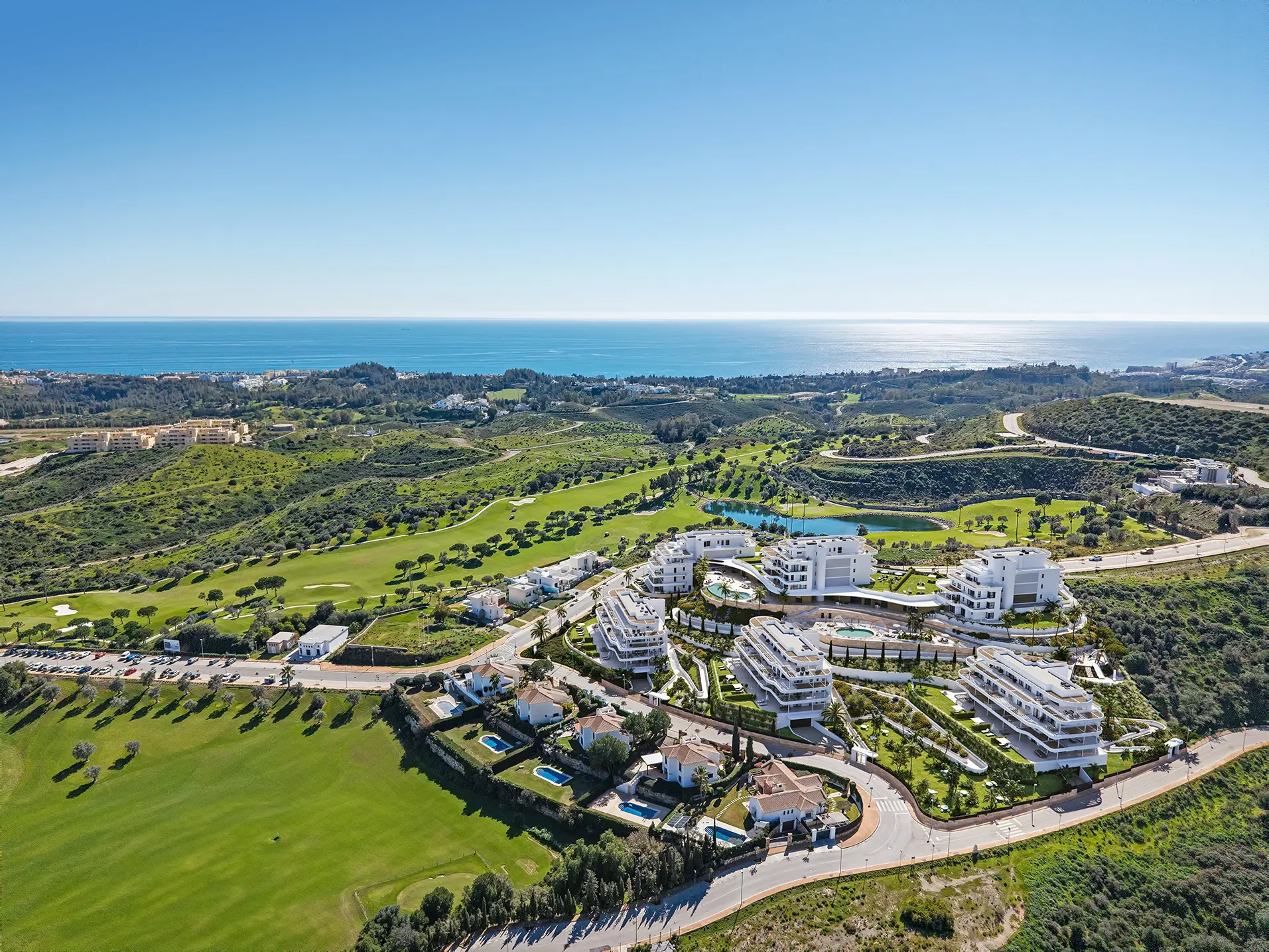
This new development, located in the Cerrado del Águila area, combines modern design, sustainability, and quality of life, strengthening Cordia’s presence in the Spanish residential market, according to the Hungarian residential developer.
“The first phase will include 71 units and the project meets BREEAM sustainability standards and has an ‘A’-rated energy certificate, reflecting Cordia’s commitment to energy efficiency and environmental care.”
The development offers services designed to enhance the residents’ quality of life. These include outdoor swimming pools, an infrared sauna, a jacuzzi, a fully equipped gym, a yoga room, a billiards and poker room, a gastro bar and coworking spaces. The complex also incorporates advanced home automation systems, allowing residents to control lighting, temperature, blinds, and video intercoms from their mobile devices.
Cordia has ongoing projects in the mid- and upper mid-market segments in Hungary, Poland, Romania, and the United Kingdom, as well as its second project in Spain. Across Europe, ESG and sustainability issues are increasingly prominent in new multi-unit residential development.
“A good development today must be climate-conscious, taking into account shading, cross-ventilation, usable outdoor spaces, proximity to services, and pedestrian-friendly urban connections. Internal quality is equally critical: flexible, functional floor plans, sufficient storage, low energy demand, good acoustics, cycling infrastructure, and genuinely usable shared areas all make a real difference. I also expect ESG elements to become more and more integral part of the projects,” comments Géza Germán, deputy CEO of Óbuda Group, on residential development in Hungary.
“In Hungary, ESG becomes truly impactful when it is seen not only as a communication aspect, but as a baseline expectation for banks, investors, and buyers. At the same time, there are still instances where green messaging is ahead of underlying performance,” he notes.
“The most effective approach is not simply to label every project as sustainable, but to establish mandatory minimum standards for higher-quality developments such as low operating costs, summer thermal comfort achieved through passive measures, long-lasting materials, effective energy and water monitoring, and credible certification systems,” he adds.
Hungary is experiencing a significant wave of residential construction, making it more important than ever to ensure that these new homes are designed with occupant health and well-being at their core.
“A healthy home goes far beyond energy efficiency: it encompasses indoor air quality, adequate ventilation, thermal comfort, access to natural light, acoustic performance, and the use of low-emission materials,” says WELL consultant and managing director of Rewell Consulting, Regina Kurucz, on the Hungarian residential market.
“With thousands of new units being delivered across Budapest and other Hungarian cities, there is a unique window of opportunity to embed health-promoting features from the design stage, rather than retrofitting them later at greater cost,” she concludes.
The newly launched BREEAM New Construction V7 provides a comprehensive framework for assessing and certifying the sustainability of newly built assets. It»integrates science-led metrics and global best practice to help developers, designers and sustainability professionals minimize environmental impact, optimize resource efficiency and enhance asset resilience.
For new construction, this is seen as particularly important because decisions made early in the design and construction process can have a long-term impact on environmental performance, operational efficiency, resilience and user experience, says the U.K.-based third-party sustainability system.
BREEAM says the new version follows a full review of the latest in energy and carbon science in the built environment, and incorporates feedback received during a consultation period.
“BREEAM New Construction Version 7 supports a more holistic approach by helping project teams consider the factors that shape an asset’s long-term sustainability performance from the design and construction stages,” the certification body says.
“The standard brings together key issues such as whole-life carbon, predictive operational carbon, biodiversity, resilience, material selection, resource efficiency, water, transport, and health and wellbeing. This means sustainability is not treated as a single issue or a narrow compliance exercise, but as a set of connected decisions that influence how an asset performs over time.”
The updated standard has been introduced at a time when expectations of the built environment are changing rapidly. Certification is no longer a “nice to have” for investors, developers and owners who are under increasing pressure to demonstrate measurable progress on carbon, resilience and long-term asset performance.
The standard places stronger emphasis on whole-life carbon and predictive operational carbon, helping project teams make better-informed decisions during design and construction. This is particularly important because decisions made at the earliest stages of a project can have a significant impact on the long-term performance, resilience and value of the asset according to BREEAM.
“For owners, BREEAM NC V7 supports long-term asset value by improving asset intelligence, strengthening resilience and helping them respond to investor and occupier expectations. For tenants, it supports more efficient, resilient and healthier buildings, with continued emphasis on areas such as air quality, natural light, thermal comfort and acoustic performance,” James Fisher tells the Budapest Business Journal.
Fisher is head of strategic partnerships at BRE Group: the initials stand for Building Research Establishment, and it is the body behind the BREEAM standard.
“For wider society, the benefit is that new developments are encouraged to reduce environmental impact, use resources more efficiently, support biodiversity and contribute to healthier, more resilient places,” Fisher says.
“The standard strengthens data collection and reporting across key sustainability issues, helping project teams assess performance in a more structured way and report more consistently across the asset lifecycle. This includes the use of industry-recognized metrics such as Energy Use Intensity and Carbon Use Intensity, giving project teams a clearer view of predicted energy and carbon performance,” he adds.
Fisher sees the Budapest market mirroring the percentages in the BREEAM-wide dataset, where 5% of the buildings achieve BREEAM “Excellent” or “Outstanding,” the highest levels in the sustainability accreditation system.
“Government can help by creating clarity, consistency and long-term confidence for the market. Regulation can set the baseline, while recognized standards such as BREEAM can help define and recognize leadership. From a BREEAM perspective, the key is to support better data, clearer expectations and investment in buildings that are more efficient, resilient and future-ready,” Fisher concludes.
This article was first published in the Budapest Business Journal print issue of June 5, 2026.
Producing journalism that is worthy of the name is a costly business. For over 30 years, the publishers, editors and reporters of the Budapest Business Journal have striven to bring you business news that works, information that you can trust, that is factual, accurate and presented without fear or favor.Newspaper organizations across the globe have struggled to find a business model that allows them to continue to excel, without compromising their ability to perform. Most recently, some have experimented with the idea of involving their most important stakeholders, their readers.
We would like to offer that same opportunity to our readers. We would like to invite you to help us deliver the quality business journalism you require. Hit our Support the BBJ button and you can choose the how much and how often you send us your contributions.