


Long penciled in for their respective posts, Orbán’s ministry will be separated from trade, while Kármán’s ministry will once again be independent of economic responsibilities. In other key changes, the new administration will feature independent health and education portfolios (long absent under the Fidesz governments), fulfilling Magyar’s promise to rebuild what he sees as vital public services.
With the inaugural session of the new parliament scheduled for May 9, the newly formed committees will hear the ministerial candidates on May 11-12, enabling the ministers to take the oath that week.
With Magyar eager to maintain the momentum following his election success, this means the new Hungarian government could be formally up and running by May 15.
“It might be that Magyar is trying to speed things up as much as he can. A reasonable explanation […] is that [Viktor] Orbán’s elite is continuing the misappropriation of public funds, tying up loose ends, and shoveling skeletons into the closet, a process that started long before election day, when the regime change became a likely outcome. Magyar is in a hurry to take over before the ship hits the iceberg,” Márton Schlanger, a researcher with Republikon Institute (generally accepted as an independent but Liberal-leaning think tank and pollster), told the Budapest Business Journal.
With 16 ministries planned in total, this will be “a pretty standard number in Europe,” he says, and it means the most important policy portfolios will have their own ministries.
“Hungarians were looking forward most to having a ministry for healthcare and one for education, which is now guaranteed. Seeing a ministry for environment is a really pleasant development in itself,” Schlanger added.
The tasks at hand are challenging, particularly on the economic side, with the Fidesz-led Ministry for Economy announcing that the budget deficit hit 81% of the annual target on a cash-flow basis by the end of the first quarter, largely due to pre-election spending.
Fitch Ratings, in a mid-April note, warned that the Tisza government would be facing a tough macroeconomic backdrop, with weak growth, large budget deficits and rising public debt. While the likely improved relations with the EU and reduced institutional risks were positive developments, the agency forecast moderate GDP growth of 2% for this year and 2.4% in 2027.
The expected squeeze on finances could also dampen the heady post-election mood still being felt among Tisza officials and supporters when it comes to the hard decision-making on individual budgets, especially if, despite the goodwill, frozen European Union funding proves difficult to access this year.
As political analyst Zoltán Ranschburg points out, none of the Tisza MPs have ever worked together before, and the party’s primary raison d’être was to unseat the Orbán government. Having achieved that goal, fissures could appear within the party.
“I can’t see a political, ideological basis behind Tisza that will keep the party and its voters together. The most important glue that has kept Tisza’s together was Fidesz, which is not going to be a prominent political power from now on, [so] that glue is going to slowly evaporate. I think when it comes to the work in parliament, more and more fault lines within Tisza and its new MPs are going to show,” Ranschburg warns.
With Magyar possibly sensing such future difficulties and fears of last-minute asset acquisitions by the outgoing government, it is little wonder he is keen to both rebuild relations with the European Union as quickly as possible and to achieve his political goals domestically while the positivity generated by the election victory remains strong.
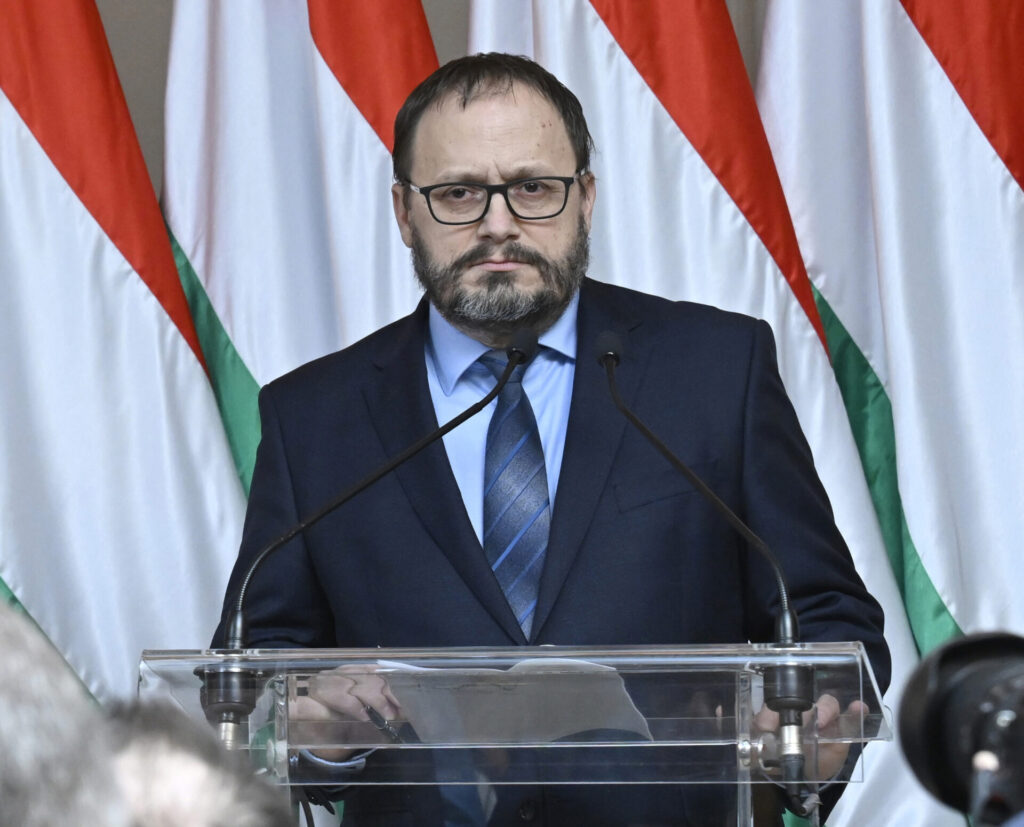
The Ministry of Finance, which was merged into the current Ministry of National Economy at the beginning of 2025, will again become an independent ministry in the Magyar administration.
Kármán, an economist, worked at the central bank from 1997, before moving to the finance ministry in 2010–11 as state secretary for tax and financial regulation in the Orbán government.
“András Kármán is a highly regarded economist with experience spanning the central bank, government, and private sectors, and is unquestionably a credible figure in the eyes of financial markets,” Zoltán Török, head of research at Raiffeisen Bank, Hungary, told the BBJ.
Török credits Kármán with playing a central role in the post-2010 fiscal consolidation program (the Széll Kálmán Plan) and in negotiations with the European Commission and the IMF in 2010 in his capacity as state secretary.
“His meeting with central bank governor Mihály Varga suggests that the two policymakers are well placed to collaborate effectively, laying the groundwork for Hungary’s ambitious euro-adoption trajectory,” Török notes.
Kármán will face the difficult challenge of reducing special taxes and price caps while fighting inflationary pressure and reducing budget outlays. On top of these daunting tasks, he has to oversee the introduction of the new ‘wealth tax’ on assets over HUF 1 billion, as well as prepare Hungary’s accession to the eurozone.
Arguably one of the toughest jobs in the new government, given what critics allege is the chaotic nature of the inheritance for Anita Orbán (no relation to Viktor Orbán)
Orbán, latterly external affairs director and deputy chairwoman of the board at Vodafone Hungary, was part of the former Euro-Atlantic wing of Fidesz in the 2000s, and after the 2010 victory, worked at the Ministry of Trade and Foreign Affairs as Hungary’s ambassador at large for energy security, before moving into the world of business. She is the author of the book “Power, Energy and the New Russian Imperialism” (published in 2008 by Praeger Security International, now part of Bloomsbury Publishing).
“I’m convinced that Anita Orbán will definitely bring positive changes to Hungary’s foreign policy in practically all fields. She is a very calm, ‘no nonsense’ kind of person,” Tibor Mezei, an analyst at the Budapest-based Center for Foreign Policy Analysis think tank, told the BBJ.
Mezei, a fierce critic of the foreign ministry under its outgoing minister, Péter Szijjártó, says Orbán’s task is to avoid confrontation abroad so that Péter Magyar can focus on fixing domestic issues.
“The new Tisza government will definitely seek to improve cooperation with EU bodies, and relations with Russia will not be as deep and affectionate as during the Fidesz government. Orbán will work on reviving Visegrad Four cooperation, with particular emphasis on reinvigorating Hungarian-Polish bilateral relations. It will also be her difficult task to restore professionalism within the ministry and the foreign service,” Mezei said.
The other ministers named at the time of going to press are: Minister of Economy and Energy István Kapitány; Minister of Defense Romulusz Ruszin-Szendi; Minister of the Environment László Gajdos; Minister of Health Zsolt Hegedűs; and Minister of Agriculture and Food Economy Szabolcs Bóna.
For reasons of space, the BBJ plans to give pen pictures of the above and other ministers in the new government in an upcoming issue of the paper.
Note: The names of the new ministries have not yet been finalized and may change once the official appointments are made.
This article was first published in the Budapest Business Journal print issue of April 24, 2026.


