


The answers to such questions lie not in some detailed, quirky, guide to Budapest, but in a republished and superbly updated memoir of life on the run in the city during World War 2.
Ralph Brewster, a descendant of one of the Pilgrim Fathers, considered himself as American as apple pie. But born in Rome and raised in Florence, his father had relinquished his US citizenship to adopt Italian nationality for himself and his family.
The young Brewster never considered himself Italian, a feeling that only grew as fascism gripped the country in his late teenage years. It didn’t help that he was gay.
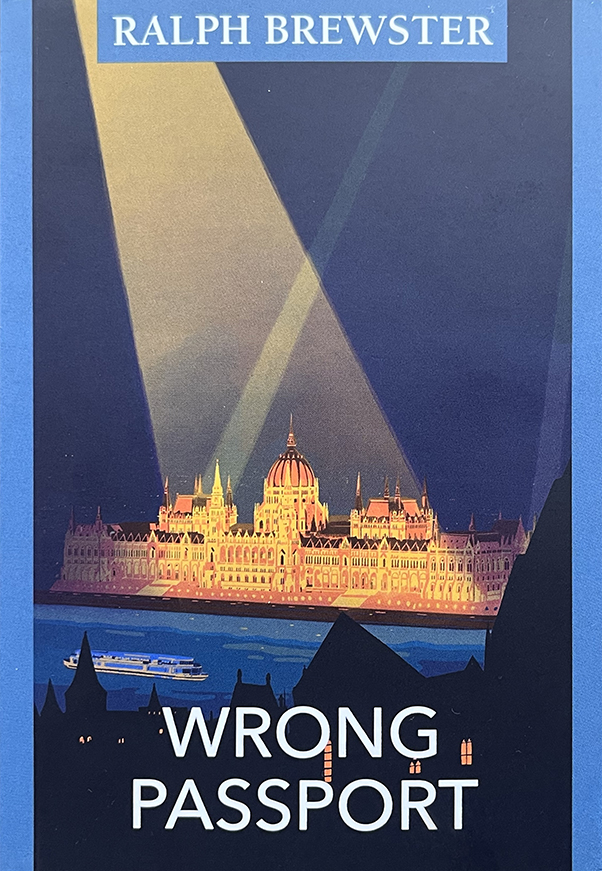
The aesthete, gifted pianist and polyglot wanted out, but that could only be achieved by dint of an Italian travel document, an indignity (to him) that led to his memoir’s title: Wrong Passport.
Brewster paid for, or at least bartered, his bon vivant wandering lifestyle by teaching English, playing music and constructing horoscopes. He could clearly hold his own in good company.
But ensconced in Athens in October 1940, disaster struck; Mussolini’s Italy invaded Greece. To local patriots, he was a potential enemy, to the occupiers, he was a draft evader.
Brewster hurried north to Hungary, a country he knew from an earlier sojourn teaching at the renowned protestant school in Sárospatak, 250 kilometers northeast of Budapest.
It was also a country that, while strongly nationalist and tilting towards Nazi Germany, was thus far at peace. Alas, for Brewster, Hungary and Europe, this was only temporary. Yet in the summer of 1942, despite aiding Hitler’s invasion of the Soviet Union a year earlier, and Hungary’s declaration of war against the United States in December 1941, Budapest lived on as ever.
True, Jewish families feared for their menfolk doing so-called “labor service,” which often included life-threatening duties on the eastern front, but, as Brewster writes in his opening pages: “In my second spring here […], Budapest in 1942 was still a gay town with nothing to remind you that a war in Europe had been on for nearly three years […]. It was the last great city in Europe where life went on as in peacetime.”
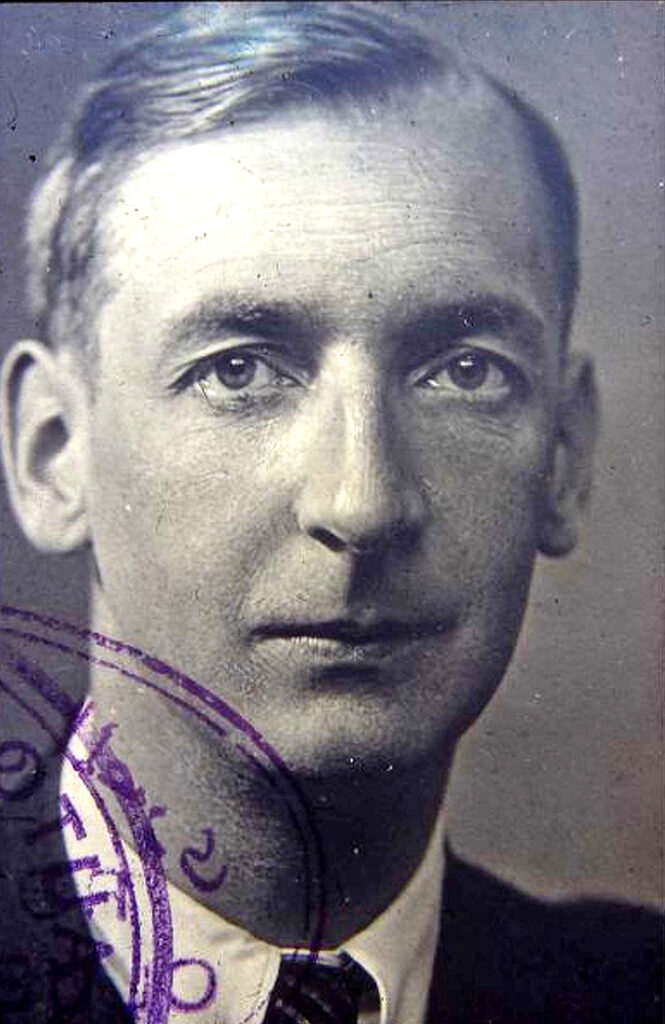
Well, almost. One problem with wars is that governments get jittery about spies, and Budapest certainly had its fair share of those. Brewster had personal experience, having been a target for recruitment by a certain Heinrich Berg, a German art dealer who moonlighted as an SS agent, or maybe the other way round.
Our hero several times deftly sought to decline the offer (it’s not a good idea to annoy SS employees in a country where many have Nazi sympathies), but he may have failed. Whatever, at the beginning of the book, in May 1942, Brewster’s stay in Budapest looks well and truly over: his visa expired, he faces being deported to Slovakia.
Of course, this can’t happen, or we would have no book, at least not one recounting another 30 months of furtive shuffling between flats in the Hungarian capital interlaced with stays on Balaton and nights under the stars in the Buda hills.
Sure enough, Slovak border guards refuse a visa and push him back on the next train, whereupon he wangles his return to Budapest and the desperate search for accommodation safe from the prying eyes of house concierge-cum-informers really begins.
In the course of 14 chapters, we meet a grand assortment of humanity, from a Cistercian monk who believes more in reincarnation and African magic than salvation through the cross, via a Hungarian trainspotter to a one-legged Jewish shoemaker.
One of note is Aladár Rácz, a Roma, naturally from a miserable background, whose astonishing talent at playing the cimbalom (a Hungarian version of the dulcimer) allowed him to climb out of poverty to teach the instrument at the Ferenc Liszt Music Academy.
The virtuoso lived in what is today a long street in the Buda hills, now named after him. Brewster describes Rácz as “The most important person I have met in Budapest.”
Another stand-out is László Almásy, the geographer-explorer and pilot who became the inspiration for “The English Patient,” a 1996 blockbuster film based on a novel of the same name by Michael Ondaatje.
Anthony Minghella, the British director of the movie, can be eternally grateful to Ondaatje for his artistic license: the real Almásy bore little relation to the character played by Ralph Fiennes. In fact, it is astonishing that Brewster had anything to do with Almásy at all, a Nazi seconded from the Hungarian to the German military to advise General Rommel on geography and topography for the North Africa campaign.
As Brewster writes, it was impossible to understand how Teddy (his code name for Almásy), who had been educated in Eastbourne, a seaside town in southeast England and once pro-British, could have become so virulently Nazi.
“I had never met so pathological an anti-semite as Teddy […] I found him crazy, though it interested me to know one Nazi really well,” Brewster confesses.
Teddy, by the way, lived at Bartók Béla út 29, up the road from the Gellért Hotel.
It should be said that Brewster was not constantly illegal in these years, for though he claims to have had no links in high places, he somehow meets or teaches people with friends or relatives in authority who provide legal papers and, on occasion, pull him out of deep water, most notably a stinking prison near Keleti station quite early in his stay.
Ironically, after witnessing both the German occupation of Hungary in March 1944 and the later Arrow Cross putsch, he flees the country for Austria legally (and only just in front of the “liberating” Soviet Army) with papers from the Italian consulate, one of the very offices he specifically shuns during his stay to avoid forced conscription into Mussolini’s military.
I hate hackneyed terms like “hidden gem,” but when it comes to English-language publications on Hungary, this cliché genuinely describes “Wrong Passport,” which made few waves in its first publication in 1954, nor, thus far, in its second life from 2022.
As publisher Annabel Barber admits, the book is very niche, really only suitable for Magyar-philes with a voracious appetite for history and knowledge of the country.
Barber herself deserves a standing ovation for what must have been hundreds of hours of research, contacting Brewster’s descendants in Italy (still in the family home in Florence) and inserting more than 100 notes to link the reader with who was who at the time and where, given the renamed streets in Budapest in the seven decades since the first edition.
(I could spot only one error in its 407 pages; the train in Austria, pp 315, would have been “dashing” westwards, not eastwards, fortunately for Brewster.)
Finally, the plot in District II that is now home to Mammut 2 was once the location of the infamous Margit Prison, one that Brewster muses about, but thankfully managed to avoid.)
This article was first published in the Budapest Business Journal print issue of November 28, 2025.


