



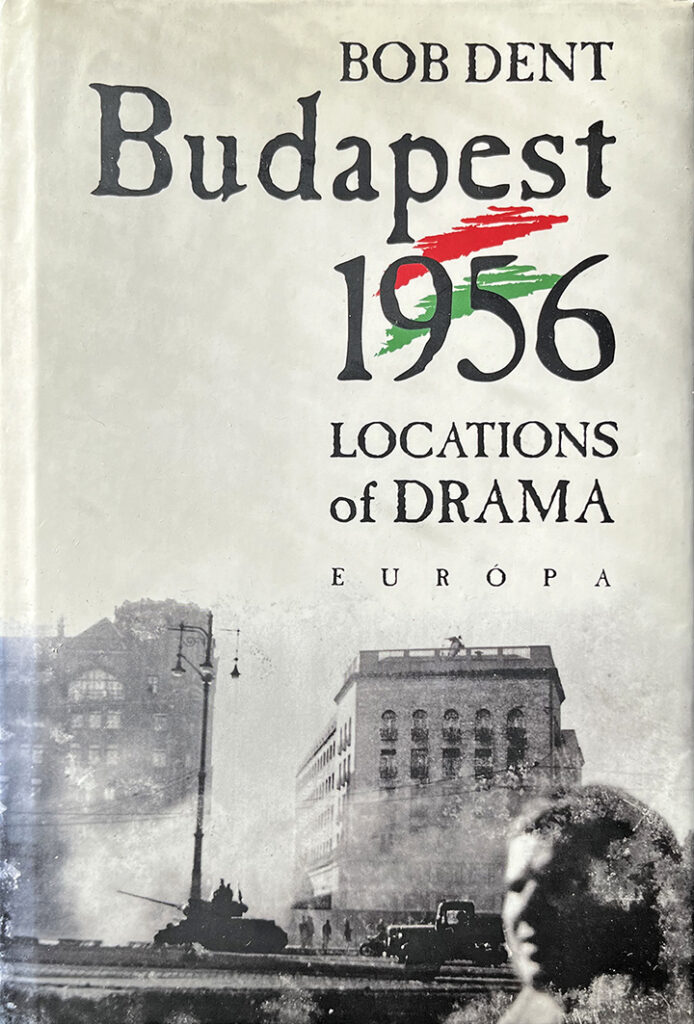
Mention 1956 and the Hungarian Revolution, and for many, it will likely conjure up black-and-white images of enthusiastic young Magyars toting guns, poorly clothed but happy going about their voluntary duties in a common effort to rid their country of a detested, Soviet-imposed Communist government and the AVH, its dread security police.
There is often also an underlying narrative of a patriotic David seeking to defeat a cruel, powerful, foreign Goliath. Certainly, that is the framing frequently given by many of today’s politicians, notably the prime minister himself.
Reading Bob Dent’s “Budapest 1956 Locations of Drama” soon shatters any such romantic illusions: the rebel authorities in charge (such as they were) were frequently at odds with their troublesome, quarrelsome “freedom fighters.” Army Colonel Pál Maléter was originally sent to quell the insurgents at the Corvin cinema but later changed sides and would briefly become Defence Minister, and found himself toasted as a heroes’ hero. But he remained distrusted and detested by Gergely Pongrátz, a later leader of the Corvin fighters. As Dent describes, these are just two of the scores of divides with which the history of the uprising is riven.
The British-born author began planning this book at the turn of the millennium as a guide to the places of action for anyone interested in the history of the ’56 Uprising. He imagined a pocket-sized book of 100 pages. It emerged in 2006 to coincide with the 50th anniversary of the conflict at 435 pages and in hardback.
There are many books about ’56, but Dent’s unique approach and determined efforts to verify stories means that, for non-Hungarians and natives alike, this work is a must-read.
One slight complication is that the English version is out of print, but volumes are typically available on eBay and in used-book shops for around HUF 6,000-8,000. ISBN 963 07 8033 X. The revised (2016) Hungarian version entitled “Budapest 1956: A Dráma Színterei” is available from europakiado.hu, price HUF 2,495.
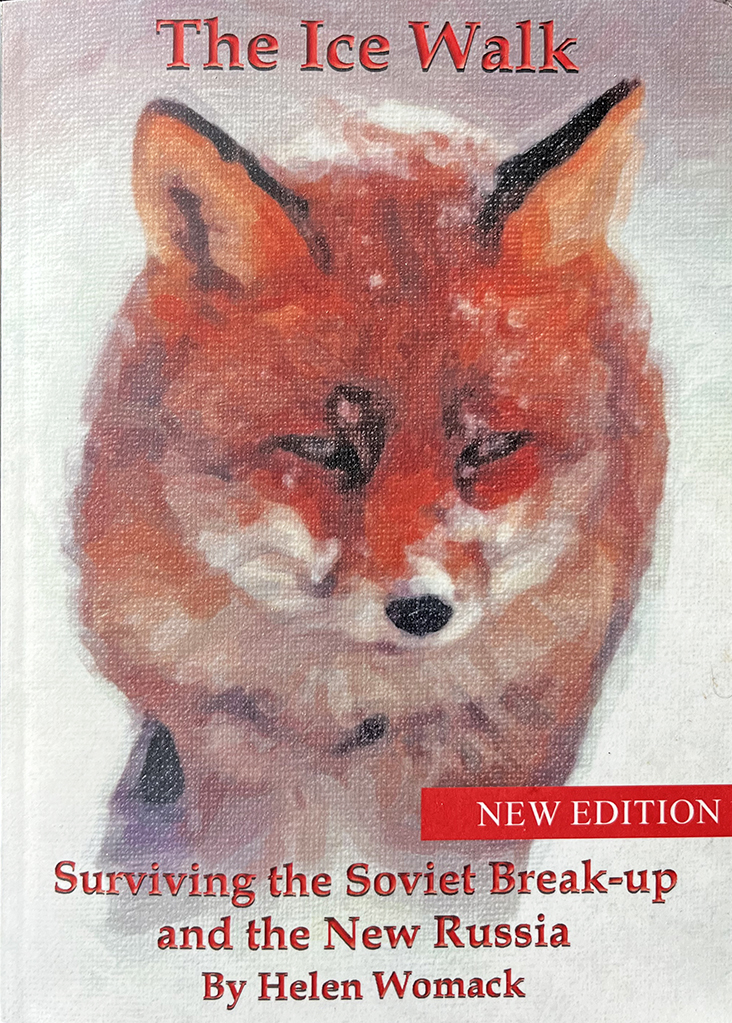
Declared a “pathological Russophobe” by the Russian authorities just days previously, journalist Helen Womack flew to Budapest in the summer of 2015 out of necessity rather than desire. It was a case of leave or go to jail, courtesy of the FSB (the successor to the Soviet-era KGB).
Upon landing and finding herself in the middle of Hungary’s “migrant crisis,” she immediately got to work and has been here ever since. One of her tasks this year has been to update her memoirs, initially compiled in 2013, of her nearly three-decade stint in Moscow.
“The Ice Walk” is thus a book about Russia. However, given that country’s current influence on world affairs, it is also a timely, indeed profound, primer into understanding the mindset of the average Russian struggling to cope with the collapse of the Soviet Union and survive the subsequent chaos before Vladimir Putin came to power in 2010 determined to “restore order.”
If the culture and customs of Hungary sometimes seem strange to the average Westerner even today, this volume reveals things in Russia are many multiples stranger. Womack wrote the book “for my Mum,” she told the Budapest Business Journal. The logic was simple: if her Mom, who was not a great reader, could understand it, everyone else could too.
This is what sets “The Ice Walk” apart from the scores of otherwise excellent recent histories of Russia that give the facts about when and what happened on the grand scale. Womack instead tells the lives of ordinary Russians, people to whom she had access through her knowledge of the language and marriages to two native husbands, their families and contacts.
Thus, we read how astrophysicist Timur Gagua ended up as a shopkeeper selling pet food and how Nina Veniaminovna, her flat’s once-a-week house cleaner, began arriving in a chauffeur-driven car and vacationing in Sri Lanka. (The answer is Andrei, her son, who became, as Womack terms him, a “minigarch.” Andrei was no crook but needed bodyguards as his business grew profitable for protection against racketeers.)
Sadly, from your reviewer’s perspective, Womack has self-censored one or two of the worst incidents of her time in Russia. Far from a Russophobe, she loves the country and its people too much. But perhaps that makes what she does reveal both more readable and believable.
The Ice Walk, pp 310, second edition, New Generation Publishing, 2024, ISBN 978-1-83563-211-6
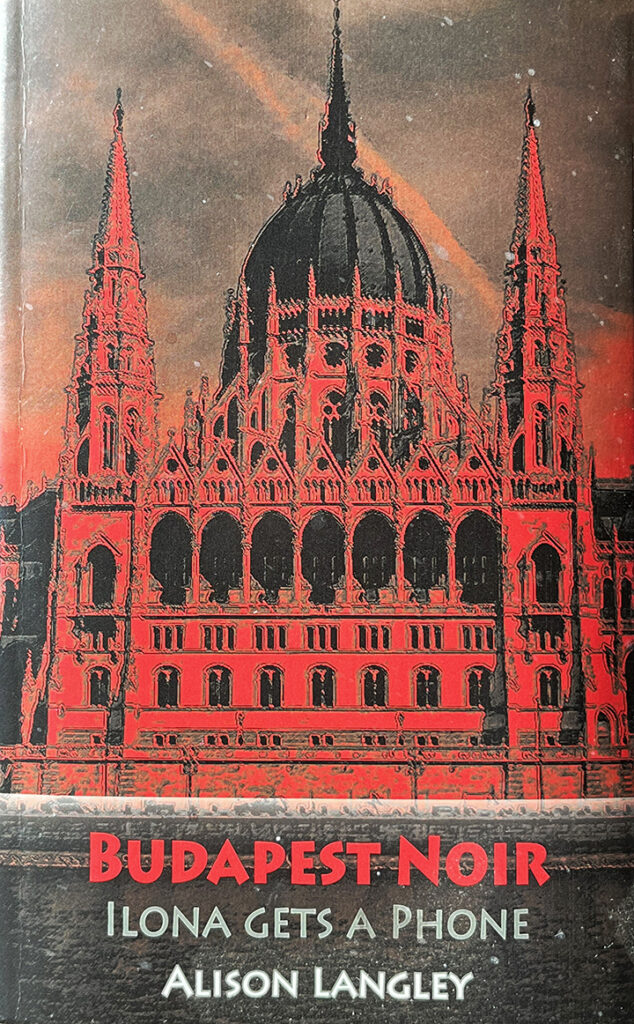
After a guide and reportage history, here is a volume of fiction. Yet as “Budapest Noir: Ilona Gets a Phone” is based around last century’s historical events in Hungary, it too inevitably involves an inordinately large dose of Soviet-Russian influence on the characters and events.
Ilona, the central character, grew up pre-WW2 in an idyllic, aristocratic family, all, naturally, long gone. To describe her as neurotic is an understatement; many would say she is mad. The novel begins in 1991 with Ilona and her fantasies, followed by fears, as she acquires a telephone. Not a mobile, you understand: a straight landline. Indeed, as impossible as it seems today, securing a phone, even in 1991, was something of an achievement, a hangover from communist-era inefficiency.
We soon learn that Emil, Ilona’s long-estranged son, is due to visit with Melissa, his American wife and their baby daughter. Emil, born in Budapest and a champion swimmer, was a disszidált (dissident) who escaped to the United States a decade or more earlier and had largely cut himself off from his mother.
The plot revolves around the horrendously incompatible aspirations of Ilona vis-á-vis her son and Melissa. Somehow, through twists and shatteringly unhappy turns, they make it through 320 pages to a solution, or at least a strong hint of one. Critically, we learn to appreciate Ilona, as, ultimately, do Emil and Melissa, impossible though that seemed early on.
Starting with the phone, Langley is at her best in revealing the incongruous details of daily life in Hungary in the early ’90s, a time when the country stumbled, often bewildered, into the ways of the Western world. Those who lived through those times will appreciate the reminders, even if some are exaggerated.
This is not a fast novel; as with Ilona, the book needs patience. Indeed, Ilona is sometimes so hung up she seems contrived. Yet Langley insists she is based on a real character encountered when the author lived in Budapest in that period.
And it’s true, the likes of Ilona did exist back then, and perhaps still do. If so, let’s hope they also have their version of Emil and Melissa to help them through.
“Budapest Noir: Ilona Gets a Phone,” by Alison Langley, 320 pp, Dedalus Press 2024, ISBN 978-1-915568-42-7
This article was first published in the Budapest Business Journal print issue of November 29, 2024.


