

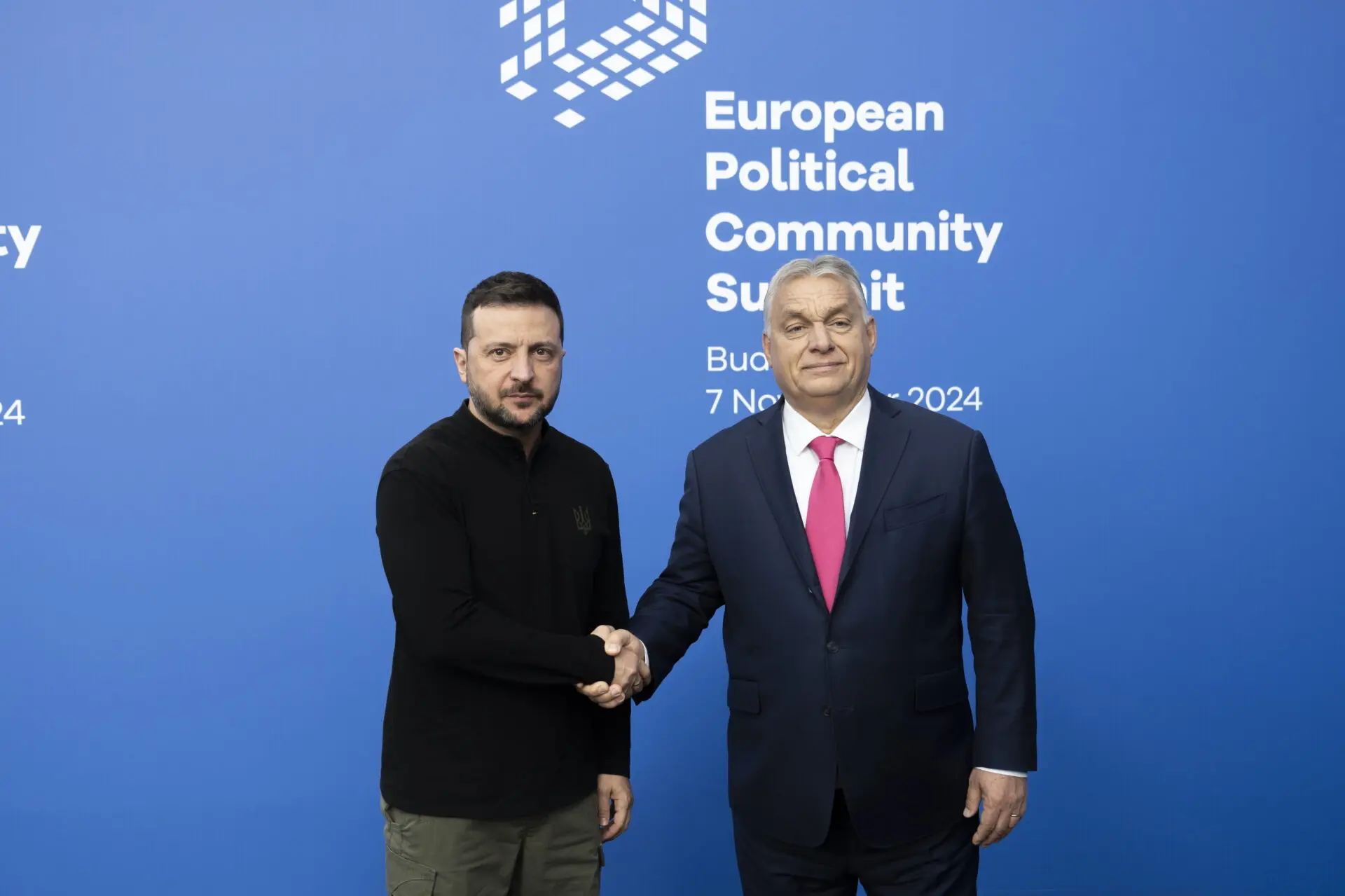

The outcome of the U.S. election, which saw a convincing Republican victory with Donald Trump reclaiming the presidency with both the electoral college and the popular vote, as well as securing the Senate (53-44) and looking on course to claim the House, has introduced uncertainty regarding future Western support for Ukraine.
Prime Minister Viktor Orbán and other European leaders expressed concerns about the sustainability of the European Union’s current approach, emphasizing the need for a reassessment of its strategy.
Orbán had underscored the need for a “new European strategy” in light of the U.S. election results in his address at the summit of the Turkic States in Bishkek on Nov. 6, just prior to the EPC summit. He noted that a Republican victory would force European leaders to question whether Europe could continue to provide military and financial support to Ukraine without significant U.S. backing.
“I have serious doubts in that regard,” Orbán said.
The Prime Minister of Hungary, which currently holds the Presidency of the Council of the European Union, suggested that the EPC summit could serve as the platform for taking the first steps toward a revised strategy. The discussions were expected to include a reappraisal of a EUR 50 billion EU-U.S. loan package previously allocated for Ukraine under a G7 agreement.
While no formal decisions were made at the meeting, Orbán said the question arose: if America did not participate in future financing, how would Europe solve this independently, if at all?
The caretaker Prime Minister of Belgium, Alexander De Croo, echoed the sentiment for reevaluation during a press briefing at the EPC summit. He called for comprehensive talks with the incoming U.S. administration “going beyond theatrical rhetoric” about their geopolitical goals.
He added that a few scenarios had to be clarified to bolster continued support. For instance, De Croo pointed out that over half of military assistance to Ukraine already actually comes from European nations rather than the United States.
In his closing remarks at the EPC summit, Orbán exulted that the group advocating for a negotiated peace settlement has gained momentum following Trump’s U.S. election victory. However, he was careful to note that there was no consensus on the issue among European leaders, with differing opinions on whether to push for a rapid ceasefire or continue military support to press for a more favorable resolution.
Meanwhile, Ukrainian President Volodymyr Zelensky, who also attended the EPC summit, pushed back against calls for a swift ceasefire, arguing that such a move would not restore Ukraine’s sovereignty or independence. During a press conference, Zelensky expressed concerns about the uncertainty surrounding a ceasefire and what might follow, stressing that the war would not simply end with a cessation of hostilities.
“I respect the opinion of those European leaders who urge the quickest possible ceasefire,” Zelensky said. “But under the current conditions, a ceasefire would not guarantee the end of the conflict or the restoration of our territorial integrity.”
Zelensky also stressed the importance of discussions with President-elect Trump, suggesting that Ukraine would seek clarity on how the incoming U.S. administration plans to address the conflict. He proposed that frozen Russian assets, worth an estimated USD 300 bln, could be utilized to support Ukraine’s military efforts and aid in rebuilding its devastated infrastructure.
“Russian aggression so far has caused USD 800 bln-worth of destruction,” he estimated.
This article was first published in the Budapest Business Journal print issue of November 15, 2024.
Producing journalism that is worthy of the name is a costly business. For over 30 years, the publishers, editors and reporters of the Budapest Business Journal have striven to bring you business news that works, information that you can trust, that is factual, accurate and presented without fear or favor.Newspaper organizations across the globe have struggled to find a business model that allows them to continue to excel, without compromising their ability to perform. Most recently, some have experimented with the idea of involving their most important stakeholders, their readers.
We would like to offer that same opportunity to our readers. We would like to invite you to help us deliver the quality business journalism you require. Hit our Support the BBJ button and you can choose the how much and how often you send us your contributions.


