



The digital transition, particularly the application of AI, is one of the most important topics of today, with a significant impact on both the economy and public administration. The conference held on September 24 revolved around this topic. The event was co-organized by the National Research, Development and Innovation Office (NKFI Office) and the Hungarian Project Management Association (PMSZ). It was hosted at the Budapest University of Technology and Economics (BME), where leading professionals discussed questions related to the digital future. The speakers included representatives from the Ministry of Interior (KIM), the NKFI Office, the National Tax and Customs Administration (NAV), BME, the Artificial Intelligence Coalition, and the HUN-REN Hungarian Research Network, as well as experts from Deloitte and Stradamus from the corporate side.
The conference, held at BME’s Q building, was opened by Charaf Hassan, rector of BME, who emphasized in his opening remarks that recent discussions among universities have resulted in almost all of the country’s higher education IT institutions launching AI-focused master’s programs with coordinated curricula and requirements.
Some institutions will begin offering these new programs in February 2025, while others will start in September next year, working closely with industry players. A “micro-certification” system will also be introduced, allowing participants to earn state-recognized certificates upon completing shorter courses, such as in digital skills or a basic AI course. For those who continue their education, these micro-certificates will count as credits toward related higher education programs.
Almost all speakers stressed that the state’s role lies in strengthening collaboration. They pointed out that the state is itself a relatively new player in AI application and should work with both universities and corporate experts and consultants to develop a focused and effective digitalization strategy, particularly in AI.
This is especially important in a critical area like AI, as currently only 3% of people in Hungary actively use AI, compared to 7% in the EU. While neither figure is high, both need improvement, it was noted at the event.
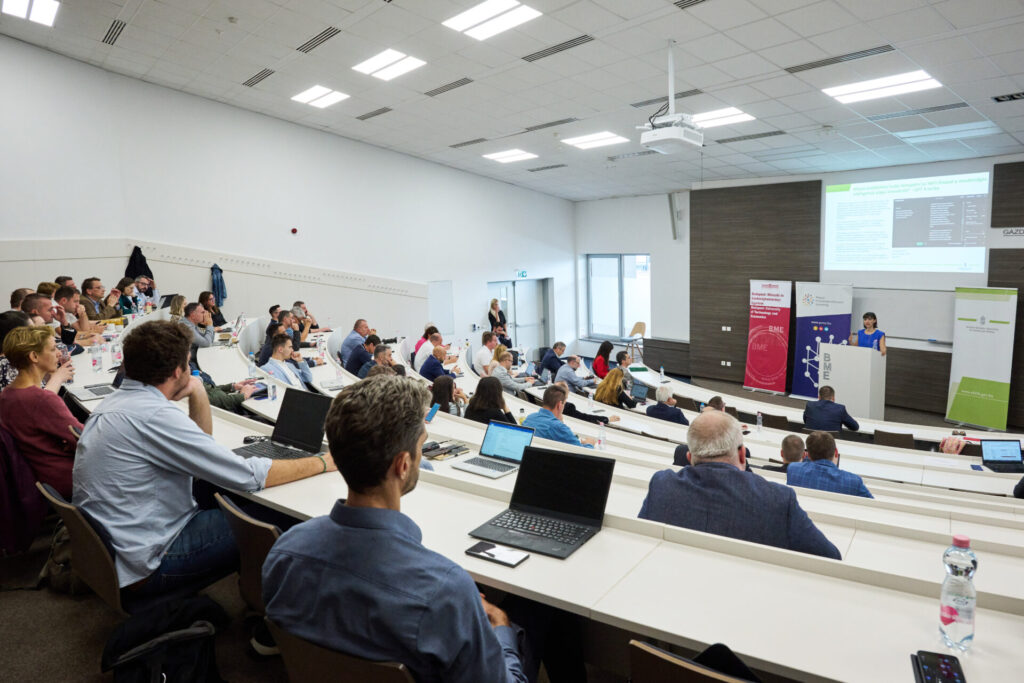
Dr. Zsuzsa Szabados, VP for Business Innovation, NKFI
The speakers at the conference illuminated the role of AI in state operations and the daily workings of public administration from various perspectives. It was noted that the state could apply AI-supported IT solutions in numerous areas of its own operations. Several contributors and experts supported the idea that the state, following successful international examples, could play an open innovation role in promoting the spread of AI. This would mean that the state and its research institutes and offices could act as clients toward the corporate sector, particularly when it comes to testing or implementing AI systems.
One expert speaker from BME also pointed out that AI is not a development of the last couple of years, but a scientific field spanning several decades, the results of which are heavily influenced by the availability of data for implementation and application. Although data anonymization, such as under the EU’s GDPR regulations, is essential, the largest amount of data is often available in the public and municipal sectors. This data, if made available in an organized form, should be accessible to the domestic research network, universities, or companies contracting with the state. This could lay the foundation for the development chain necessary to build a strong AI ecosystem in Hungary.
Not only digitalization but the much more active and widespread use of AI, which enhances competitiveness, is supported by the NKFI Office’s grant system, aligned with the goals of the Neumann János Program focusing on digitalization. Additionally, the HUN-REN Hungarian Research Network is actively involved in developments, applying the latest AI results across various research fields through a focused initiative called AI 4 Science, which aims to build a professional community, emphasized Jakab Roland, CEO of HUN-REN. HUN-REN is a domestically funded research network managing 11 research centers, 7 research institutes, and 116 supported research groups.
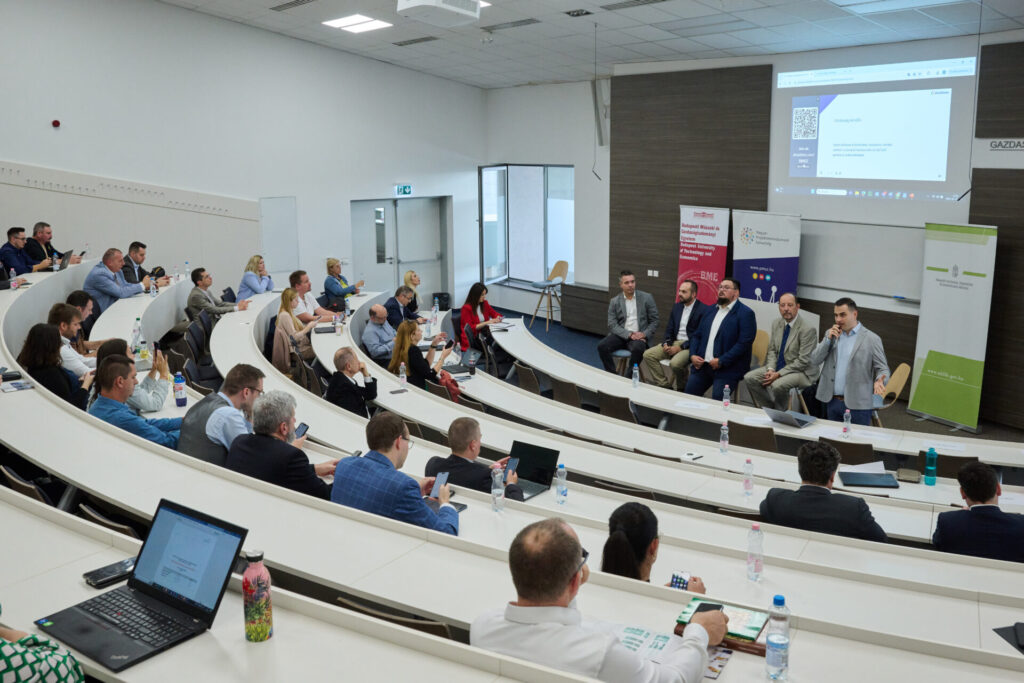
From left: Áron Boros, CEO of Stradamus Consulting, VP of the Hungarian Project Management Association; Dr. Gergő Barta, Risk Management Division lead manager, Deloitte; Szabolcs Szolnoki, Deputy State Secretary, Ministry of National Economy; Dr. Géza Németh, university professor at the Department of Telecommunications and Artificial Intelligence at BME, head of the Speech Communication and Intelligent Interaction Laboratory (SmartLabs)
Following the 5-petaflops Komondor supercomputer, which was launched in early 2023, the new Hungarian supercomputer, Levente, could soon be installed. Levente will deliver 5-6 times greater performance than its predecessor. The project would be implemented at the Wigner Research Centre for Physics in Csillebérc as part of the EuroHPC JU program. Once completed, this supercomputer will not only be available to Hungarian researchers or university labs but also to domestic small and medium-sized enterprises (SMEs) and startups for developing and testing AI models in a wide range of scientific fields.
At the closing roundtable discussion, speakers made it clear that AI will play a significant role in Hungary’s future digitalization leap. Collaboration between the state and companies, strengthening the state’s role in open innovation, and improving the available infrastructure could all contribute to Hungary making further advances in AI-based innovations.


