


With a hands-on approach, she has led through complex situations, built and expanded teams, and navigated changes within the industry. Her dedication to practical, sustainable solutions reflects her commitment to advancing her organization while nurturing a supportive, dynamic work environment.
Auernigg has a master’s in European economics and business management from the University of Applied Sciences BFI Vienna in the Austrian capital, and a post-graduate diploma in advanced management from the European School of Management and Technology in Berlin, Germany.
2026 is an election year in Hungary. Do you think this will impact economic matters such as investment decisions or GDP growth?
For us, long‑term structural factors matter most: Hungary has a strong industrial base, a skilled workforce, and a long history as an automotive hub. The government has consistently supported the sector, and lately there has been investment from Asia, not only on the manufacturing side but across the broader mobility ecosystem. Global and European development, with more stability and growth expected, will influence automotive and battery production in Hungary, which will in turn strongly influence GDP growth.
Naturally, consumption trends and GDP growth influence customers’ readiness to invest in mobility, and this affects the entire market. However, the fundamentals that guide major investment decisions, infrastructure, talent, and the ease of doing business, remain solid.
Are you already using or planning to use AI in your business in Hungary? How do you think this may change the economy here?
AI is already part of our daily operations, and we are working to develop and integrate the technology further into our processes. We see AI as an enabler that enhances efficiency, improves decision-making with analytical tools, helps in creative processing, and enables our teams to focus on higher-value tasks. It is also an opportunity to address the shortage of qualified workers.
We are piloting how a robot can support the sales process. It is important not to be afraid of or ignore the changes, but to be part of their development. It is also critical to ensure that companies and educational institutions move in synchronization so that the workforce is prepared for these tools. The broader economic impact will be substantial, and not just for Hungary.
Is the Hungarian education system producing suitable talents in sufficient numbers for your business? Do you have direct outreach with tertiary and secondary education?
Hungary has a strong engineering and technical education base, which is valuable for our industry. At the same time, the demand for digital and software-oriented skills is growing rapidly, so continued development is essential. This is why we have, for years, maintained close cooperation with universities and vocational schools through internships, dual-education programs, and joint projects.
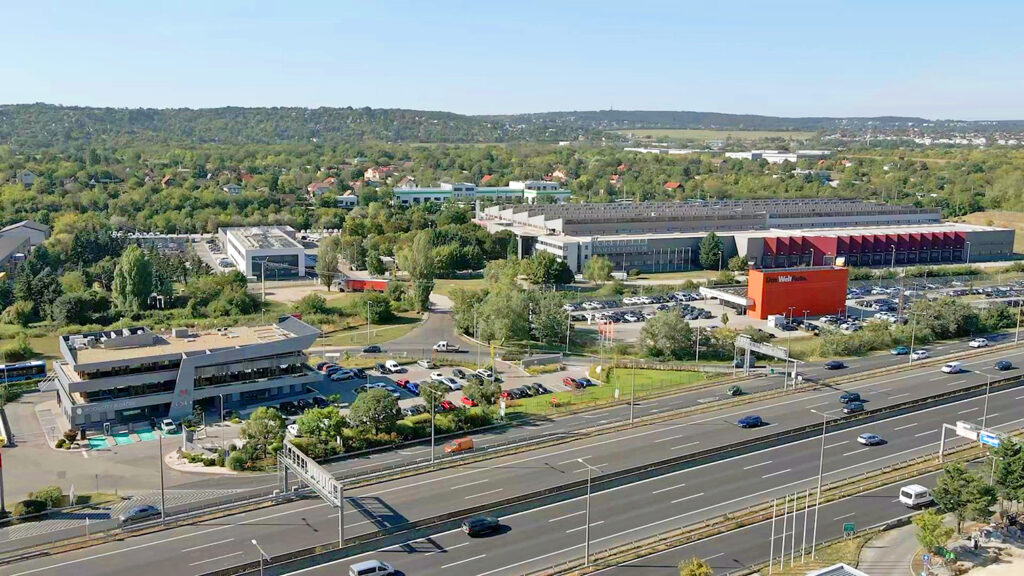
Our innovation and training center in Budaörs, the home of our Porsche Academy, opened in 2022 and plays a key role in ensuring high-quality education. It welcomes automotive technicians from across the country and provides them with up-to-date knowledge in a modern environment. Over the years, we have built strong relationships with an increasing number of Hungarian educational institutions, which has only encouraged us to deepen our cooperation. A recent milestone is the provision of five fully equipped demo vehicles to educational centers nationwide, enabling students to work with real, modern automotive technology and supporting their professional development in a very practical way.
Views on CEOs learning Hungarian range from “I’m too busy” to “You must learn the language to understand the culture.” Where do you stand?
The Hungarian language is famously challenging, but I believe that making an effort is important. I don’t expect to reach full fluency. However, I manage to pronounce the basic communication words quite well, and this already opens a window, which is invaluable when leading teams and engaging with partners. English is widely spoken in business, but I find that even small steps in Hungarian – a greeting, a thank you, a short conversation – can create a more personal connection. For me, it is less about mastering the language and more about demonstrating a genuine interest in the people and the country.
What has surprised you most about doing business in Hungary, and life here in general?
What impresses me most is the combination of innovation and adaptability. Hungarian professionals are highly skilled, solution-oriented, and open to innovation, qualities that are essential in an industry undergoing rapid transformation, and that have been a major asset in our operations.
On a personal level, I have been pleasantly surprised by the richness of the country’s cultural life and the diversity of experiences it offers. Budapest is a vibrant, cosmopolitan city with a strong creative energy, while the countryside provides a completely different rhythm and charm. The balance between professional dynamism and a high quality of life is something I appreciate deeply. The warmth and directness of everyday interactions also make living here very enjoyable.
What’s your favorite hospitality or entertainment setting in Hungary, and why?
I enjoy exploring Hungary’s wine regions and lakeside destinations, especially around Lake Balaton. The combination of a sailing trip on Balaton with good company, jumping into the water, and enjoying a nice dinner in a relaxed atmosphere in the evening, with an excellent view of beautiful landscapes and smooth local wines, makes these places truly special. While skiing is one of my passions and less accessible here, Hungary’s hospitality and natural charm offer a different kind of recreation that I value just as much.
This article was first published in Top Expat CEOs 2026.


