

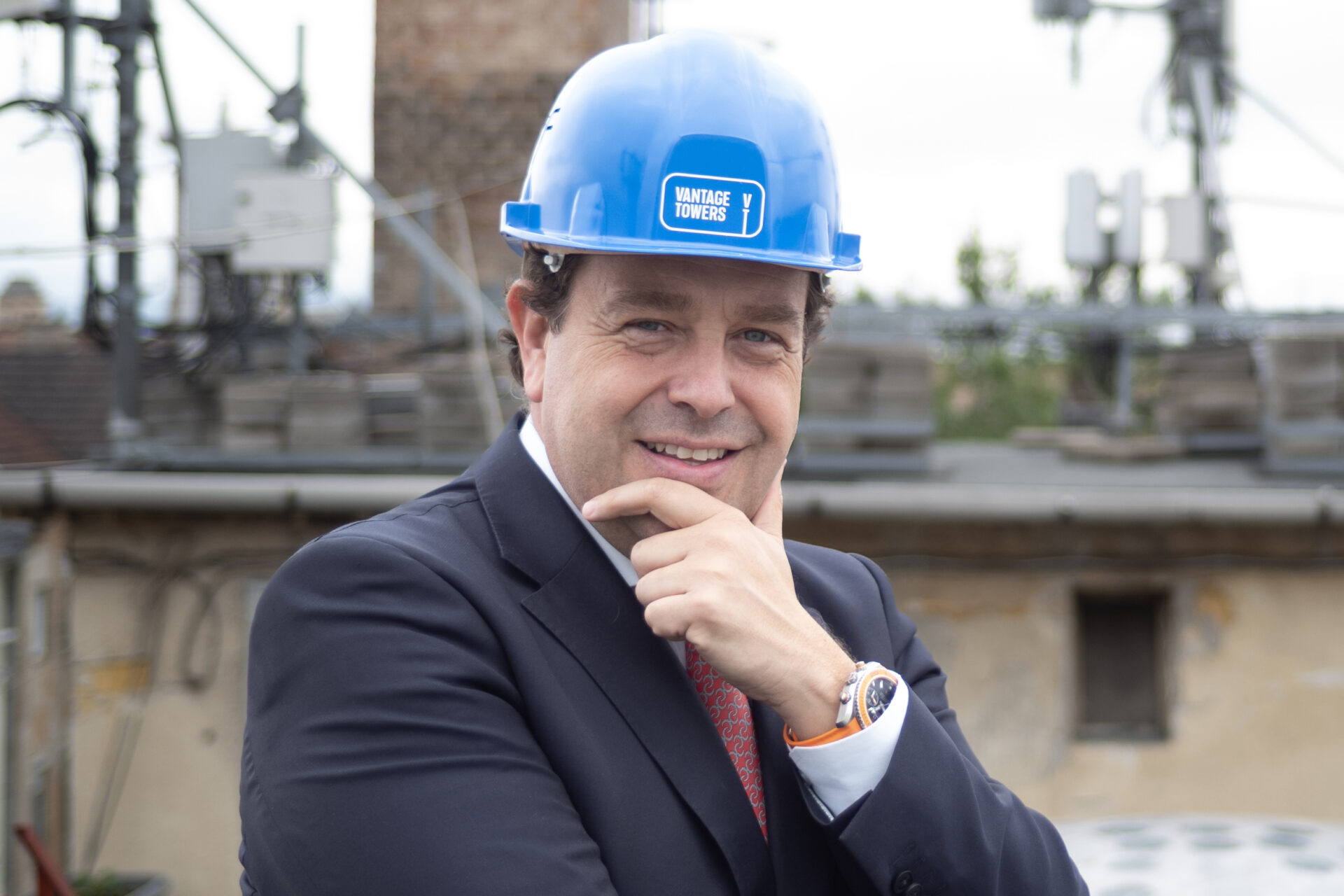

The Hungarian telecom market is still undergoing significant transformation, according to a recent report by Big Four consultancy PwC. With the acquisitions of Digi Telecommunications and Vodafone Hungary by 4iG, the mobile telephony market has consolidated, while service providers are looking at separating the infrastructure business units from the core. This will probably lead to four players: Cetin, Vantage Towers, Pro-M, and a Magyar Telekom tower company.
BBJ: From holding a legal director and board member position at pharmaceutical firm Pfizer, you switched to telecoms in 2012. How was this transition?
Gergő J. Budai: I started my career at White & Case LLP as an attorney. From there, I joined Pfizer, where, to date, I became the youngest management board member it has had at 28. At the time, Pfizer was better known for Viagra than vaccines. At White & Case LLP, one of our clients was a London-based investment fund, Mid-Europa Partners. They offered me an opportunity at Invitel, a national multi-regional telecom operator that was pretty much in dire straits at the time. We were talking about a 17% decline year-on-year. I accepted the challenge and joined a super crisis management team.
I’ll never forget April 1, my first day on the job. We entered the boardroom, and Invitel presented all the data to the new management. And on April 1, we clearly saw that if we didn’t do anything, we would go bankrupt somewhere in July. At first, we thought it was an April Fool’s joke. Then, we realized the situation was extremely serious. So, we rolled up our sleeves and started work. We closed down business lines that were loss-making and opened new ones that were profitable. We took Invitel and separated it into several companies. One of the steps was to start Invitech, which was later bought by 4iG. We turned these businesses around, but it took five or six years; first, we stabilized them and then put them on a growth track.
BBJ: After that, you joined Vodafone Hungary. Unlike Invitel, it was a well-performing company when you arrived. What was the challenge here?
GJB: I’m very proud of my time at Vodafone. It was from 2016 to 2020, which, if you look at the 25-year tenure of Vodafone in Hungary, was one of the most successful periods for the company. We were the first to introduce 5G (a year before our competitors), built the first IoT network in Hungary, secured spectrum for the next 25 years and purchased UPC, making the company fully convergent. Service-wise, technology-wise, and quality-wise, we were excelling. Vodafone was the third entrant to the Hungarian market. We became the number two player in that period, overtaking what was then Telenor.
My current opportunity arose in 2020 when Vodafone decided to separate off the base stations, the mobile infrastructure, in several markets. And I was tasked, amongst other things, with this work and then to find new management to run this company.
BBJ: Vodafone was a people-centered company; you sold a service to customers. Vantage Towers looks like a pure technology firm: wires, antennas and towers. Is it so, or is it more complex than that?
GJB: I think it’s much more complex, and I think it’s also all about people. When we speak with our colleagues and talk about ‘What is it that we do, what is the business we’re in?’ the answer is always that it’s really all about connecting people and enabling connections. Whatever technology you want to use, whether it’s a phone call, an SMS or MMS, whether you want to use AI or virtual reality, or if you want to make an online call or a video conference, you need mobile base stations.
Because whatever the technology is, you won’t be able to use it without the necessary infrastructure we operate. So, I’m always saying we’re much more than a tower company; we’re actually empowering people to be connected and do business; we’re enabling them to use the technology and get in touch with one another. I think that is crucially important, and that is what we do.
BBJ: You have a legally oriented mind, yet you run a technology company. I suppose you need a lot of technological advice. How do you select your team to ensure you have strong support for what lies ahead?
GJB: I like working with and surrounding myself with colleagues who are perhaps more intelligent and more knowledgeable than myself. First of all, they are inspirational and I can rely on them and have good professional conversations and debates. And I do treasure a good and healthy discussion when we’re talking about professional issues
But we need to get to a good common position. And my team is the most important to me for that reason. In every company, I think I was able to build a super team around me. When I left, that was the thing that I was most sorry about: leaving that team behind. When I came to the next task or challenge, luckily so far, in every single case, I was able to build another great team around me, perhaps even a little better than the previous team. And that, I think, is a huge contributor to my past successes. There’s always been a good team around me, and I was always able to rely on them.
So, it is not just about the steel or the structures; it’s really about the team and the people who are building it, who are operating it, and who are taking care not just of the infrastructure but also of our customers and the people who use that infrastructure. You need a robust team to operate it and take care of it because if, God forbid, something happens, everybody can feel it immediately. After all, it’s critical infrastructure.
This article was first published in the Budapest Business Journal print issue of May 5, 2025.
Producing journalism that is worthy of the name is a costly business. For over 30 years, the publishers, editors and reporters of the Budapest Business Journal have striven to bring you business news that works, information that you can trust, that is factual, accurate and presented without fear or favor.Newspaper organizations across the globe have struggled to find a business model that allows them to continue to excel, without compromising their ability to perform. Most recently, some have experimented with the idea of involving their most important stakeholders, their readers.
We would like to offer that same opportunity to our readers. We would like to invite you to help us deliver the quality business journalism you require. Hit our Support the BBJ button and you can choose the how much and how often you send us your contributions.


