


In an industry where delays can quickly translate into shortages and cost pressures, pharmaceutical distribution is becoming less about physical handling and more about data-driven coordination across increasingly complex systems.
On the outskirts of Hungaropharma’s operations, ultra-low temperature storage units sit at the center of a logistics system that has already been tested by crisis. By the time COVID-19 vaccines needed distribution across Hungary, the infrastructure was already in place. That timing, according to Hungaropharma CEO Judit Füzesi, reflects how pharmaceutical logistics actually evolves: not through sudden disruption, but through long planning cycles that often outpace public expectations.
By 2020, she said, the company had already completed its ultra-low temperature (ULT) storage capacity, capable of holding products at minus 70 to minus 90 degrees Celsius. “This made it possible to store and distribute the vaccines that arrived a year later across Hungary,” she said.
The development, she added, is less about foresight as a slogan and more about the demands of the sector itself. “Anyone operating in this industry, especially as a full-range wholesaler, must rely on medium-term planning and a global mindset to operate such finely tuned and secure systems.”
That long horizon contrasts with the way digital transformation is often described in public debate.
“In terms of digitalization, pharmaceutical trade is no different from other industries,” Füzesi said. “It has been present across the entire supply chain for many years; at large companies it forms the basis of development from manufacturing to logistics, so by now digitalization has moved beyond what we could call a transformation.”
Instead, she said, the industry has entered a phase defined by artificial intelligence rather than basic digitization. “We have reached a stage clearly dominated by artificial intelligence, and this is not a transformation but part of digital evolution.”
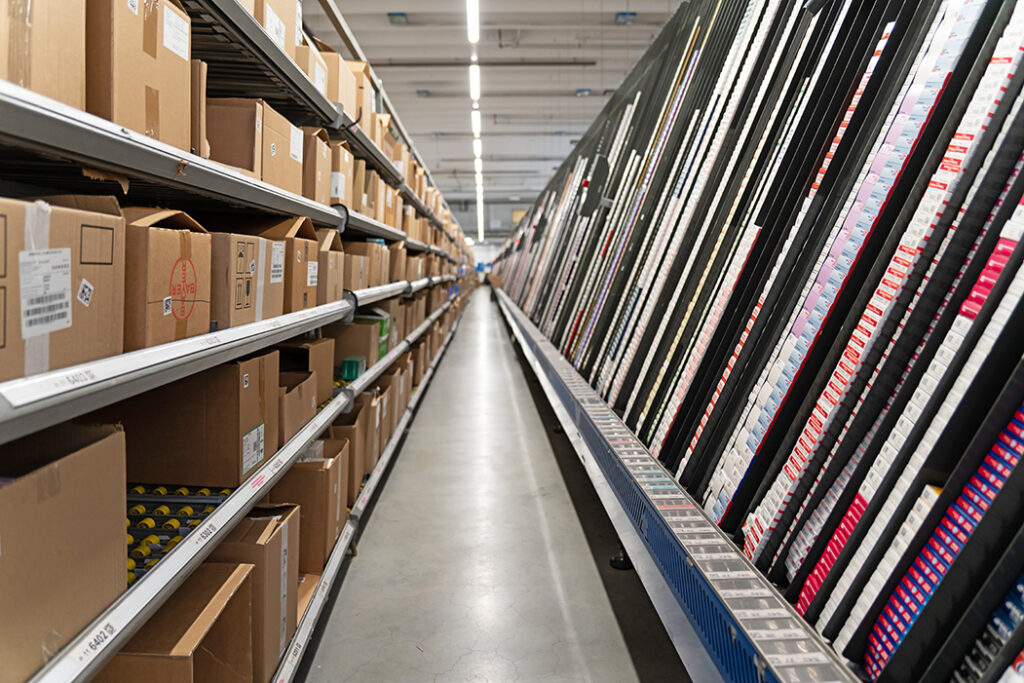
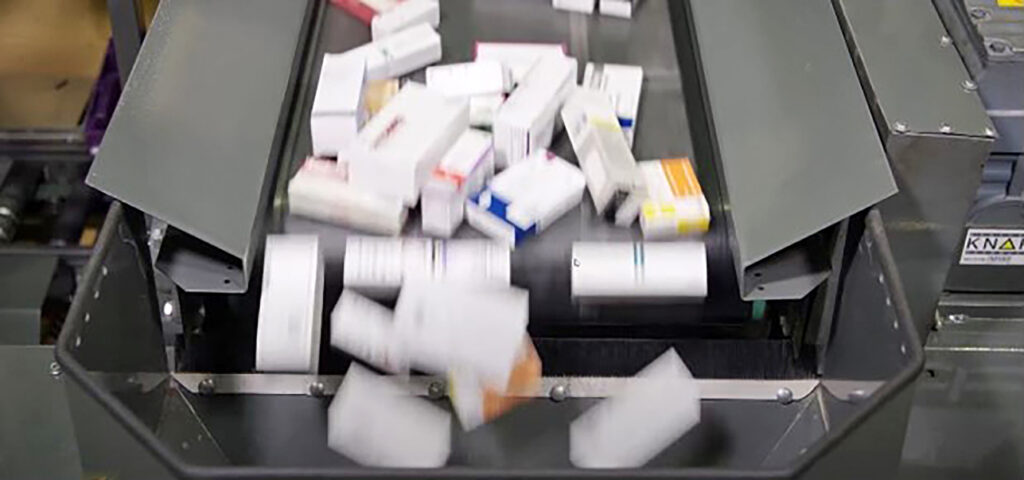
In practice, that shift is less visible in physical automation than many expect. While robotics already exist in logistics systems, she pushed back on the idea of humanoid warehouse workers or sweeping physical replacement of labor.
“Robots have been working in Hungaropharma’s logistics for years, though not in the physical form many imagine today; they are not humanoid,” she said.
Instead, she described automation as something embedded and largely invisible—systems embedded in planning, forecasting and inventory flows rather than humanoid machines on warehouse floors. Still, expectations around technology continue to evolve. But Füzesi argued that not every emerging tool should automatically be adopted simply because it exists.
“Sustainability, however, also appears in small principles, such as not forcing something onto our systems just because it appeared yesterday and therefore integrating it today,” she said. “Humanoid robots are a good example.”
For now, she said, the economics do not support that direction in pharmaceutical logistics. “Their use in domestic pharmaceutical logistics is not currently justified by rationality, process efficiency, or return on investment.”
Where artificial intelligence is already making a measurable impact is not in physical handling, but in data-heavy processes across the supply chain.
“Wherever data is generated, AI can be effectively applied,” she said. “And pharmacies will adopt it sooner than they will robotize a small pharmacy.”
That includes forecasting shortages, improving financial planning and supporting smaller market players. “AI can provide substantial support in SMEs’ operations and patient/customer relations,” she said. But she also cautioned against overstating what technology alone can solve. The pharmaceutical supply chain, she said, is under pressure from multiple directions at once, including cost inflation and energy-related risks.
“Multiple risks must be managed simultaneously in the supply chain,” she said. “However, it must be recognized that innovation alone cannot necessarily address every problem.”
Shortages, she added, remain structurally rooted and cannot be fully eliminated through digital tools. “The root causes are shortages of raw materials, as well as financing and regional distribution issues.”
Still, AI can help smooth volatility at the edges. “AI-based forecasting systems can somewhat smooth the peaks and troughs that occur when a product drops out,” she said, adding that “AI and industry innovation will not solve shortages.”
The same balance between capability and limitation appears in how the company approaches sustainability and infrastructure development.
At Hungaropharma, sustainability is not treated as a standalone initiative but as part of operational design, including energy use and logistics capacity. One example is its automated high-bay warehouse, designed with energy independence in mind. “Our automated high-bay warehouse has already been designed for self-sufficiency — digital operation and solar power supply,” she said.
But she emphasized caution around environmental messaging in the industry. “We do not like to use grand statements in greening or present procedures that fall into the category of ‘greenwashing,’” she said. “We value authenticity and our efforts far more.”
She added that the company expects to track progress through formal reporting frameworks. “I hope these efforts will be clearly measurable year by year in our ESG reports.”
Looking ahead, Füzesi described the industry’s current phase as a transition from mechanical automation to data-driven intelligence. “The era that followed, which we are currently in, is about implementing artificial intelligence,” she said. “If we place an equals sign after robotization, on the other side stands quantity. If we place it after artificial intelligence, we can write quality.”
That distinction, she said, will define how pharmaceutical distribution evolves in the coming years—not through more physical automation, but through better prediction, interpretation and coordination of information.
“AI is an assistant that can give pharmaceutical distribution, the journey of medicines, a more balanced, predictable, and secure rhythm,” she said. “We already use AI in several areas and are continuously seeking further applications, but it is a priority to integrate AI-driven optimization responsibly into the company’s daily operations.”
This article was first published in Pharma Industry Review 2026 / 1.


