


The venue, on Biblia utca, marks a formal return for one of the most noted Hungarian contemporary painters of the early 2000s. Kordás’ large-scale pieces drew wide attention at the turn of the millennium.
His painting bringing the Hungarian national anthem to canvas hung for years in the Parliament and the Office Building of the National Assembly, often serving as the backdrop to diplomatic events.
Many also remember his striking “Ode to Joy,” which translated music into a visual experience. The gallery’s opening signals a curated re-entry into public life, placing both the new cycle and earlier reference pieces in one space for comparison.
Kordás chose to step away from the art world for close to 20 years, continuing to create while staying out of the public eye. With the launch of the Kordás Gallery, he decided the moment was right to re-engage and present the results in a focused setting.
The space showcases the works of a master now in his early 70s. While the new and the old paintings differ in many respects, they share a distinctive signature that engages viewers immediately.
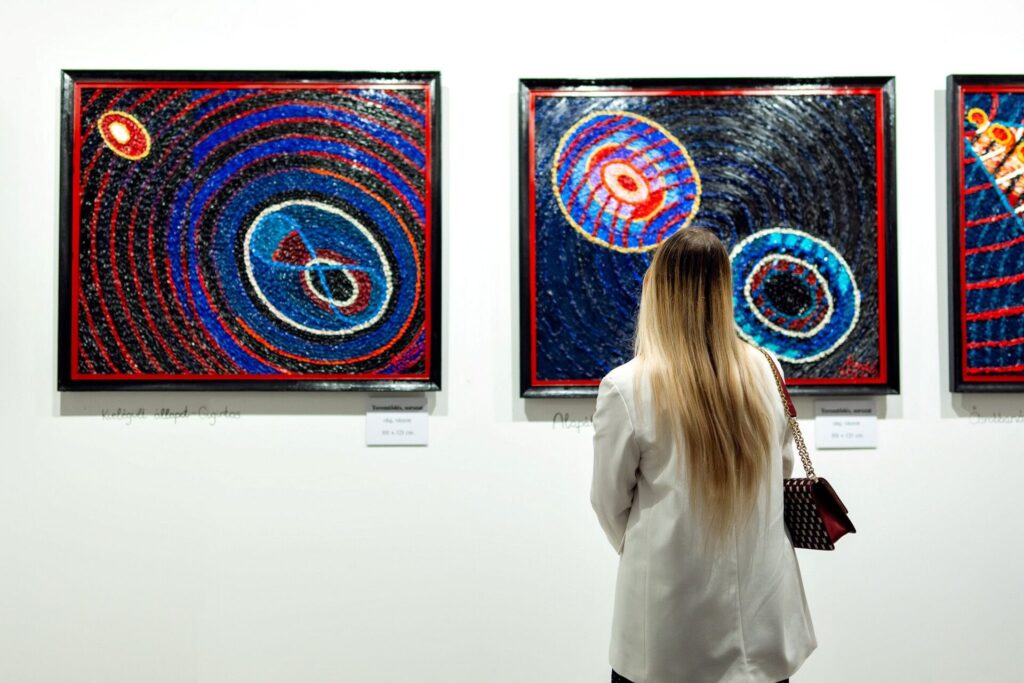
According to the art experts, the compositions are painted on a plane, yet register with a tangible sense of depth, reinforcing a dynamic, contemporary mode of expression. That spatial effect, achieved without relief, is one of the reasons the works seem fresh even when they echo earlier themes.
The canvases rely on bold chromatic contrasts and confident handling of paint quantity, producing a visual density that holds attention at close range or from across the room. Kordás links the new series directly to the research he pursued while out of the spotlight.
“Every creator with self-respect aims to bring something new into being, in whole or in part. That motivation drives me in writing and in painting,” he says. “I spent recent years researching, writing, and reading. I summed up my observations in a book titled ‘Creation,’ and the paintings are the visible results of this two-decade journey.”
The exhibition opened with the artist and gallery-founder Dávid Borsos welcoming visitors. The presentation is designed to make the continuity of Kordás’ work visible. Earlier benchmark pieces establish the reference points, while the latest canvases expand the vocabulary toward themes that preoccupied Kordás during his retreat. The gallery confirms that most of the exhibited works are available to collectors, with a small group of key pieces retained by the artist.
“Most of the paintings are for sale, though I am attached to a few major works,” Kordás said. “The recurring themes in my latest pieces are the birth of the universe and energy, which I hope become almost tangible.”
From a market perspective, the return to the public eye strengthens supply with a defined authorial voice rather than attempting saturation. The location near Ráday utca gives the project a steady flow of footfall while still being able to stand as a destination in its own right.
For collectors who followed Kordás in the 2000s, the gallery opening provides direct access to the evolution of his method. For new audiences, free access encourages entry at a time when galleries must compete with larger venues for attention.
A hallmark of Kordás’ method is the orchestration of color fields and experimentation with paint application. Canvases move between restraint and abundance without losing structural control. Even when pigment is applied generously, the images resolve into legible relationships. The result is a sense of elemental force, frequently cited by viewers as the works’ immediate appeal.
From a technical perspective, although the compositions are planar, they read as spatial. Kordás achieves this by leveraging edge behavior, saturation shifts, and layered passages that suggest receding planes without literal depth. The dynamic is not an illusion so much as a felt space, aligning with the artist’s stated interest in energy and genesis. In that context, his book “Creation” provides a textual mirror to the visual display, indicating how the two fed into each other over the long interval away from the public gaze.
The gallery notes that the mix of never-before-seen works and earlier “classics” is likely to rotate as additional pieces from the new series are prepared for presentation. In contrast, the anchor works will maintain continuity for repeat visitors.
In placing a mature artist’s return at the center of a new gallery venture, the founders are betting on depth rather than novelty. The strategy, they say, is to let the paintings carry the argument.
This article was first published in the Budapest Business Journal print issue of November 28, 2025.


