



We expect limited new developers to enter the market in the short term. Established players are likely to remain most active, with companies such as Skanska in the office sector and CTP, Panattoni, and others in industrial and logistics continuing to maintain a strong presence.
One key challenge is the development equation itself. Land, construction, and financing costs remain high, while rents and capital values have not kept pace and, in some segments, have stagnated. This puts significant pressure on development margins.
For Hungary more broadly, the key opportunity is to translate improved investor sentiment into a broader, more diversified capital base. Lower country risk, combined with potentially better financing conditions, greater regulatory predictability, and stronger transaction liquidity, could lead Hungary to attract significantly more international CRE capital.
Kata Mazsaroff, managing partner, Colliers
The interesting development is hybrid. Our operating model lets us take on very different property formats, from single apartments to whole buildings, and still deliver the return the owner needs. Scale improves efficiency, and in purpose-built student housing, that efficiency usually comes from minimizing the living unit and compensating with communal areas and services.
The trend in central locations is now a hybrid student housing and apartment-hotel model. It handles vacancy across the summer break far better and captures the upside of peak tourist demand, so the operator gets flexibility while student demand keeps the asset base stable. It also drives the exit yield down compared with hotel-only operations, where demand is highly pro-cyclical. Flexibility is the point. Different locations demand different approaches, and we are 100% let across all 17 Budapest locations running more than one format at once.
Marco Nobel, founder and CEO, Fuse
We see a clear role for both speculative and BTS development, but speculative has become much more selective. Nationwide, close to 500,000 sqm of industrial and logistics space is currently under construction, with around 54% already pre-let. This is not the same as the BTS share, but it shows that development is increasingly driven by identifiable occupier demand rather than pure supply creation. At the same time, recent speculative completions have contributed to a national vacancy rate of around 13%, making location, technical quality, and timing more important than ever.
For developers, higher vacancy means that simply adding new stock is no longer enough. New entrants need the right location and technical capabilities, plus an increasingly strong operating platform that can meet a broad range of tenant requirements to a high standard. The market is differentiating more sharply between modern, adaptable assets and buildings that are harder or more expensive for occupiers to operate.
Rudolf Nemes, CEO, HelloParks

Budapest hotel development has a long way to go, as the capacities are way behind those of Prague and Vienna, our two closest competitive destinations. Also, pressure on short-term rental (STR) market capacity, often referred to as Airbnb apartments, means they are being reduced by regulation, so hotel capacity needs to expand to allow room for growth. As long as financing and market conditions confirm the viability of hotels, expansion is healthy. The supposed boom is always kept at bay by market forces.
Tourism leadership in vision, promotion, and execution needs to be in place to attract investors. Essentially, there is no proper leadership for Budapest. Just Google Budapest Convention Bureau and Vienna Convention Bureau and see the difference. To have sell-out days, city-wide large events are required. Sports events of recent years have brought great success to the city with serious economic benefits. The lack of clarity on whether sports will receive the same level of immediate focus remains a big question mark. The recent announcement that Budapest is submitting a bid to host the 2036 Olympics shows good intentions, but we need to fill hotel rooms tonight and tomorrow, not in 10 years’ time.
Marius Gomola, managing partner, Horwath HTL Hungary
There seems to be no stopping development, especially in the three- and four-star segment. The pipeline of new developments is strong; this will force existing hotels to renovate to remain relevant. The only area where we see slowing is the five-star and luxury segment, where supply has grown, but demand from travelers has not followed. Luxury hotel supply alone will not create an attractive destination for luxury travelers; they need a full luxury city experience outside the hotel walls. Those investors uncomfortable with development and construction risks will turn to buying existing three- and four-star hotels, especially those that can be repositioned through a renovation and change of operator.
We have been saying this for about 20 years: Budapest should build a modern, large-capacity congress center that will compete with major European congress cities. That would attract a large volume of travelers who spend more than your average leisure tourist.
Péter Takács, partner, Newmark VLK Hungary
A successful residential development is one where people can live comfortably and affordably over the long term. Energy consumption is certainly part of this, but so are functional floor layouts, thermal comfort in both winter and summer, durable materials, views and privacy. Just as importantly, residents shouldn’t have to get into a car to go shopping or take their children to school. Transport connections and the infrastructure needed for everyday life should be in place by the time people move in. Waiting years for promised urban infrastructure is hardly a good start.
At a recent real estate investment conference, I heard first-hand how Hungarian developers are approaching large-scale, integrated residential programs. As an architect, what I look for in these concepts is how a development program becomes a functioning urban neighborhood. The number of apartments alone tells us very little about what it will feel like to come home there, raise a family there, or maintain those buildings 20 years from now. These everyday questions need to be addressed from the very beginning of the design process.
Géza Germán, deputy CEO, Óbuda Group
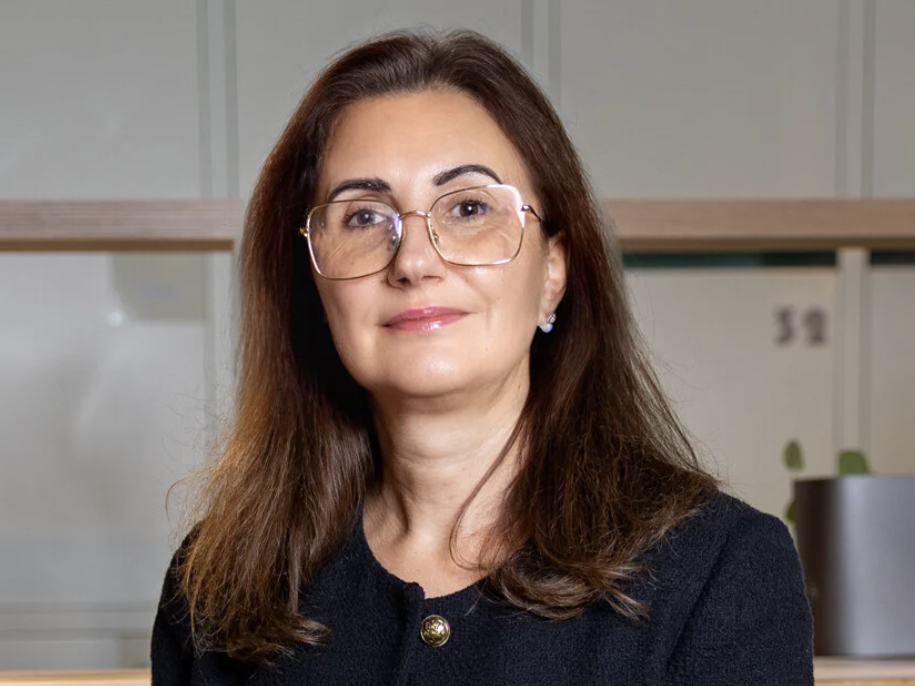
Our general approach is to start developments on a speculative basis, as we did with the first two phases of H2Offices. This reflects our confidence in the projects we bring to the market and in our ability to deliver the quality we committed to from the outset. The full leasing of H2Offices Phase II well ahead of completion confirms that there is demand for this approach when the right location, product, and long-term vision come together.
A successful office project must work at three interconnected levels: location, building, and long-term operation. It needs to be easy to reach, connected to public transport, and integrated with the services people use during the workday. Inside, the focus should be on a healthy, comfortable, and adaptable working environment, supported by natural light, good air quality and acoustics, shared spaces, greenery, and amenities that respond to people’s everyday needs.
Aurelia Luca, executive vice president of operations for Hungary and Romania, Skanska Commercial Development Europe

In the current industrial market, BTS is likely to become the preferred development model. With higher vacancy, geopolitical uncertainty, and a more cautious macroeconomic environment, committed tenant demand matters more than ever. That said, we do not see this as a permanent shift away from speculative development. The right balance between BTS and speculative development should be driven by actual tenant demand. Wing Industrial has developed speculatively when market conditions supported it; today, however, the case for BTS is stronger.
BTS is especially relevant for tenants with specific operational requirements. At East Gate Business Park, Phoenix Pharma expanded its warehouse from 8,000 to 11,200 sqm; a good example of how industrial infrastructure can grow alongside a tenant’s business. BTS can also involve the major adaptation of existing assets. We are currently rebuilding an industrial hall around a tenant’s manufacturing requirements, retaining essentially only the external structure. This shows that BTS is not only about new-build projects.
Speculative development still has a role. In the first three quarters of 2026, we have signed leases covering 90,000 sqm, half of which were new leases accommodated in our speculative developments.
Zsófia Korda, head of Wing Industrial
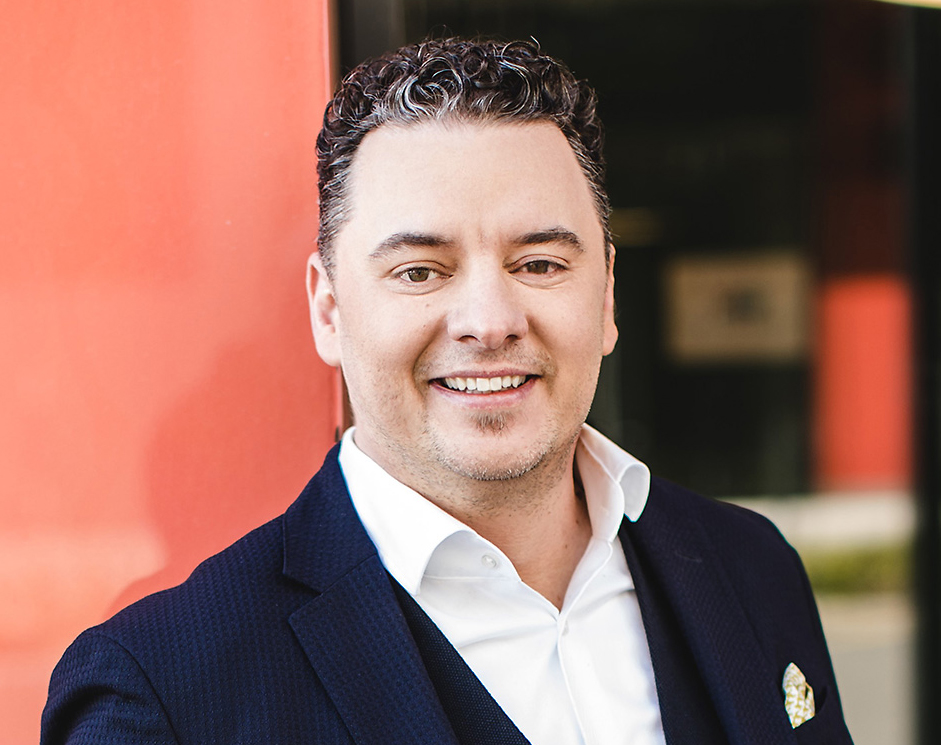
Office development was brought to a near-complete halt by state acquisitions in 2023, and the fate of those projects has since become uncertain, though they will eventually come to market. Meanwhile, the substantial volume of office-to-other-use conversions is steadily reducing supply and pushing down vacancy rates, which will sooner or later create the conditions for office development to become viable again.
Once vacancy rates fall below a critical threshold, which we expect within two to three years, and assuming no new supply enters the market for a further three years alongside that, the sector will almost certainly pick up again. In the office market, a pre-lease ratio of 70–80% is typically required before a new development can be launched.
Our expectation is that once rule-of-law guarantees provide long-term assurances on investment security, foreign end-investors will begin entering the market, and that could trigger a full repricing. In our view, that is still 18 to 24 months away. We are not anticipating large-scale market entry by major Western developers anytime soon.
Mihály Schrancz, CEO and founding partner, Realis WAM.
This article was first published in the Budapest Business Journal print issue of October 19, 2026.