


Held Sept. 24 at Aquaworld Resort Budapest, the event brought together representatives of construction, logistics, electrical services and finance to discuss how businesses can adapt to changing market conditions.
Opening the forum, HAD Group owner and managing director Ernő Hadnagy discussed the challenges of recent years and the transformation of the group, which has a history spanning more than three decades.
“Our group is a little like a toolbox: each tool is a separate item that can do its job independently, but its real strength emerges when a complex project does not require gathering equipment from five different places because the full set is already at hand,” Hadnagy said. “Our ecosystem comes together along the property development and construction value chain.”
He said the event aimed to encourage open professional dialogue and identify opportunities for businesses to combine their capabilities.
Tamás Nagy, HAD Group’s business development director, said closer coordination between the group’s companies had been central to its development.
“Previously, the companies in the group performed very well, but they operated alongside one another on separate tracks,” Nagy said. “We are looking for partnerships, joint projects and opportunities where we can complement one another’s capabilities.”
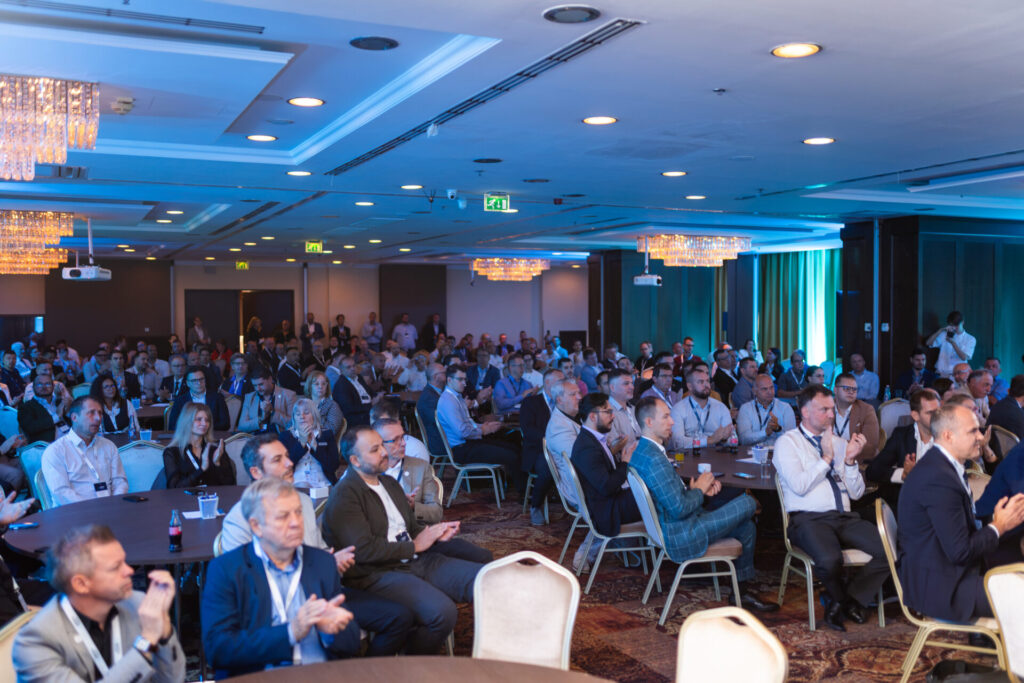
Economist Zoltán Pogátsa examined the international and domestic economic outlook, while Mariann Trippon, chief analyst at CIB Bank, discussed technological adaptation and managing uncertainty.
Trippon highlighted how geopolitical tensions, energy prices, transport routes and domestic economic conditions influence the investment environment.
A financing panel explored which projects banks consider viable, how contractors can remain creditworthy over the long term and the role of subsidized and guaranteed financing. Participants discussed programs offered through SZKP, EXIM and the Hungarian Development Bank (MFB), among others.
Panelists agreed that, alongside stricter banking requirements, environmental, social and governance (ESG) considerations and energy efficiency increasingly offer direct business value and financing advantages.
Bence Bolfán, head of HAD Consulting, examined the Hungarian construction industry’s prospects for 2026-2028. He attributed the downturn primarily to weaker investment demand and said productivity, financial stability and the quality of project preparation would become increasingly important.
“Value can be built even in a difficult market,” Bolfán said.
A subsequent construction panel considered the technological and organizational changes needed to improve efficiency and translate market challenges into practical business decisions.
“It is not enough to talk about the challenges facing construction; action is needed,” said István Derczó, founder and owner of Weinberg 93 Kft.
Energy costs and their implications for construction were central to the afternoon program.
Attila Holoda, an energy expert and managing director of Aurora Energy Kft., said energy prices and carbon emissions costs affect the entire construction value chain, from materials manufacturing to building work.
“The impact of energy prices runs through the entire construction value chain, with its extent determined by the technology selected, the contract and how costs are allocated,” Holoda said. “Energy is no longer an overhead cost, but a design parameter.”
He argued that energy should be treated as a fundamental consideration in building design and life-cycle costs.
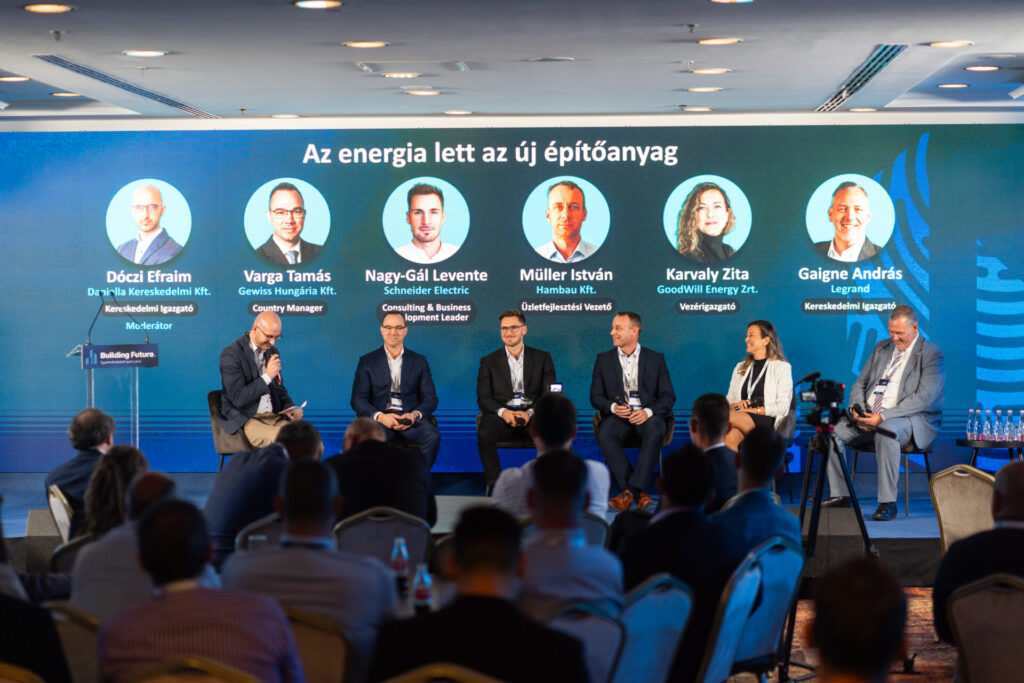
The following panel examined how decisions made early in a project can reduce operating expenses, increase property values and improve competitiveness. Topics included energy upgrades to existing buildings, smart building technologies and the returns available from solar installations, energy storage, electric vehicle fleets and power purchase agreements (PPAs).
Participants emphasized that energy investments can deliver cost savings and long-term business value when design, engineering and construction decisions are coordinated from the outset.
According to the organizers, HAD Group seeks to apply this approach by combining expertise across its companies to support partners from planning through technical development and construction.
Neurobiologist Máté Szász closed the conference program with a presentation on physical and mental performance, health awareness and cooperation in the workplace.
Szász argued that trust can reduce bureaucracy and uncertainty, allowing teams to work more effectively. He also drew a parallel between the information people consume and their diet.
“Information affects our bodies just as food does,” he said. “You can become overfed or dangerously undernourished, and if it goes bad, it can even be toxic. It matters what kind of diet you feed your brain.”
The forum concluded with networking and test-drive opportunities, reflecting its central theme of building the industry’s future through cooperation.


