


E.ON Hungária Group’s EU-funded investments support this shift by expanding capacity and strengthening digital operations.
When choosing a location for a new plant or business investment, available electricity capacity has become a decisive factor alongside transport connections, labor availability and the supplier base. The same infrastructure must meet businesses’ growing energy needs, support community development, and serve the increasing number of electricity-consuming devices in households. Adequate grid capacity is therefore a matter of both competitiveness and quality of life.
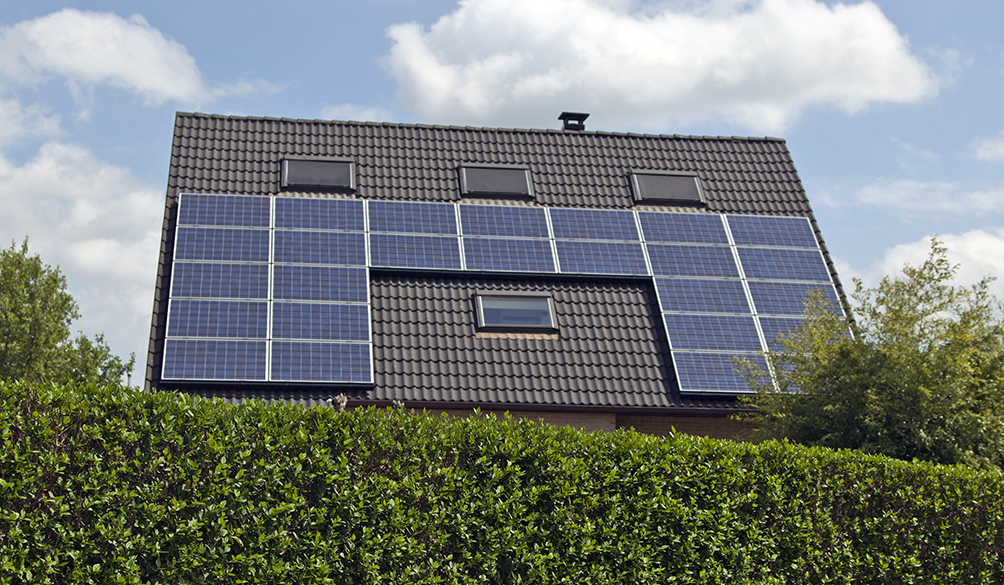
Meanwhile, energy use itself is changing. More households and businesses are generating their own energy. At the same time, electric vehicles, heat pumps and energy storage solutions are becoming more widespread. A system that previously operated primarily in one direction is increasingly becoming bidirectional: Some consumers also supply power to the grid at certain times.
All of this requires a new approach to planning. A business may decide within a few months to purchase new equipment or expand production, while developing a major grid facility can take years. Investments must therefore consider not only existing requirements but also the expected economic development of a particular area and changes in consumption and generation.

Meeting growing electricity demand does not always require the construction of new physical capacity. If the entire grid were designed to accommodate the highest loads, which occur only rarely, it would require investments whose capacity would remain underused for much of the year.
Making better use of existing infrastructure is therefore becoming increasingly important. More detailed metering data can reveal where genuine bottlenecks exist, where new grid infrastructure is justified and where modern operational controls, energy storage or adjustments to the timing of consumption could provide a solution.
For example, energy consumption associated with certain industrial and commercial processes can be shifted within defined limits. With appropriate controls and incentives, this can reduce peak loads and help lower customers’ energy costs. The task for the coming years is, therefore, to build a grid that offers both greater capacity and more efficient, flexible operation.
E.ON Hungária Group’s grid development program, supported by EU funding through the Recovery and Resilience Facility, forms part of this long-term transformation. The investments under the program, valued at approximately HUF 230 billion, will provide the conditions for an additional 4 GW of wind power capacity to be built in Hungary by 2030, in line with the government’s intentions. Wind farms could further diversify the country’s energy mix, adding another renewable energy source to complement existing solar capacity.
New and upgraded substations, reinforced grid sections and digital improvements build on one another. Upgrading power lines and transformers increases the amount of power that can be transmitted, while remotely monitored and controlled equipment enables faster, more precise intervention. Automation can help identify and address faults, while increasingly detailed operational information can support more efficient operation.

Physical infrastructure improvements are complemented by grid digitalization. E.ON has also secured an additional HUF 13 bln in EU support for smart meter installations, which could enable the installation of 237,000 new units. Although these devices will primarily be installed in households, the more detailed information they provide is valuable for operating the entire energy system.
More accurate metering provides a clearer picture of how consumption changes throughout the day. Customers can gain a more detailed understanding of their own energy use, while the grid operator can plan operations and necessary improvements more precisely.
However, a smart meter does not reduce consumption or control equipment on its own. The real opportunity lies in services and technologies that use metering information to help optimize the timing of energy use within parameters set by the customer.
E.ON’s approximately 88,000-kilometer electricity network in Hungary serves the energy needs of more than three million customers. The grid must operate reliably, accommodate new generation, meet new demand and adapt to increasingly varied patterns of energy use.
This is also changing the role of energy companies. The previous, predominantly one-way supply model has gradually given way to a system involving multiple participants, in which generators, consumers, storage facilities and controllable equipment work together. The task now involves both delivering energy safely and coordinating this increasingly complex system.
The significance of E.ON’s EU-funded developments extends beyond individual grid investments. Greater capacity and smarter operation together enable the grid to respond more flexibly to the changing energy needs of the economy, communities and customers. The investments now underway therefore address current requirements while strengthening the foundations of an energy system capable of adapting to further long-term changes.
This article was first published in the Budapest Business Journal print issue of October 2, 2026.


