


True, at the time Tisza had no information that the budget deficit was significantly higher than the Fidesz-led government had initially targeted. Before we get into the details, however, let us focus first on a more immediate issue.
The EU approved Hungary’s revised recovery plan in July, but the money remains conditional on the completion of 27 so-called “super milestones,” covering corruption and transparency, judicial independence, and the auditing and protection of EU funds. Commission and Hungarian officials said recently that the process was on track, with around two-thirds of the required milestones already completed and the remaining measures at an advanced stage. The government has pushed through legislation covering anti-corruption safeguards, public procurement, asset declarations, the tax system and other areas required under the agreement (see photo box).
But the EUR 10 billion will not appear immediately in the Hungarian Treasury. The European Commission still has to assess the evidence, and Hungary must go through the payment process. However, meeting the deadline is a major boost to the Tisza cabinet’s credibility.
And that is probably what Péter Magyar and his government need most right now. The cabinet is working with a 2026 deficit target of around 7.5% of GDP, compared with the original budget target of 3.7%. International news wire Reuters described the forthcoming budget overhaul as Magyar’s first major credibility test, as the government tries to reconcile spending promises made during the election campaign with the need to reduce the deficit.
Without knowing the actual deficit figures, Tisza campaigned on tax reductions and higher social spending, and some of those promises are indeed being implemented. The government has announced, for example, a sharp increase in the minimum retirement pension from HUF 28,500 to HUF 120,000 a month from January 2027. Yet the fiscal starting point leaves little room for maneuver.
The monetary picture is more encouraging. Inflation has fallen dramatically, giving the National Bank of Hungary the headroom to start easing monetary policy. The base rate is now 5.5%, following a series of cuts, while inflation has dropped to exceptionally low levels. The latest rate reduction therefore marks a significant change from the restrictive monetary environment that dominated Hungary’s economic policy in previous years.
Lower interest rates should eventually support investment, credit and consumption, while a stronger forint and low inflation help reduce the cost of imported goods and improve household purchasing power. True, exporting companies benefit less from a strong forint, but this combination could provide a relatively favorable environment for economic recovery. Investors, however, look for more than low interest rates: they need a predictable economic policy framework. That will also matter to the sovereign rating agencies.
All three of the major bodies, Moody’s, S&P and Fitch, maintained Hungary’s investment-grade rating in their May-June reviews, but all retained negative outlooks. S&P rates Hungary at “BBB-,” only one notch above speculative grade, while Moody’s rates it “Baa2” and Fitch “BBB.” The agencies effectively gave the new government time to demonstrate that it can repair the fiscal position and implement institutional reforms.
That grace period will not last indefinitely. The next rating reviews are expected towards the end of November and the beginning of December, and will be particularly important. The agencies will be looking at whether the 2026 deficit is brought under control, whether the 2027 budget provides a credible consolidation path, and whether EU funding is flowing. The government then needs to convince markets that a deficit of around 7.5% is a temporary problem rather than the new normal, while keeping its campaign promises sufficiently intact to avoid undermining domestic support.
However, the 2030 euro ambition, another electoral promise, further complicates the situation. If Hungary genuinely wants to move towards euro adoption, it will eventually need to demonstrate sustained fiscal discipline, favorable debt dynamics, price stability and exchange-rate credibility. The current fiscal position is clearly incompatible with that objective, but the ambition could itself provide a useful long-term anchor for economic policy.
The most likely scenario, therefore, is neither a dramatic fiscal crisis nor an immediate economic boom. Hungary is entering a period of gradual normalization, but from a difficult starting point. Having completed the EU milestones to secure the recovery funds, if the government produces a credible fiscal consolidation plan and allows the MNB to continue its cautious easing cycle, investor confidence could strengthen further and growth could accelerate in 2027. Failure on any of those fronts would make the task considerably harder.
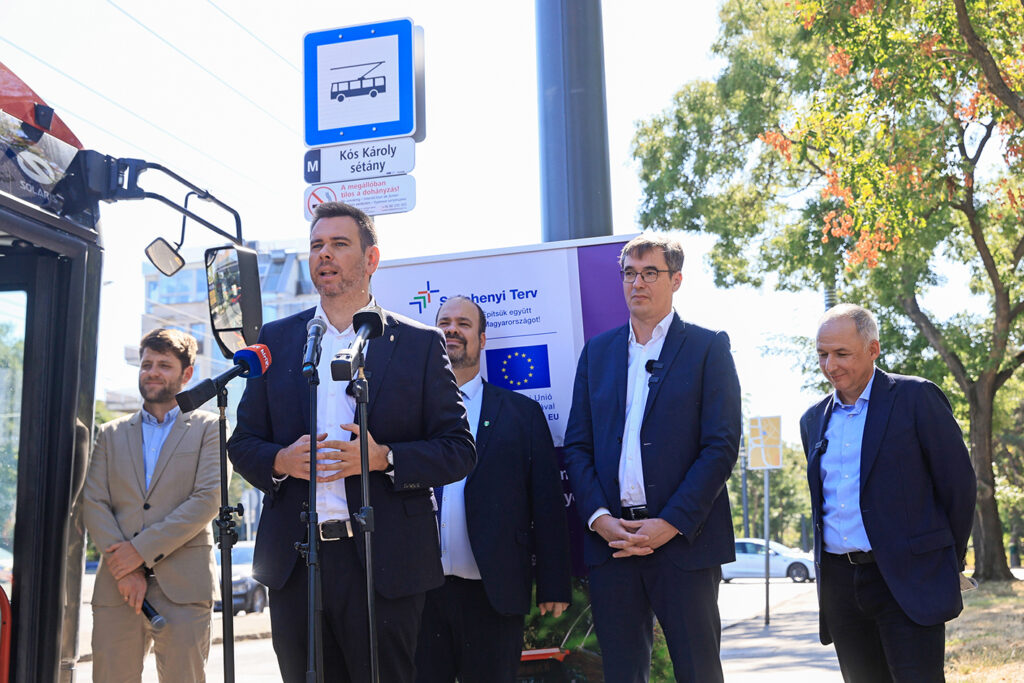
Hungary has fulfilled all the milestones required to receive the full EUR 10 billion in recovery funds, Minister of Transport and Investment Dávid Vitézy said on Aug. 31, as reported by Euronews. The deadline to meet the conditions expired that same day. Prime Minister Péter Magyar had campaigned on unlocking EU funds suspended during Viktor Orbán’s 16-year rule.
In May, Magyar and European Commission President Ursula von der Leyen agreed to release EUR 16.4 bln previously frozen over rule-of-law and corruption concerns. Of this, EUR 10 bln is from the Recovery and Resilience Facility, which expires later this year, while EUR 6.4 bln is allocated from Cohesion Funds without an immediate deadline. According to news outlet 24, Vitézy said that this represents roughly HUF 5.5 trillion–6 tln in EU funding, depending on the exchange rate.
Hungary had to deliver on 27 “super milestones” and more than 100 milestones. Parliament amended over 100 laws over the summer, mostly on judicial reforms and anti-corruption measures, and updated its National Recovery Plan to ensure timely access to the funds. The revised plan includes investments in the energy grid, railways and rental housing. Vitézy made the announcement at a press conference about an HUF 11 bln trolleybus development project in Budapest.
This article was first published in the Budapest Business Journal print issue of September 4, 2026.


