


At a joint event organized by Siemens Zrt. and the Faculty of Electrical Engineering and Informatics of BME (Budapest University of Technology and Economics), engineering students gained firsthand insight into Hungarian industrial projects that prove: Hungarian technical expertise holds its own not only at home but anywhere in the world.
At this inaugural event, which aims to become a tradition, seven leading Hungarian companies in their respective sectors showcased how world-class solutions are born through Hungarian engineers – built on Siemens technologies.
These were the inspiring industrial projects of 2025:
Cohors Concept: Modular Production Lines Configurable Like Lego
One of the most exciting innovations in Hungarian industrial automation was presented by György Papp, CEO of Amplio Zrt., who is rethinking the logic of production line design. The essence of the Cohors concept is that customers can assemble the necessary equipment themselves from modules – such as screwdrivers, manipulators, and dispensers – using an online configurator, which the company then manufactures and delivers ready-to-use. Operating on Industry 4.0 principles, these units can be reconfigured on-site in as little as two minutes, making them perfectly suitable for both high-volume production and the fulfillment of small-batch, custom orders. Modularity also means sustainability: at the end of a production cycle, the elements can be reprogrammed or reconfigured, giving the equipment virtually unlimited lifespan and continuous adaptation to changing market demands.
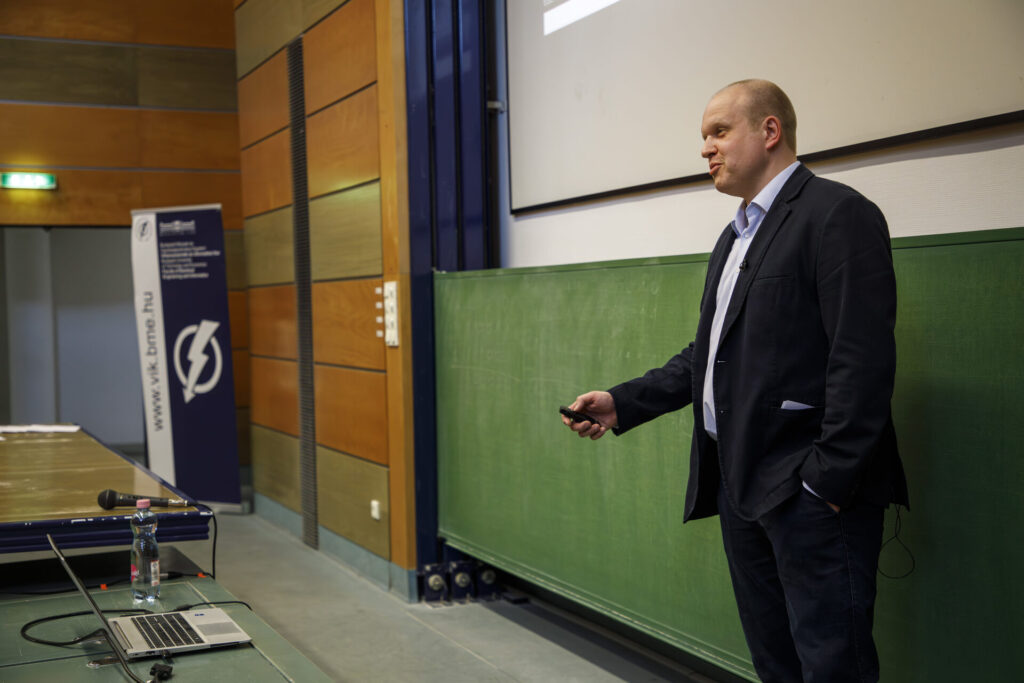
AI-Powered Robot Store Open 24/7
A bold answer to two pressing problems in the retail sector – labor shortages and high operating costs – was provided by a joint development of BBM Engineering Solutions Zrt., Logbord 2010 Kft., and the Cibus Hungaricus Foundation. The project was presented to the students by Botond Bővíz, CEO of BBM. The solution is an automated warehouse built into a container, where three industrial robots fulfill customer orders placed via a mobile application – 24/7, without human intervention. The unique feature of the system is its ability to recognize and handle any product using AI, without prior training. The solution is suitable for supplying both small settlements and industrial parks, and the company is already thinking about mass production and international expansion.
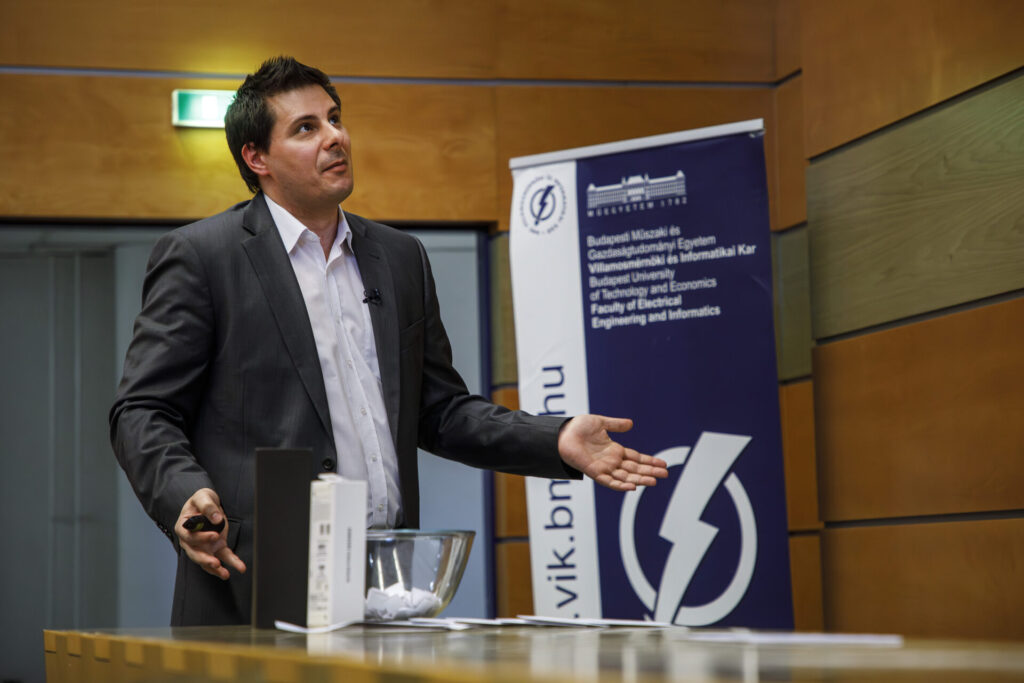
Hungarian Pharmaceutical Technology in Costa Rica: Sterile Production Line for a Global Medical Device Giant
The international competitiveness of Hungarian engineers is demonstrated by Cooptech Kft.’s overseas investment, presented by Tamás Csapó, Technical Director. The story is also a prime example of trust-building: a world-leading company first entrusted Cooptech with a smaller task at its Hungarian plant – the expansion of a chemical supply system. Then, at the company’s Costa Rican site, they were able to build a complete chemical supply system for the production of the company’s medical devices. The technological challenge lay in the strict regulations and the requirement to operate in an explosive atmosphere. Tamás Csapó also shared the most important lesson of the project with the students: even smaller tasks must be performed with humility and precision, as these lay the groundwork for winning global major projects.
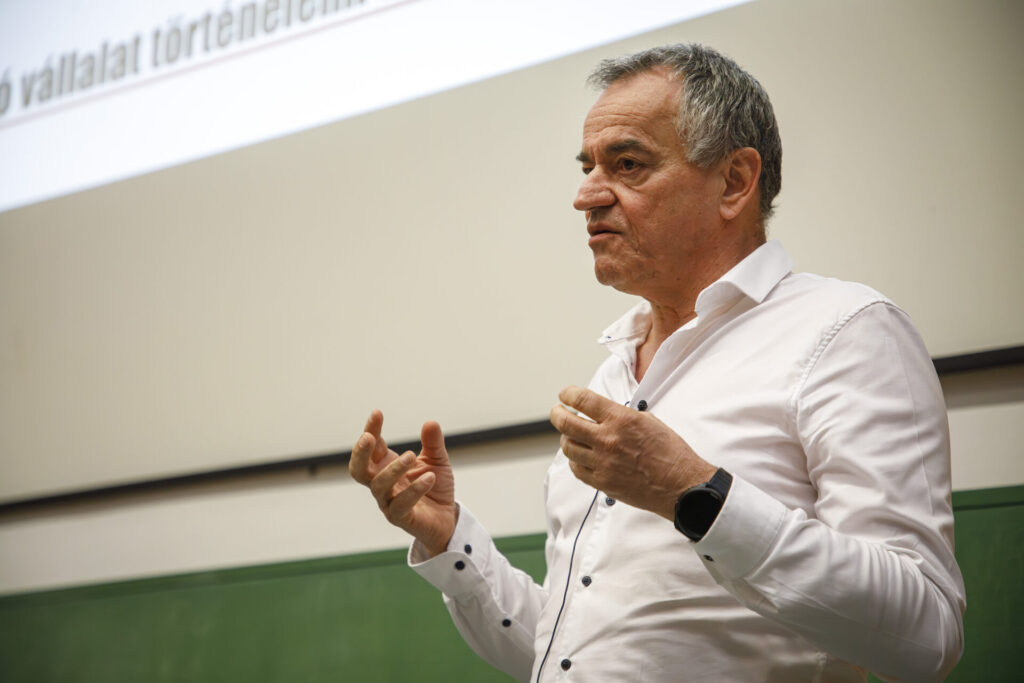
Waste to Fuel: Engineering Feat in the Laboratory of the University of Pannonia
The promise of a sustainable future through Hungarian development, the “waste to fuel” project, was presented by Géza Papp, Managing Director of PGB Engineering Kft. The scale of the investment, realized at the MOL Institute of Mineral Oil and Hydrocarbon Technology at the University of Pannonia, speaks for itself. Five technologies (including thermocatalytic, steam pyrolysis, and plastic cracking reactor systems) were created for the rethinking of hydrocarbon-based waste, such as plastic, rubber, or used oil. Their uniqueness lies in the fact that these systems operate at extreme temperatures (up to 1000°C) and pressures (up to 100 bar), often with hydrogen, which is an explosive gas. The innovation highlights that Hungarian engineering knowledge, with modern digital solutions – OT network, cybersecurity – can provide answers to global waste management and energy challenges.
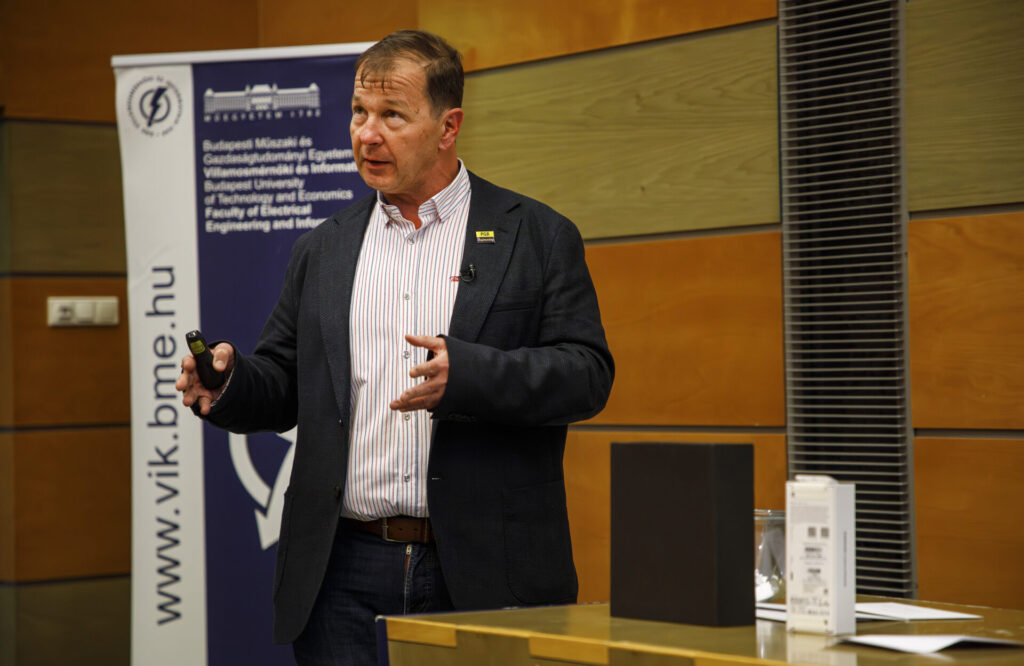
Power Plant Retrofit: Digital Transition in the Service of Domestic Energy Security
Ferenc Nagy, Development Director of Profigram Zrt., described a large-scale control system modernization of a domestic power plant, which provided a solution to the risks posed by aging systems and increasingly difficult spare parts supply. The project focused on the complete replacement of the outdated control system with a modern one that also meets the latest cybersecurity requirements. During the implementation, a tight shutdown schedule had to be adhered to while simultaneously performing hardware replacement and complex software migration. This innovative retrofit not only significantly increased operational safety and availability but also made the operation of the domestic power plant sustainable and more efficient in the long run through modern diagnostic functions and a more transparent user interface.
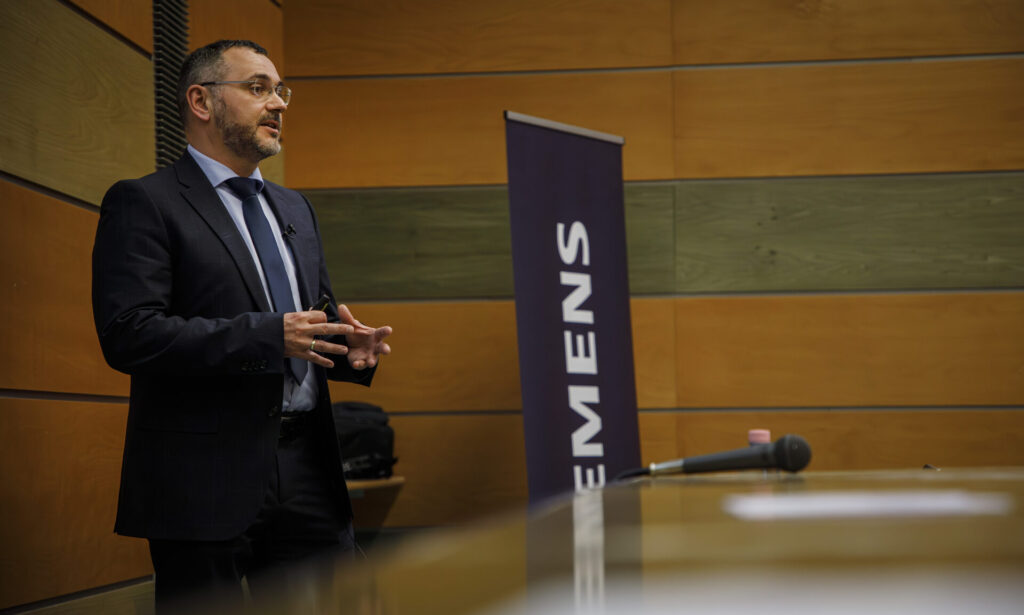
Automated PEZ Assembly: Efficiency and Precision in a Rotary Table Arrangement
Focusing on the real needs of industrial automation – reliability and quick return on investment – Márton Tóth, engineer-sales representative of Robot-Service Kft., presented his company’s inspiring domestic project. The development aimed to create an automated assembly machine capable of high-speed assembly of the various components of PEZ candy dispensers. The technical basis of the system is provided by two robots, and to optimize the process, the designers used a rotary table arrangement and controlled, step-by-step sub-processes to achieve a low cycle time. One of the most important elements of the innovation is the integration of spring production: since it takes 6 seconds to manufacture a spring, the machine ensures the supply of raw materials for continuous operation with three parallel spring production stations. Plastic components are fed into the system by vibratory feeders and manipulators, thus creating a modern manufacturing environment that minimizes human intervention.
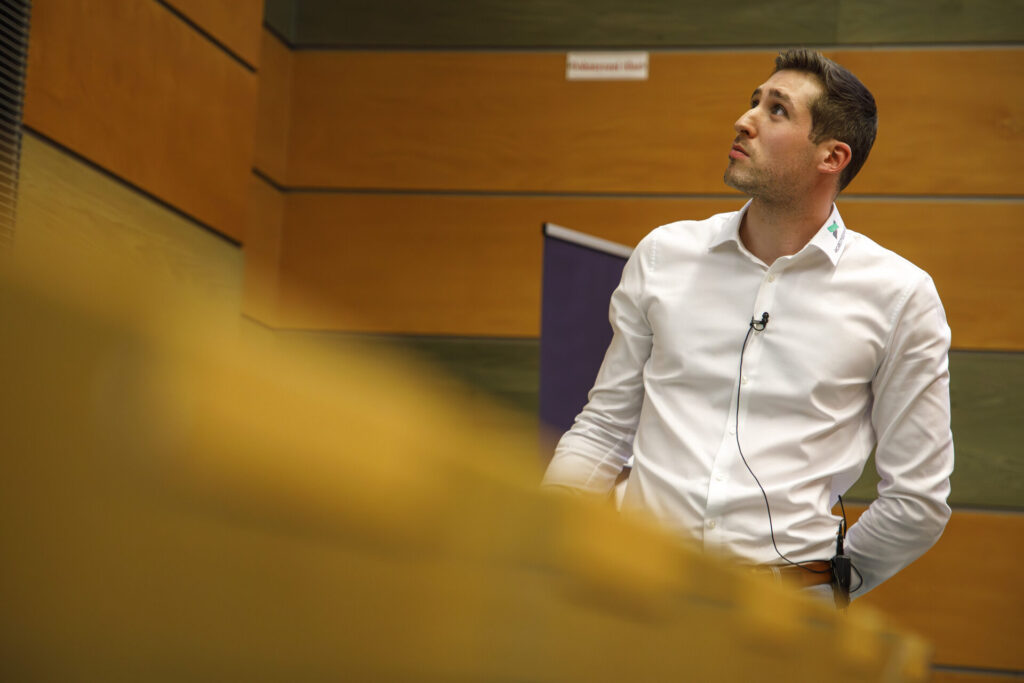
Hungarian Water Technology in Egypt: Clean Water in the Heart of the Desert
Based on student votes, the most inspiring project of 2025 was Hidrofilt Kft.’s development in Egypt. The company from Nagykanizsa built a water supply and wastewater treatment system for an oil refinery there. Gábor Lakner, Commercial Director, explained that water drawn from the Nile is purified at a rate of over 200 m³ per hour, producing even chemically pure water. In terms of wastewater treatment, they use the so-called ZLD (Zero Liquid Discharge) technology, which means that biologically pre-treated wastewater is pre-concentrated, then post-treated by evaporation and crystallization, resulting in a system with zero liquid discharge. Approximately 1.7 million m³ of water are purified and recycled annually, which is rare on a global scale. The project manager also had a message for the engineering students: at companies like theirs, it is possible to earn exceptionally well in Hungary if one focuses on the quality of professional work.
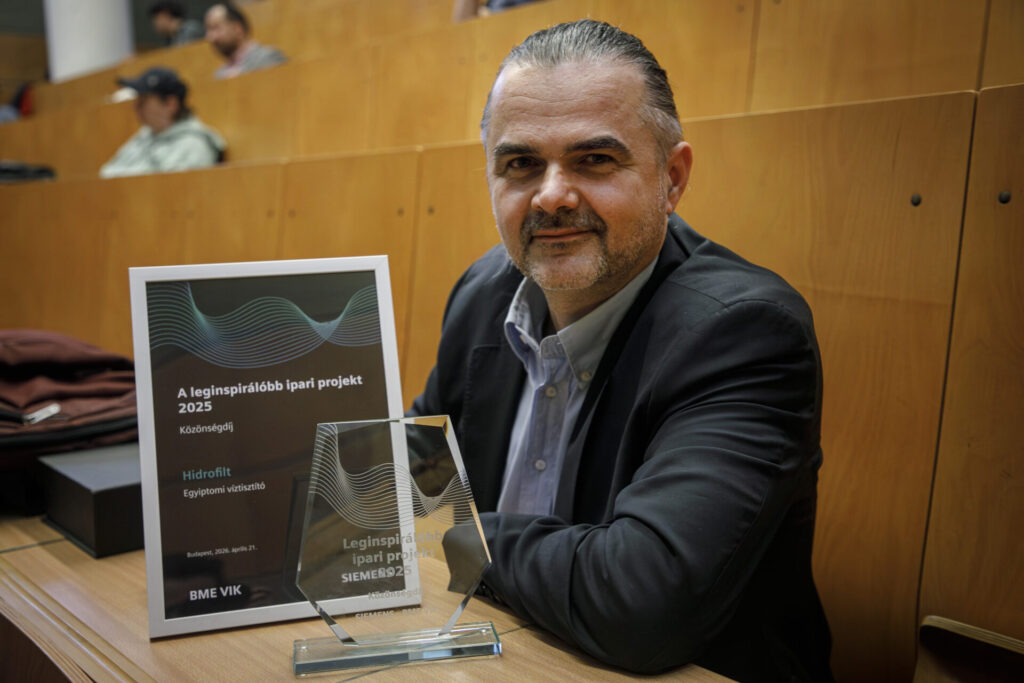
At the end of the presentations, students had the opportunity to connect with the presenters – industry leaders and project managers – and ask questions in person. The audience voted for the most inspiring project, and lucky winners left with concert tickets and smartwatches.
Collaboration with companies, demonstrating the practical application of the taught curriculum, plays a key role in the strategy of BME VIK. According to plans, students will also be able to encounter demonstrations of inspiring industrial projects at the VIK Industrial Institute – added László Kovács, Head of the Institute.


