


Dialogue focused on the need for companies in Hungary to respond to geopolitical volatility, regulatory uncertainty and structural shifts in the global economy.
Trade restrictions, increased state involvement and fragmented regulatory regimes are reshaping competitiveness, particularly in energy security, access to critical raw materials and supply chain resilience, presenting material challenges for export-oriented sectors.
Operational priorities were examined alongside these macroeconomic pressures. Participants addressed the need to enhance efficiency, optimize cost structures, and manage labor-market constraints.
Talent attraction and retention remain decisive, as does access to specialized expertise. Compliance-driven leadership is gaining prominence as ESG obligations, tax-related reporting requirements and pay transparency rules become more embedded in corporate risk management frameworks for 2026.
Investor perspectives added practical insight. Established regional players and newly arrived market entrants alike emphasized common priorities: strengthening supplier networks, expanding the talent base and deepening cooperation between companies, universities and municipal stakeholders.
These factors underpin Debrecen’s continued development as a diversified industrial and services center capable of supporting complex investment strategies. The event formally inaugurated EY’s 2026 regional agenda, with further senior executive programs planned during the year.

Over the past five years, EY has hosted the Business Club to convene leading economic actors and facilitate substantive professional exchange. The initiative has developed into a recognized forum for decision-makers across eastern Hungary, and this year’s edition featured a sharper strategic emphasis and broader international participation.
The bilingual format attracted nearly 60 senior executives representing companies headquartered in Hungary and nine additional countries. The program combined global economic context with region-specific insights, offering practical perspectives on both international trends and local opportunities.
Mayor of Debrecen László Papp opened the event by outlining the city’s rapid economic transformation and highlighting the importance of cooperation between the business community and public institutions.
After a geostrategic outlook for 2026, EY partners Róbert Ésik and Áron Nagy delivered keynote analyses on four themes shaping CEO agendas this year, including savings and incentive opportunities, supply chain resilience, ESG compliance, and pay transparency, providing a structured foundation for discussion.
A senior roundtable further enriched the program. Participants included Róbert Hosszu, vice president and managing director at Emerson (National Instruments), and James Zhou, general manager of Semcorp Hungary and VP of Semcorp Global, who offered complementary perspectives shaped by long-standing local operations and rapid market entry.
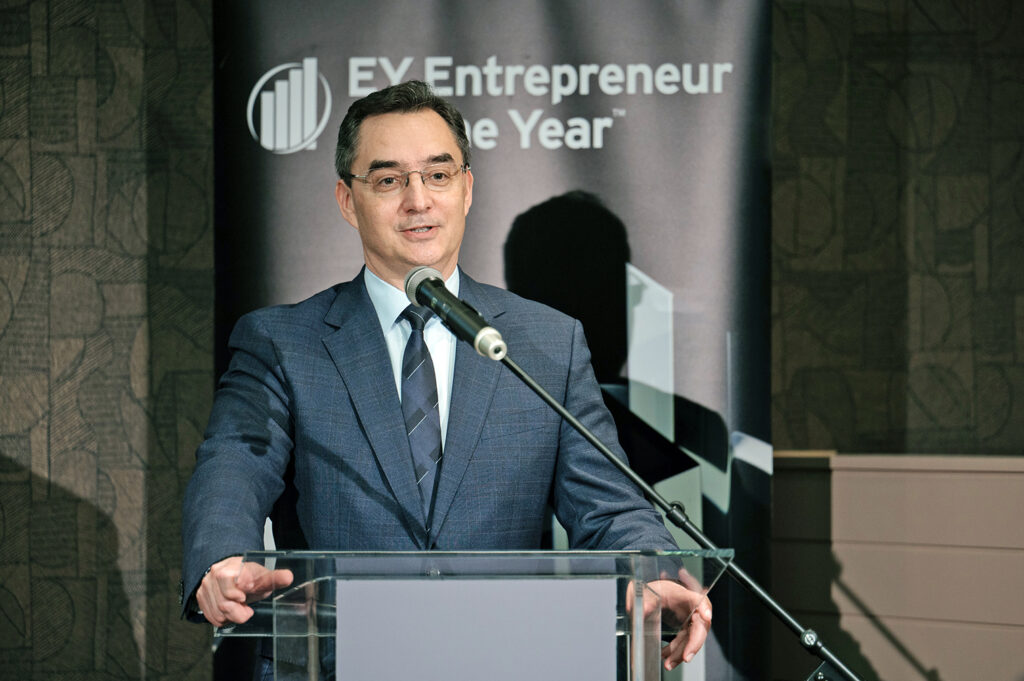
Their discussion confirmed that higher education partnerships and proactive municipal engagement continue to support Debrecen’s trajectory as a center for industrial innovation and executive collaboration.
The event also marked the fifth anniversary of EY’s Debrecen office, underscoring the firm’s long-term commitment to the region. Established to bring EY’s capabilities closer to regional decision-makers, the office delivers globally informed yet locally relevant insight.
Client relationships in Debrecen continue to broaden across strategic, financial and operational areas, typically encompassing advisory mandates, regulatory guidance, joint projects and executive-level workshops.
Institutional cooperation remains a defining feature of EY’s presence. The firm maintains active dialogue with municipal leadership. It works closely with regional economic organizations, including chambers and development agencies, as well as the University of Debrecen, helping to align local priorities with international best practice.
As Debrecen’s strategic significance continues to increase, EY says it remains committed to supporting organizations shaping the future of one of Hungary’s most dynamic growth regions.
This article was first published in the Budapest Business Journal print issue of February 27, 2026.


