


According to results shared by the Hungarian Investment Promotion Agency, foreign investors committed EUR 10.3 billion in new capital in 2024, marking the second consecutive year Hungary has surpassed the EUR 10 bln threshold. A total of 77 investment projects were launched with the agency’s support last year, generating 18,500 new jobs nationwide.
As 2025 progresses, these investments are now moving into execution, supported by ongoing reforms designed to increase Hungary’s competitiveness in higher-value-added industries. The momentum, Hipa says, indicates that Hungary is not only attracting manufacturing capacity but also rising up the global value chains.
Hungary continues to emphasize predictability, competitiveness and openness as core attributes of its investment climate. The country maintains a 9% corporate income tax rate, which remains the lowest in the European Union and applies it uniformly to all companies registered domestically. Combined with an extensive incentive framework and a well-established industrial base, the policy supports long-term growth.
Hipa highlights Hungary’s central geographic location, enabling companies to serve both Western and Eastern markets efficiently via well-developed transport and logistics corridors. Meanwhile, a skilled, motivated, and competitively priced workforce remains a key attraction, bolstered by education and vocational training aligned with industry needs. Political and regulatory stability remain priorities for Hungary’s pro-investment economic policy.
“Connectivity is not a theory and not merely a foreign-policy mindset, but one of the key drivers of Hungary’s economic success,” the agency says. What continues to set Hungary apart, Hipa insists, is its refusal to take sides in the global competition over capital.
“We do not draw ideological distinctions between investors from East and West,” the agency emphasizes. As global investment flows shift, with Eastern capital now representing 43% of worldwide FDI, Hungary’s acceptance of both sources has become a decisive competitive advantage.
Germany remained Hungary’s most active investor by number of announced projects in 2024, while China was the largest investor by value, investing EUR 5.2 bln, more than half of total inflows. South Korea ranked second with EUR 2.6 bln. Combined, Asian partners in Hungary’s “Eastern Opening” policy accounted for EUR 8.2 bln in FDI last year, roughly 80% of total investment volume.
Investors came from 20 countries, including the United States, Japan, Sweden, Thailand and the Netherlands, across three continents, underlining Hungary’s position as a broad-based international investment location. The country’s long-term ambition is to become a center not only for production, but for invention.
“We have moved forward from the ‘Made in Hungary’ period to the ‘Invented in Hungary’ period,” Hipa explains. Manufacturing has always been essential, but the government now views it as a foundation upon which higher-value capabilities, such as engineering, testing, software and technology development can be built.
This shift is particularly visible in the mobility sector, where the rise of electrification and digitalized transport is creating entirely new skill and value requirements. Hipa also notes that securing large-scale production has created the conditions to attract R&D investment from the same companies.
“Once production is established, it becomes possible to move gradually up through higher levels of the value chain,” the agency says.
Several high-profile investment decisions announced in 2024 are now shaping Hungary’s economic landscape in 2025.
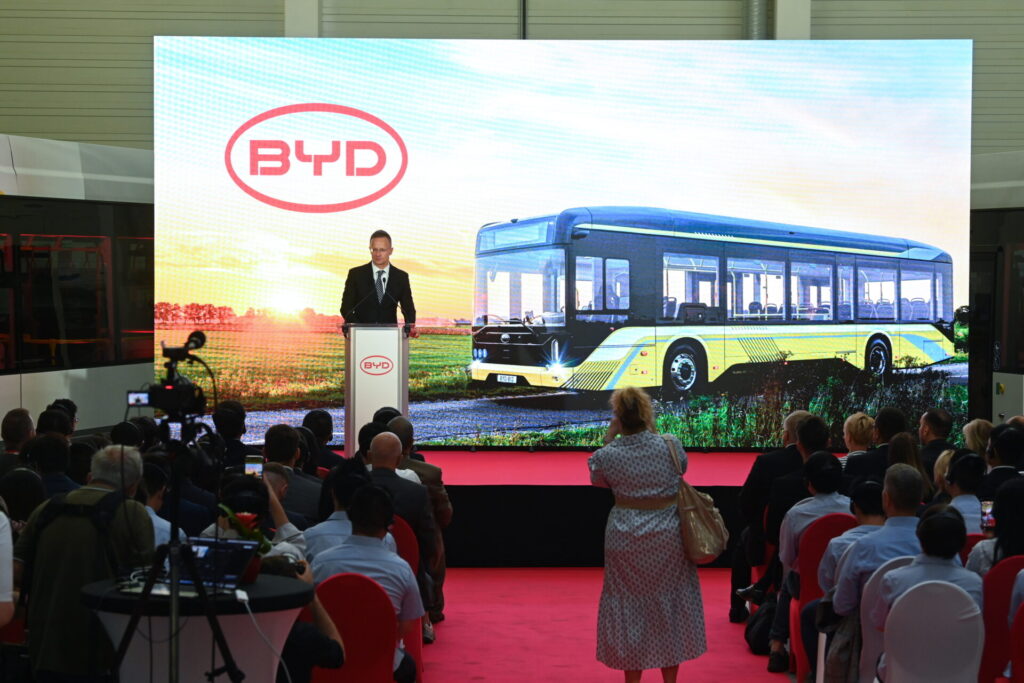
China’s BYD selected Hungary as the location for its European operational and strategic headquarters, along with a research and development hub. The headquarters will support regional sales, service, vehicle testing and localized model development. Meanwhile, R&D operations will initially focus on improving the efficiency of electric drivetrains and developing AI-based driver-assistance systems. Together valued at EUR 250 million, the projects represent the largest innovation-focused FDI initiatives Hipa has yet supported.
U.S.-based governance software provider Diligent is continuing to expand its Budapest technology campus. Following its establishment in 2021, the company now employs around 450 specialists in the capital and is adding 124 new jobs as part of a EUR 93.6 mln investment. Its Hungarian operations are taking a lead role in developing the “Grace” platform, integrating artificial intelligence into governance and compliance workflows.
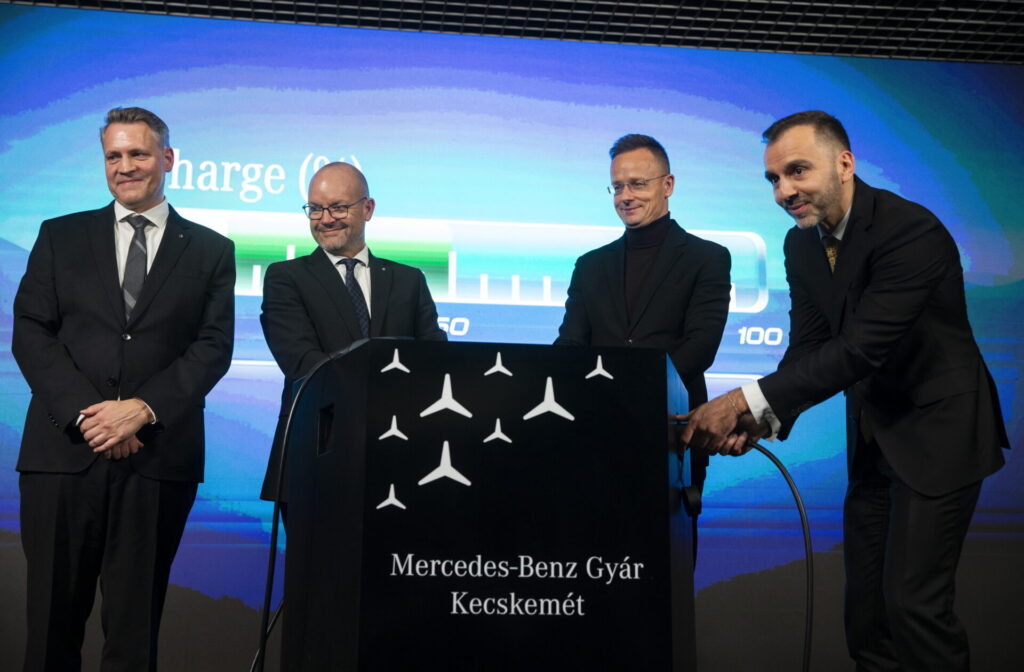
Mercedes-Benz significantly strengthened its strategic presence by launching its first Hungarian R&D investment in 2025. The EUR 54.4 million project at the Kecskemét plant will improve early-stage fault detection in car development and raise cost efficiency and product quality. The investment expands a longstanding collaboration with Neumann János University and complements the EUR 1 bln factory expansion currently underway, which will double capacity once deliveries begin in 2026. The on-site battery assembly facility will cement Kecskemét’s position as Hungary’s largest automotive production base.
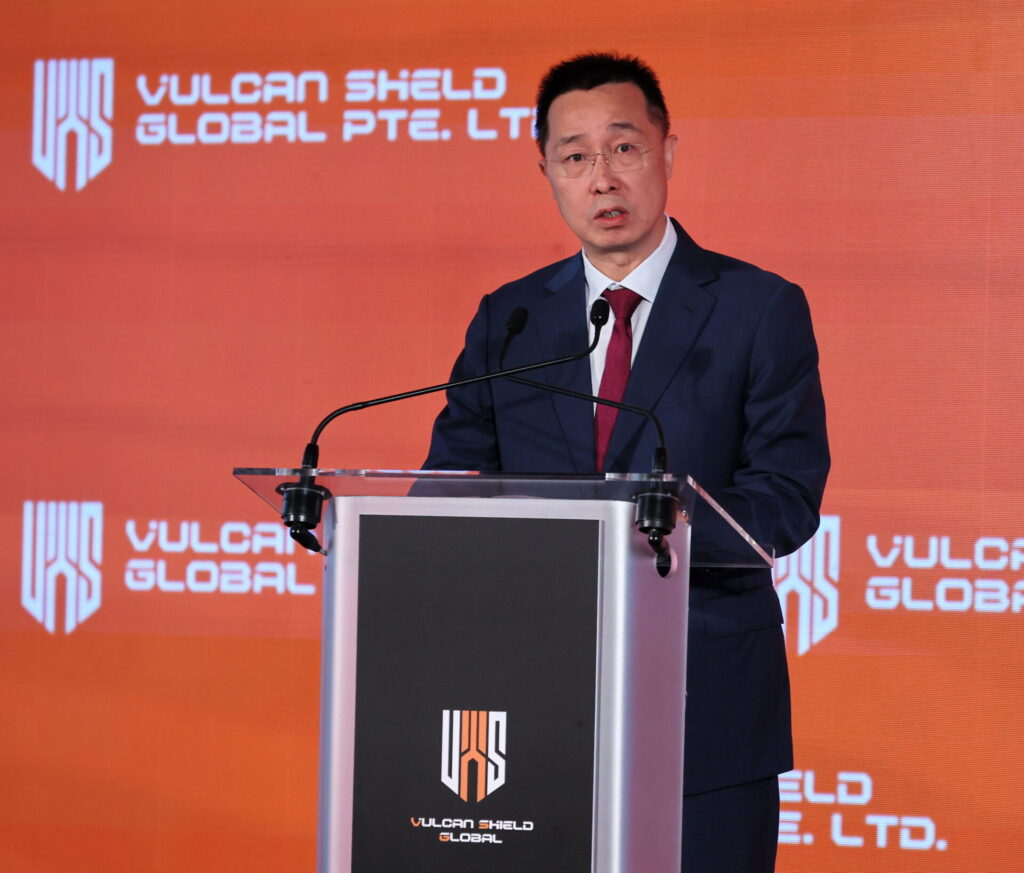
Throughout 2025, significant progress is also visible in regional development. In Békéscsaba, Singapore-based Vulcan Shield Global is preparing for large-scale operations after announcing a EUR 700 mln investment to manufacture extreme-heat-resistant alumina fibers. The development will create 2,500 jobs and represents one of the most significant projects yet realized in southeastern Hungary.
Hipa recognizes that a shift toward innovation requires equally advanced workforce capabilities. In April and again in October of this year, the government amended its VIP Cash Subsidy investment support scheme to encourage projects that boost automation, expand R&D and create technology-intensive jobs.
Minimum investment thresholds for subsidy eligibility were reduced in several southern counties and countryside cities to more evenly distribute development opportunities across the country. Companies receiving support must meet measurable wage and revenue growth commitments over the monitoring period. At the same time, greater flexibility has been introduced so that part of the eligibility criteria can be tailored to each investor’s strategic focus, including R&D partnerships with universities, supplier chain development and renewable energy integration.
A new support program was launched this year to incentivize companies to establish or expand research centers in Hungary. It is open to large and medium-sized firms with at least 50 employees, and does not require a formal R&D track record. Companies must create at least 10 new research positions and establish new collaborations with a Hungarian higher education institution. Those who file Hungarian-priority patent applications may benefit from further financial support. The training subsidy scheme, also expanded this year, supports companies employing 100 or more people with skill development tied to new technologies and operational digitalization.
Hipa is simultaneously scaling its supplier development programs. By organizing targeted industry forums and training sessions, the agency aims to ensure that Hungarian SMEs become stronger partners within multinational value chains. Supplier forums featuring major international investors, including BYD and GE Vernova, have taken place this year.
Although the automotive and electronics industries remain the primary drivers of FDI in Hungary, diversification is progressing steadily. In 2024, investments were made in 18 economic sectors, including medical technology, pharmaceuticals, information and communication technologies and high-tech food processing. Several Hungarian-owned expansion projects were also successfully supported by Hipa.
One of the strongest growth areas in 2025 continues to be the business services center sector, a field that has proven both resilient and innovative in global competition. In 2019, Hungary counted around 120 centers with 55,000 employees. Today, 245 such operations are employing nearly 120,000 highly trained professionals. Centers are increasingly adding complex activities in cybersecurity, data science and global governance roles.
Hipa says it is currently negotiating 15 additional BSC investments and shares the sector’s objective that, by 2030, Hungary should host 300 centers employing 150,000 people. As the agency puts it, “Hungary has become an important international meeting point in the BSC sector as well, a place where Eastern and Western companies can operate in an equally supportive business environment.”
As multinational firms rethink where to place capital, Hungary’s economic philosophy positions the country at the crossroads of technological and regional advantage. Investment from Asia, particularly in electric mobility, battery technologies, semiconductors and AI, is expanding at a pace unmatched a decade ago. European partners continue to anchor precision engineering, advanced manufacturing and production excellence here. Hungary aims to ensure that it remains the European location where these strengths converge.
“Chinese technological innovation and German engineering expertise, for example, can jointly create new value,” the agency believes. This strategic balancing act enables Hungary to build resilience and embed itself into multiple global supply networks simultaneously, a clear priority in the post-pandemic economy.
Hipa’s strategy for 2025 and beyond focuses on securing projects that generate long-term, future-ready jobs and deeper technological integration into the Hungarian economy. The agency continues to prioritize industries offering high added value, advanced automation, and a strong sustainability impact. Emerging sectors such as nanomaterials, artificial intelligence and advanced electronics remain central to policy planning.
Sustainability criteria are gradually expanding within the incentive system. Support for renewable energy investments is still available, but now requires energy storage components to promote industrial decarbonization.
“Our goal has never been merely to bring factories here,” Hipa emphasizes. The future lies in research, testing, design, intellectual property and system-level innovation. “Promoting this dimensional shift in the economy and increasing added value are essential tasks.”
With major factory expansions on schedule, innovation centers under development and diversification across nearly every region of the country, Hungary enters 2026 carrying on the strong FDI momentum of the past few years.
This article was first published in the Budapest Business Journal print issue of December 12, 2025.


